
CW – Mono Simple
A black and white recipe built for human moments
Some recipes are born from frustration. This one was born from anticipation.
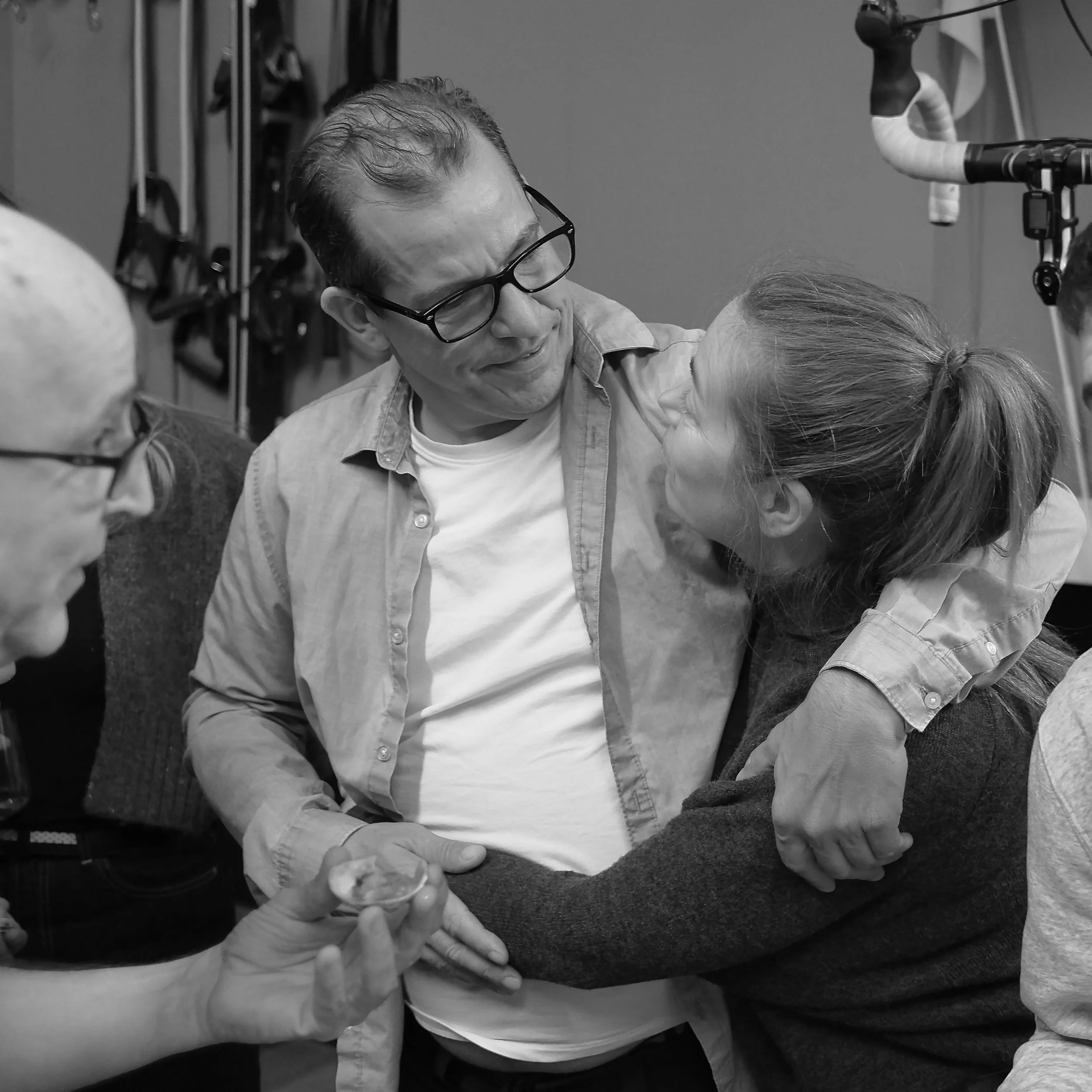
Every December, my extended family gathers for what has become a beloved ritual : forty-five cousins reunited around the pretext of oyster season. We consume them in quantities that would alarm a reasonable person, in a setting that would surprise anyone expecting a formal dinner: a residential garage, packed for the occasion into something warm, loud, and completely alive, bicycles hanging from the walls, mismatched chairs and artificial light cutting across faces and glasses in the dimness of a late afternoon.
Before leaving for that gathering, I sat down and thought carefully about what I would be walking into: forty-five people, constant movement, layers of conversation happening simultaneously and oysters, everywhere.
I decided that color would be a distraction. What the evening called for was something that would strip away everything except the essential : faces, gestures and the small moments of connection that happen in the middle of a crowd. I built CW – Mono Simple before I left the house, and I brought it to the party.
It worked.

The settings and their intent
Monochrome+R, the red filter variant of Fujifilm's monochrome simulation provides enhanced tonal separation in warm-toned subjects. Skin tones gain depth and dimension. The filter increases sky contrast naturally without pushing the image toward the harsher characteristics of a traditional red filter. In a room full of faces, it is the right tool.
DR400 stabilizes highlight rolloff in high-contrast situations, backlit subjects, mixed indoor lighting and the unpredictable light of a garage in December. It costs nothing and protects often.
White Balance Auto with R+4 / B–6 introduces a subtle cool bias that counterbalances the contrast boost from Monochrome+R. The result is a neutral-to-cool tonality that keeps the midtones honest without tipping into coldness.
Highlight +2 keeps the image open and airy, important in a crowded indoor environment where artificial light can quickly make images feel heavy.
Shadow –1 avoids excessive density in the darker areas. The X-Trans V sensor produces deep blacks quickly with Monochrome+R, pulling the shadows back slightly preserves detail and keeps the image breathable.
Sharpness +3 keeps the rendering crisp without introducing edge overshoot. On the X100VI's fixed lens, it renders fine detail with precision and without harshness.
No grain, no Color Chrome and no Clarity. The same minimalist philosophy as CW – Simple Standard. Let the simulation do its work, and trust the result.
What this recipe is
CW – Mono Simple is the black and white foundation of the CW series. It is built for clarity, flexibility, and honest human rendering. Not dramatic, not stylized, just a clean, modern black and white profile that gets out of the way and lets the moment speak.
It is the recipe I reach for when the scene is complex and the light is uncertain and I want a result I can trust.
Full settings
- Film Simulation: Monochrome + R
- Dynamic Range: DR400
- White Balance: Auto, R+4 / B–6
- Toning: WC 0 / MG 0
- Highlight: +2
- Shadow: –1
- Sharpness: +3
- Grain Effect: Off
- Color Chrome Effect: Off
- Color Chrome Blue: Off
- High ISO NR: 0
- Clarity: 0
- ISO: Auto, 500 to 3200
- Exposure Compensation: 0 to +2/3
When to use it
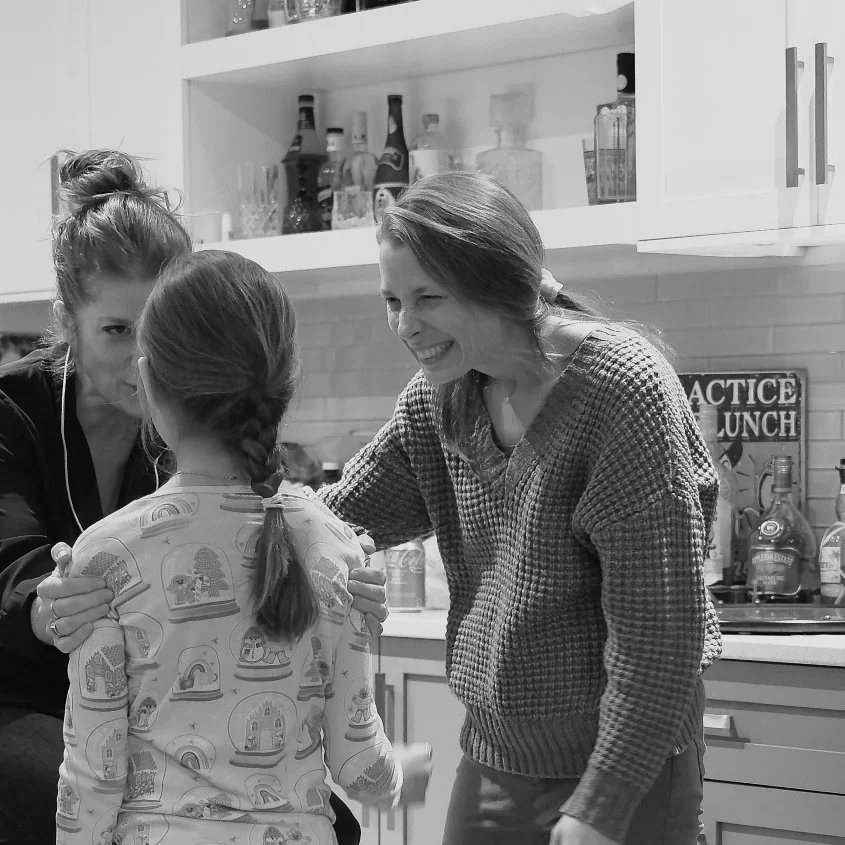
CW – Mono Simple performs best in daylight or controlled artificial lighting — exactly the kind of mixed and unpredictable light you find in a garage packed with people in December. It delivers strong highlight structure with preserved detail, moderate shadow lift to avoid clipped blacks, and crisp microcontrast without digital harshness.
It is well suited to street photography, documentary work, architecture, and — as I discovered that evening — the particular beauty of forty-five cousins eating oysters together and not paying any attention to the camera.
That last part matters. The best black and white recipe is the one that disappears. CW – Mono Simple disappears.