
Lyset kommer... The light is coming.
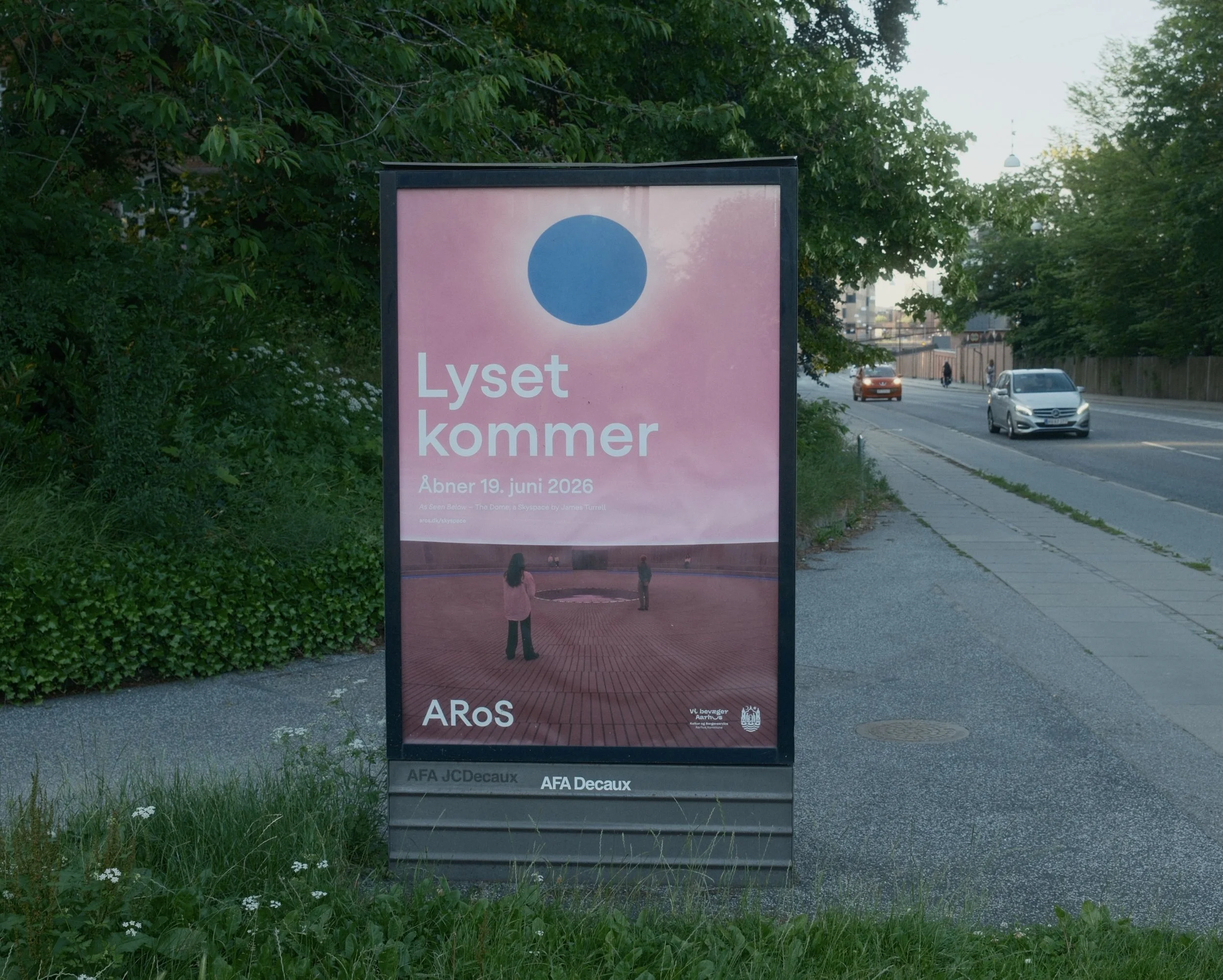
An omnipresent advertisement in Aarhus.
Lyset kommer. The light is coming. The poster was everywhere in Aarhus, on bus shelters, hoardings and walls, with that pink and blue image no one quite understood yet. A date: June 19, 2026. ARoS. Nothing else.
We entered the museum the next day with one specific intention: to see Your Rainbow Panorama by Olafur Eliasson, the circular walkway of coloured glass that crowns the building. The previous post presents a few photographs of it, all taken with NS–Céladon. I had no idea what a Skyspace was, nor who James Turrell was. We moved through the floors, the rooms and the collections. And we ended at the bottom, with the descent toward the dome.
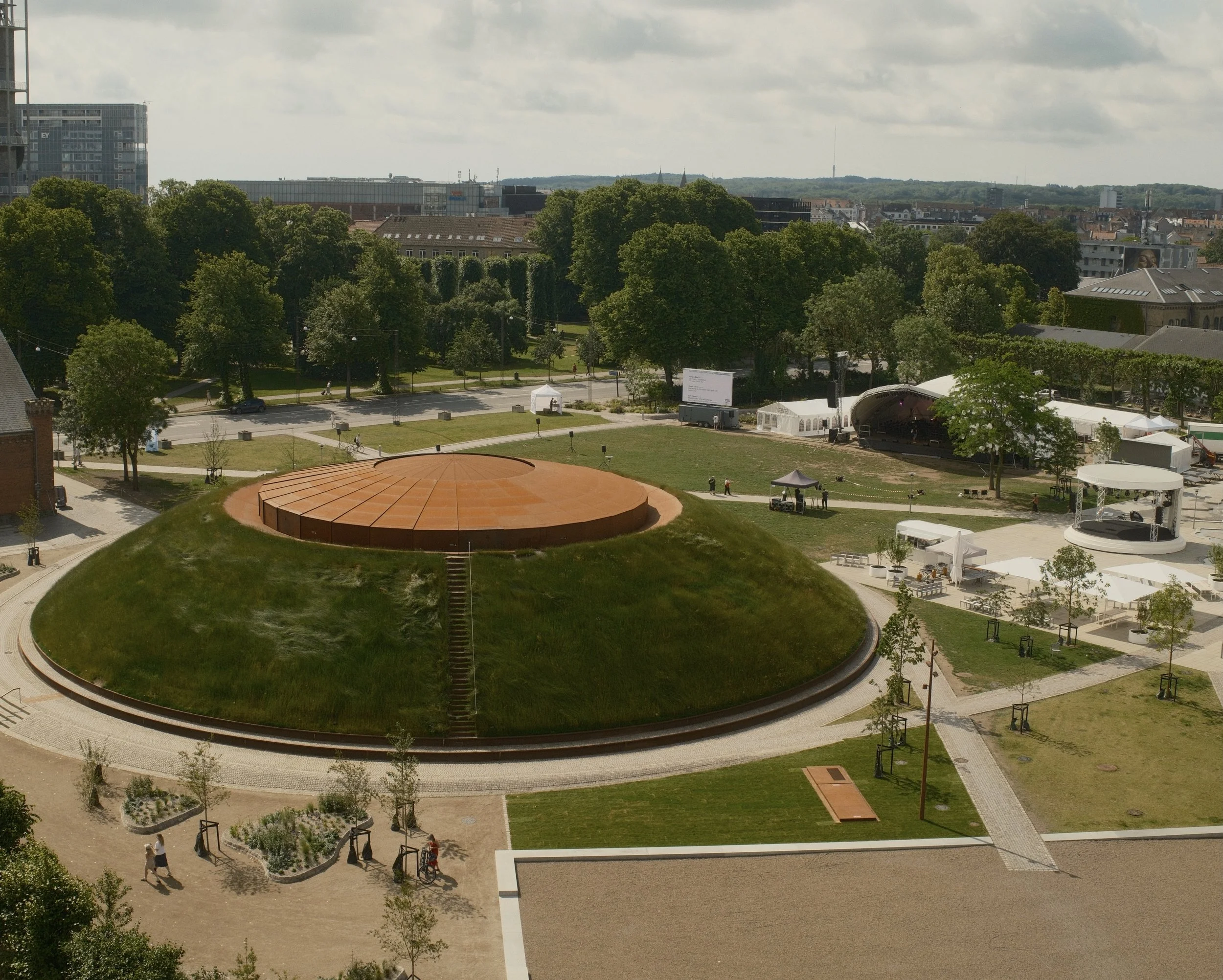
The Skyspace, seen from the ARoS rooftop terrace.
Even before entering ARoS, Denmark had already surprised me. Not once, not twice, but just about everywhere I looked.
In Copenhagen, the Opera House advances onto the harbour like a quiet statement: a massive cantilevered roof, a glass facade and a presence that has nothing to prove. Blox, the Copenhagen International School, Tip of Nordo and The Cactus each speak the same language, at their own scale and in their own function. In Aarhus, The Iceberg and Café La Cabra, both in the Aarhus Ø neighbourhood, tell the same story: one a residential building, the other a café, each designed with the same rigour as a concert hall.
What caught my attention was not the exception. It was the ordinary. A society that asks its architects, its designers and its institutions for the same formal ambition in a school, a café and an apartment building as in an opera house is a society that has decided beauty is not something to be earned, but something to be shared.
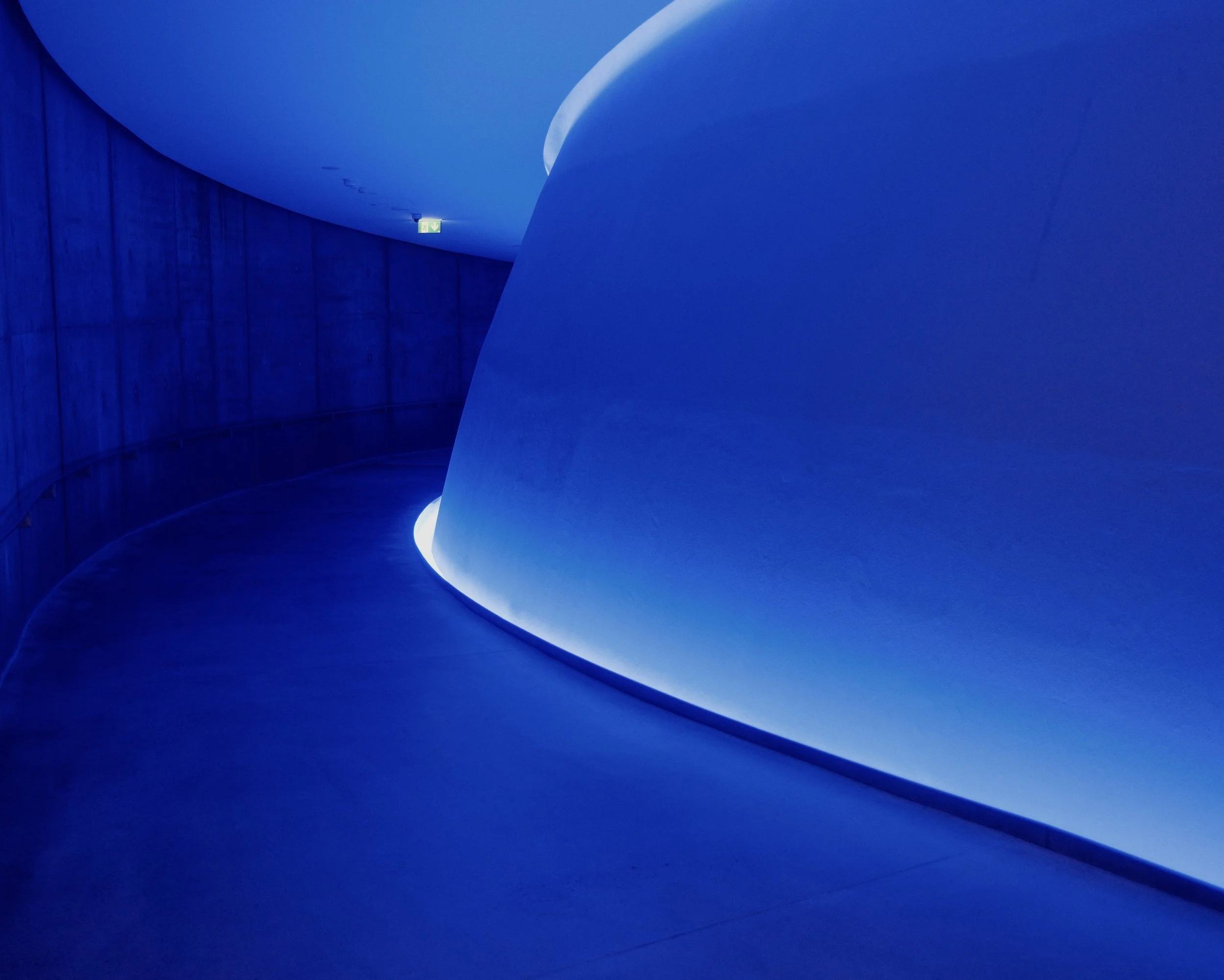
A long, electric blue corridor.
As Seen Below grew from this soil. A decade of collaboration between James Turrell, ARoS and Schmidt Hammer Lassen Architects, funding drawn from private foundations, public institutions and the municipality, a subterranean dome forty metres in diameter whose sole purpose is to alter the way one perceives light. Not a celebration. Not a monument. An experience.
The door opens onto darkness. Not a gradual dimming, but complete and immediate black. Then the descent begins, along a curved corridor whose walls shift colour with each step: an electric blue first, dense and sourceless, then a red that fills the entire space down to the floor. You do not yet know what waits below. You stop wondering.
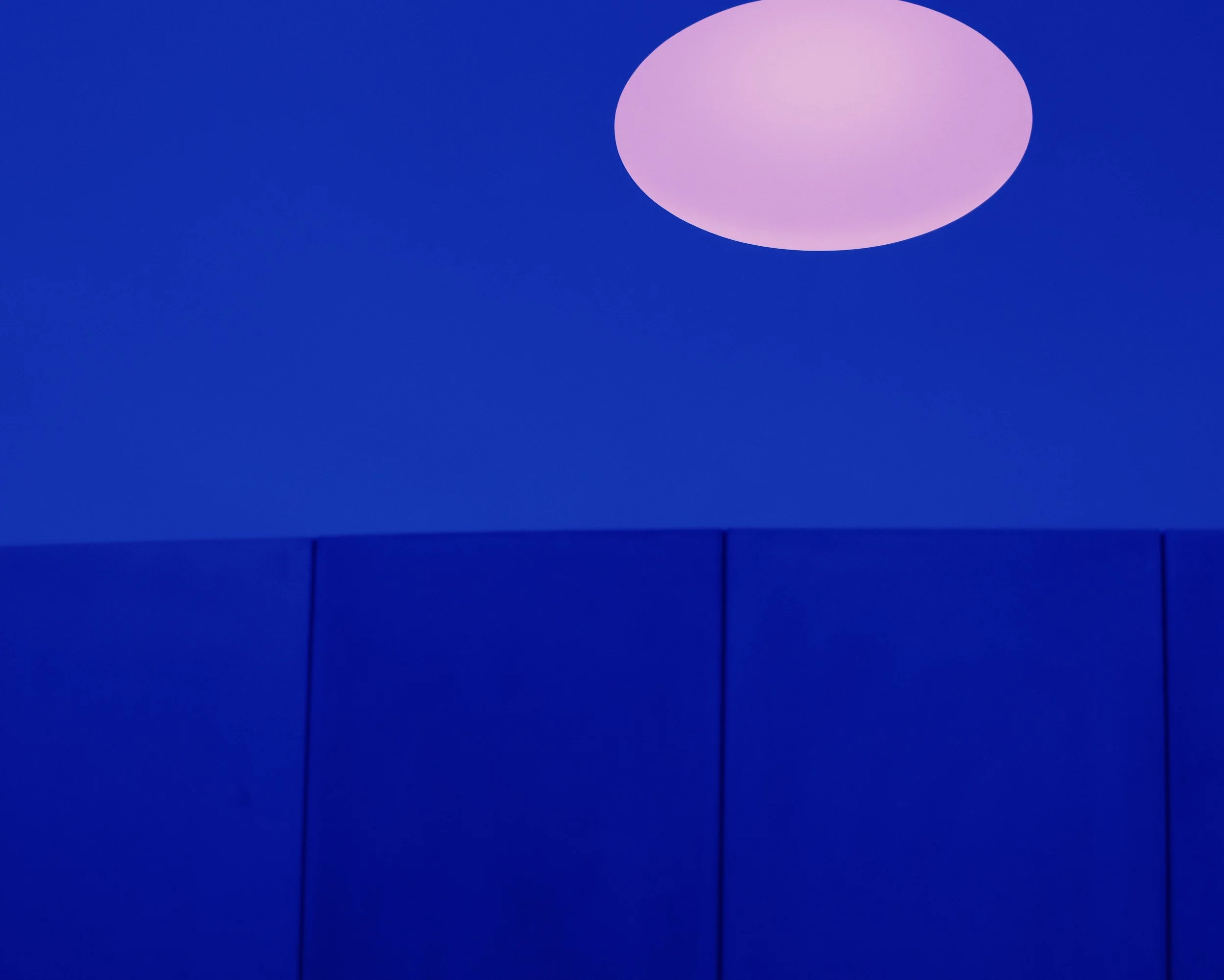
The oculus taking on a pink hue.
The dome opens in its full scale. Forty metres in diameter, sixteen metres high, and at the summit an oculus six metres wide open to the Danish sky. The light that enters through this opening is not projected, not filtered, it is simply there, shaped by the hour, by the weather and by the interior lighting that converses with it. The concrete walls dissolve into colour. The floor reflects. Edges disappear.
Turrell says he does not deliver an image. He shapes the experience of seeing. Inside the dome, you understand what that means. This is not a work you look at. It is a work you move through, and that moves through you in return.
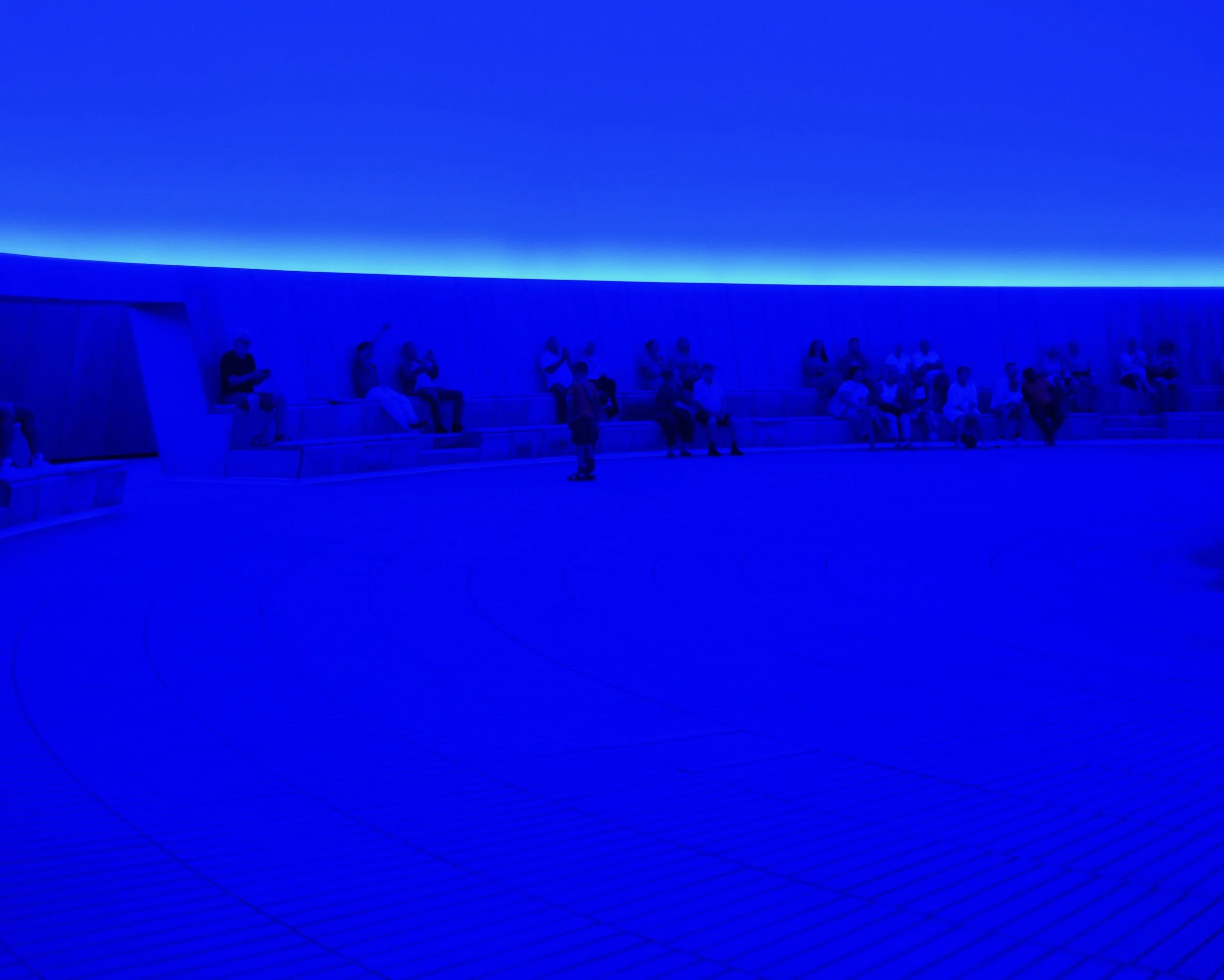
Awestruck spectators.
I did not know, descending toward the dome, that I was about to encounter a work built entirely around light. I did not even know what Lyset kommer meant. And NS–Céladon in the camera that morning was not a deliberate choice, it was simply the recipe I had been using since arriving in Denmark.
The parallel between Turrell's approach and mine was not something I looked for. It asserted itself in the dome, almost in spite of me. Turrell works at the scale of a forty-metre subterranean space, with years of collaboration, millions in funding and absolute control over every parameter of light. My practice fits in a camera, a recipe and the attention I try to bring to light before pressing the shutter.
The difference in scale is immense. But the intention, somewhere, converges: to make light not an accessory of the image, but its subject.
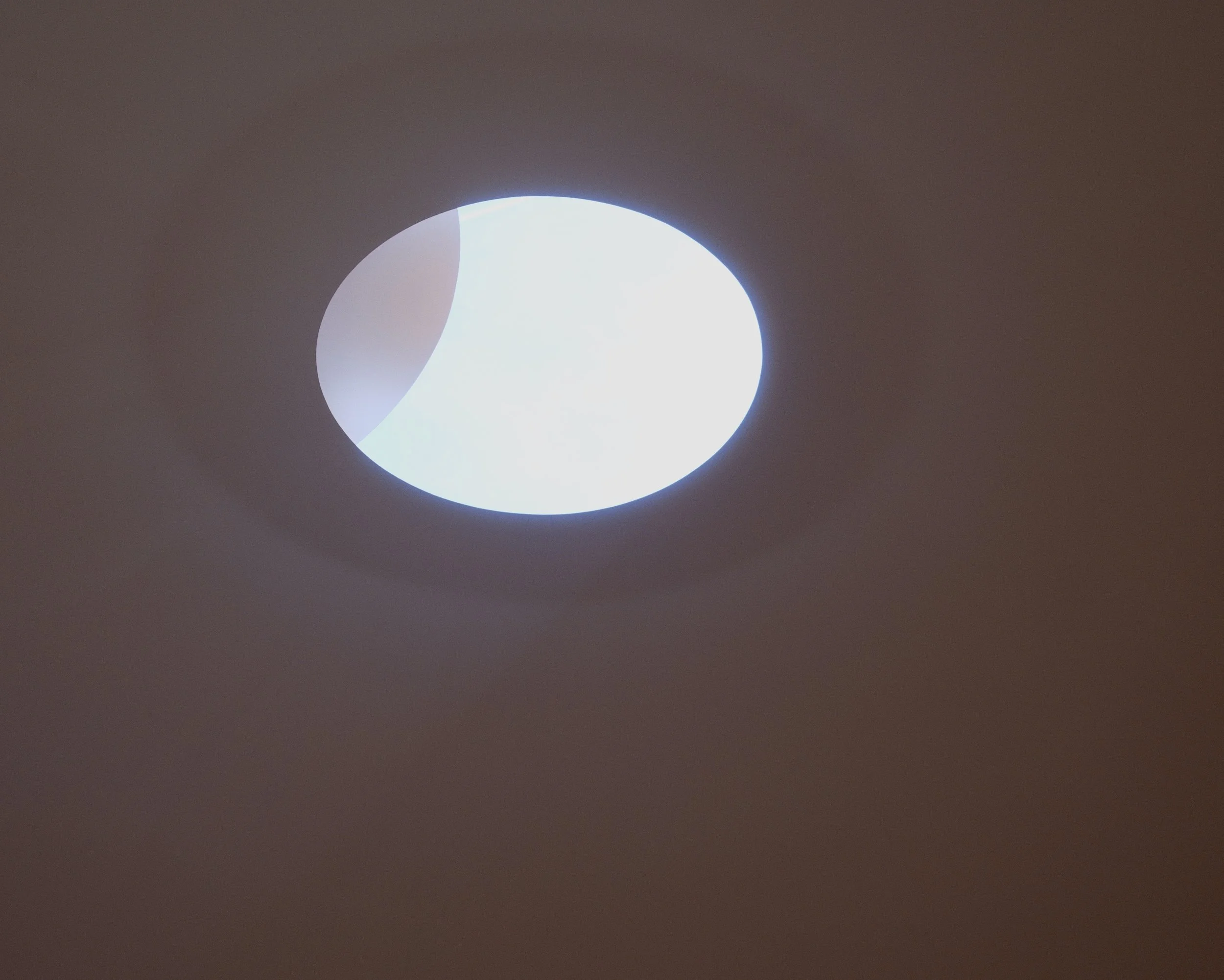
The opening of the oculus.
I did not know what NS - Céladon would do with this light. I found out on a large screen, back home.
What stayed with me first was the wide view of the dome in its blue phase, visitors reduced to barely legible silhouettes. The recipe captured something I could not name during the visit: a mystical quality, almost ritual, as though the space invited a form of stillness that people gave it naturally.
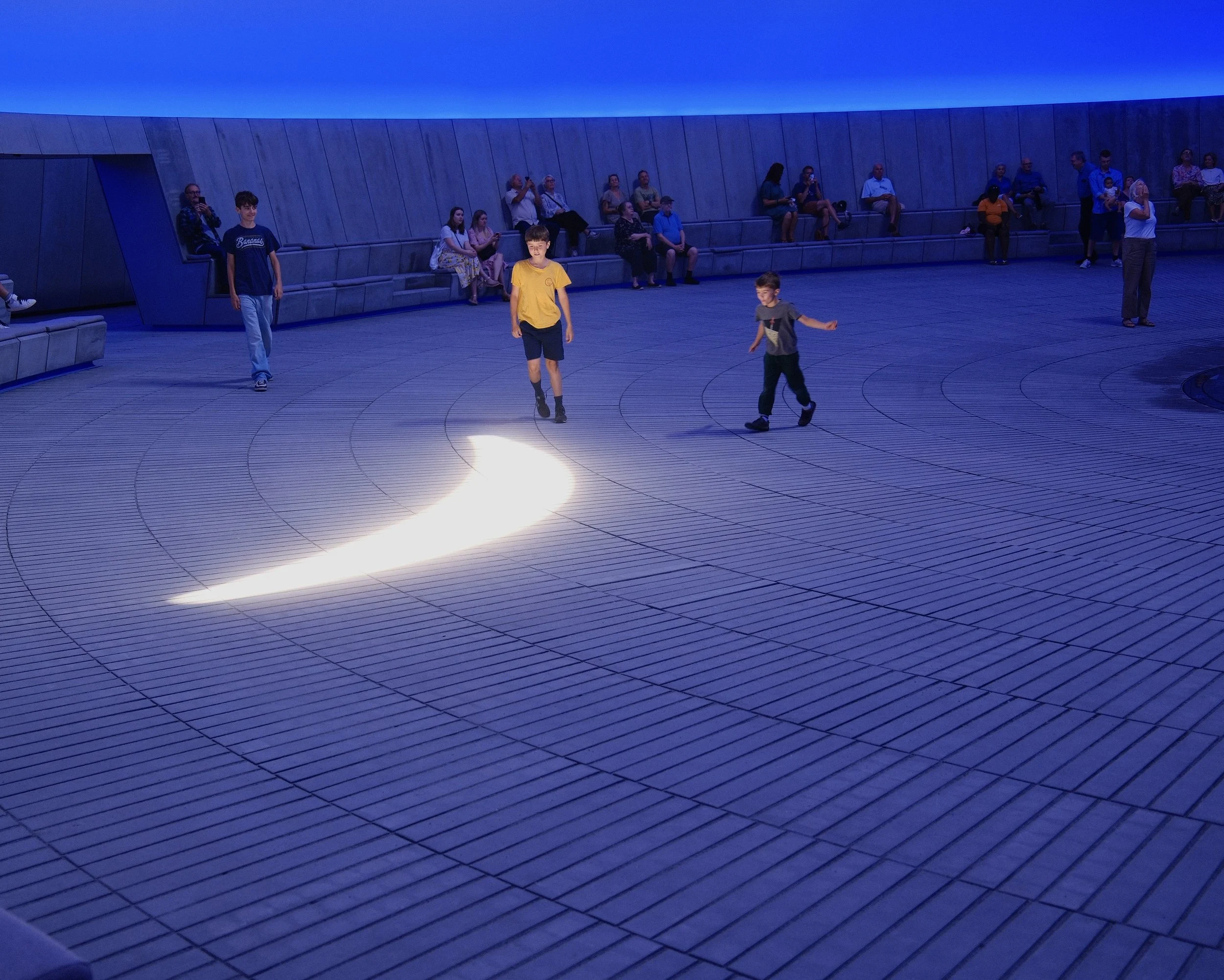
Children making the Skyspace their own.
Another image tells a different story. The children were not looking at the work, they were inhabiting it. They ran, called out and clapped their hands to exploit the acoustics of the dome, that particular reverberation Turrell built into the experience alongside the light. NS - Céladon caught them mid-motion, the crescent of light on the floor their playing field.
The photograph of my wife surprised me differently. The circle of dark polished marble at the centre of the dome, set against the surrounding matte concrete, took on the appearance of water under the amber light. She stands at the boundary between the two surfaces, her back to me, hands clasped behind her. What the photograph held onto was a posture of contemplation I had not consciously noticed at the time.
And then the oculus alone, in a warm brown-mauve phase. It is the image that moves me most. The natural light entering through the opening produced a perceptible shift in the atmosphere of the dome: a passage from the mystical toward something more real, more earthly. The Danish sky of June 20, filtered through Turrell's geometry and through NS - Céladon.
Turrell says he does not deliver an image. Visiting As Seen Below, you understand what he means and what he does not mean.
What he refuses is not photography. It is the idea of a fixed experience, closed in on itself. The dome shifts colour, the acoustics respond to the bodies moving through it, the natural light of the oculus changes with the hour and the sky. The work is never the same twice. It resists any form of definitive capture, and that is precisely what he intended.
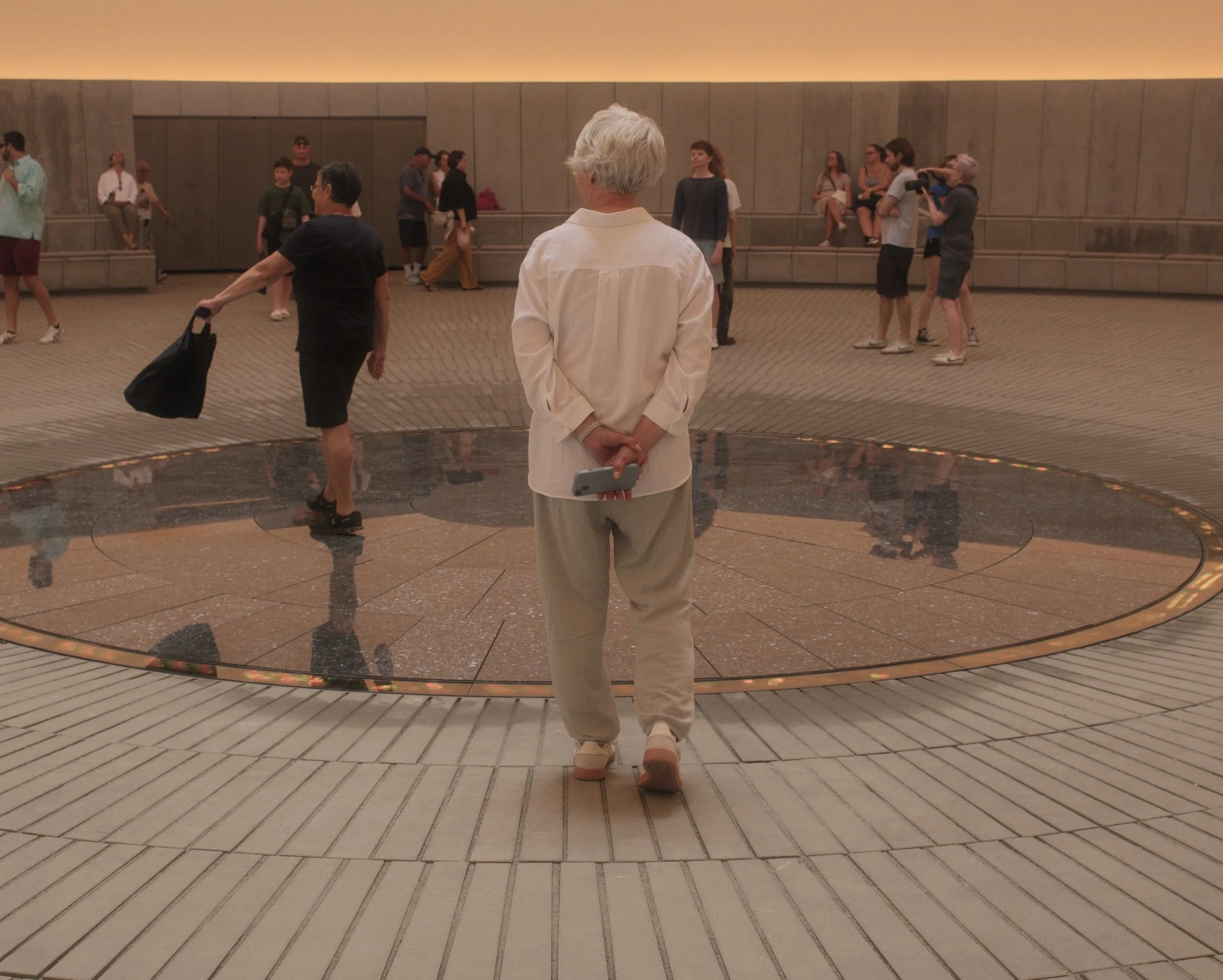
The marbled circle that looks like water.
Eight still photographs do not account for that. They do not claim to either. They are eight moments drawn from a continuous flow, eight ways in which NS - Céladon responded to a light in constant motion. What photography can do, it does. What it cannot do, the work continues to do without it.
Lyset kommer. The light is coming. It is still there.
- Louis-Martin Ouellet
All photographs in this post are SOOC — NS – Céladon settings.