
Developing Before the Shutter
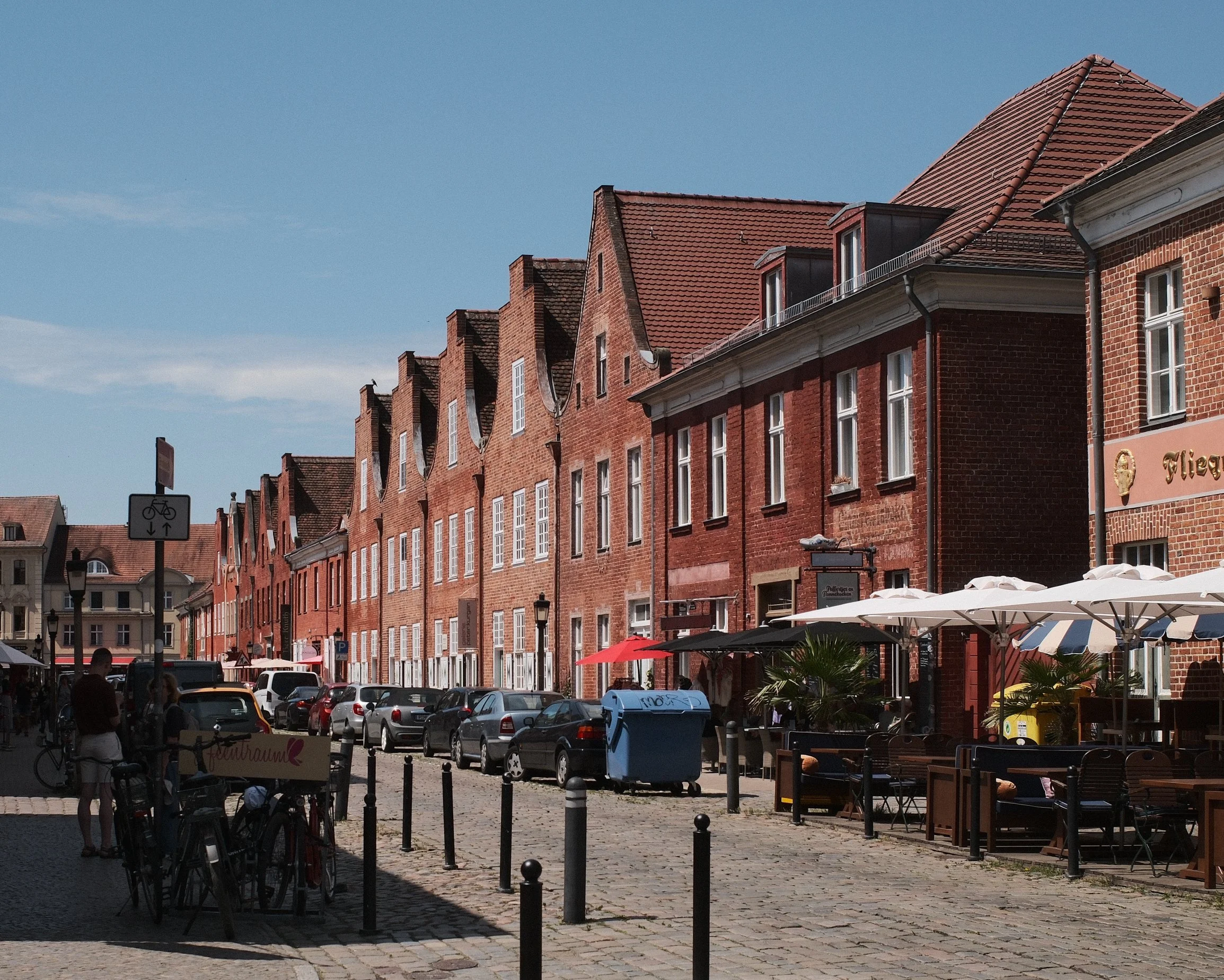
Dutch Quarter, Potsdam: CW – CCD KAF-18500, chosen before the shutter, almost instinctively because of the shaded section of the street, and one I was pleased with afterward.
In dialogue with a text by Nath-Sakura
One morning in July, a member of Club 3e Œil shared a text (in French) posted on Facebook by Nath-Sakura, a photographer and author of two manuals on photography and lighting. The text is titled RAW Is Not a Photograph, and it circulated quickly through the group.
I read it twice before responding.
What Nath-Sakura says
Her argument is clear. Neither an undeveloped film negative nor a RAW file is a photograph: both are simply information carriers, raw material requiring interpretation before becoming a visible image. Demosaicing, and then development, are therefore never optional, whether carried out automatically by the camera or consciously by the photographer. She then draws a sharp line between development, which interprets, and retouching, which transforms the very content of the image. As she puts it: "Development interprets. Retouching transforms." She draws support from Ansel Adams's own words, quoted as he wrote them: "The negative is the score, the print is the performance." The negative is never the work itself, only its score.
What resonates
I share this distinction entirely. It connects to something I've tried to express elsewhere on this site without ever putting it quite this clearly: SOOC is not a refusal of interpretation, it's a shift in when that interpretation happens. A CW or NS recipe is a complete interpretation: white balance, tone curve, sharpness, and grain are all chosen with intention, decided before the shutter rather than after.

Aarhus Ø, in front of the Iceberg and the Lighthouse tower: CW – Q3 Analog, decided before the shutter.
A small absence that intrigued me
One thing surprised me while reading. Nath-Sakura cites Nikon, Leica, and Hasselblad as examples of manufacturers whose engineers interpret sensor data, but she never mentions Fujifilm. Perhaps it's because the X-Trans sensor isn't a Bayer array, which changes the nature of the demosaicing she describes. Perhaps it's simply an omission with no particular intent. But the absence is notable, since Fujifilm's JPEG conversion engine is widely regarded as high-performing in the industry, and could have illustrated her point just as well as the brands she names.
A nuance
Where I allow myself a nuance is in how her text situates interpretation, almost implicitly, in two moments: that of a manufacturer's engineers at the time the camera is designed, and that of the photographer after the shot is taken. I don't think she establishes a hierarchy between the two, but I believe there's a third, intermediate position worth naming: that of the photographer who interprets the scene themselves, at the very moment of capture, through the settings the camera allows them to choose before pressing the shutter.
A concrete example may make this third position more tangible than an explanation. Here is a photo from Potsdam, Germany, as the camera produced it with the recipe loaded at the moment of capture, and here is the same image reinterpreted with NS – Céladon. Both are, in fact, reinterpretations: decisions made by the recipe's author and deliberately chosen by the photographer, whether before the trip or afterward.
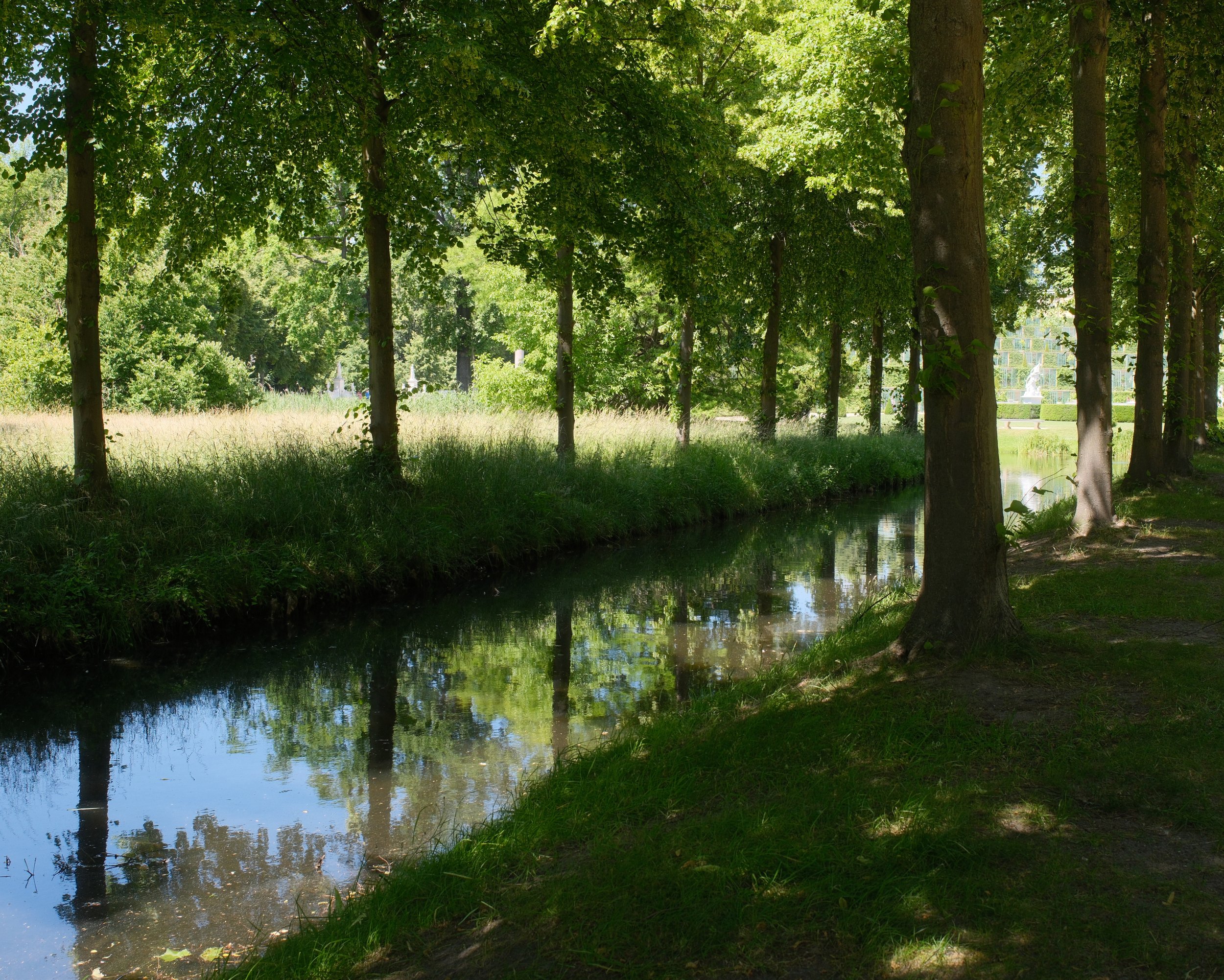
Potsdam, in front of Sanssouci Palace: a canal lined with trees and reeds, with the reflection of a distant fountain in the water. CW – Typ 113, as the camera produced it at the moment of capture.
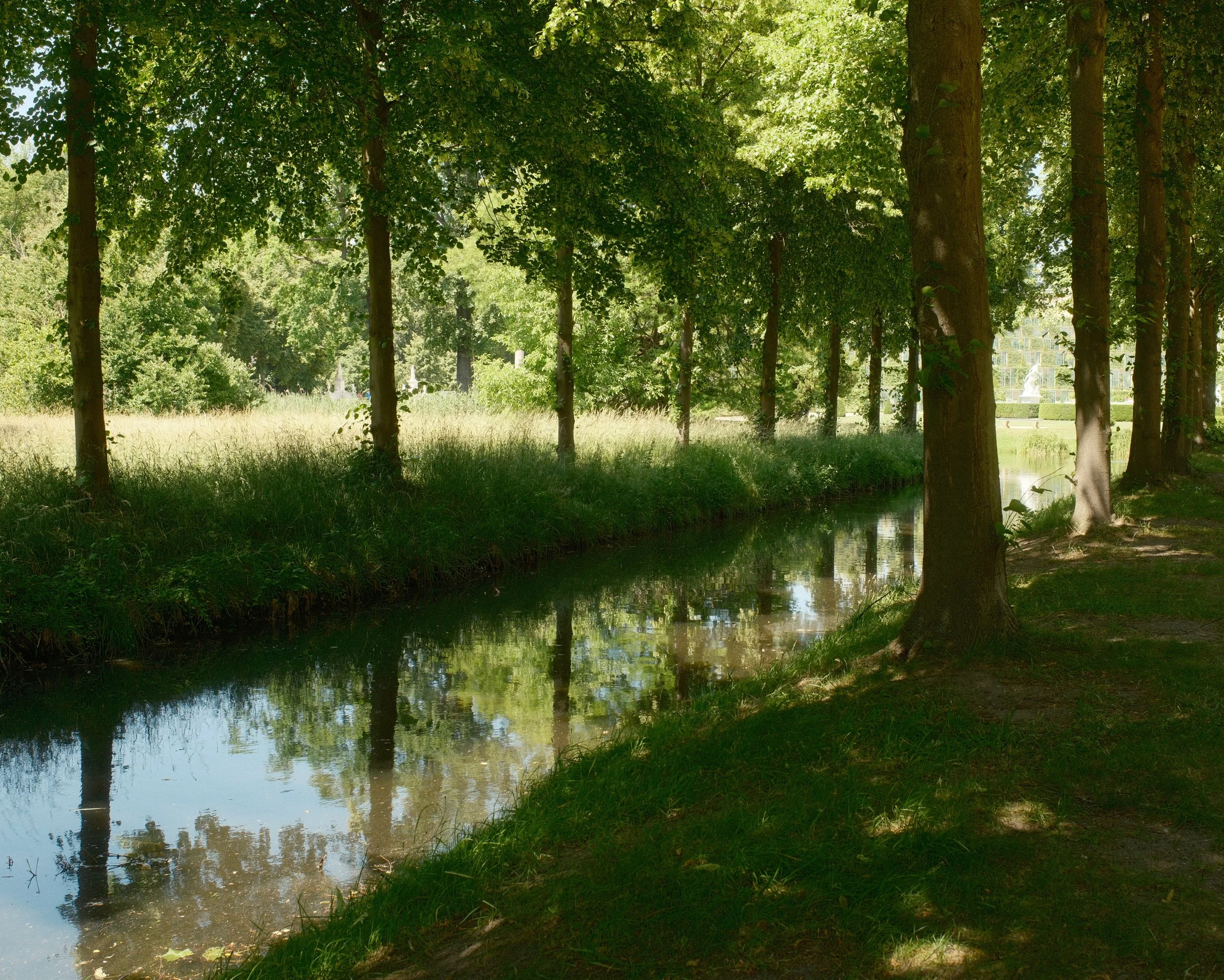
Potsdam, Germany, in front of Sanssouci Palace: the same canal lined with trees and reeds. NS - Céladon, a reinterpretation of the same RAF file.
What the camera allows, once you take the time to learn it
This is what my own recipes have tried to do since this site began. Film simulation, dynamic range, highlight and shadow tone curve, white balance, sharpness, grain, and clarity are all decisions I make myself, before the moment of capture, rather than receiving them as Fujifilm's engineers set them by default. The x100vi doesn't impose an interpretation on me. It gives me the tools to build my own.
And when a file deserves further work afterward, X Raw Studio makes it possible to apply a recipe to an existing RAF, in the same spirit as the development Nath-Sakura herself would carry out in her own workshop. This isn't a return to the automation of Tokyo's engineers. It's a continuation of interpretation begun before the shutter, using the same tools and the same intent.
Recent Fujifilm cameras, then, aren't simply devices that decide on the photographer's behalf. They're instruments of creation, provided one takes the time to learn them.
In closing
My thanks go to Nath-Sakura for this text, and to the member of Club 3e Œil who shared it. This kind of dialogue, even at a distance, is exactly what keeps a blog alive. If she ever reads this, I hope she'll see it as an extension of her thinking, and not an objection.
- Louis-Martin Ouellet