
A Question of Proximity
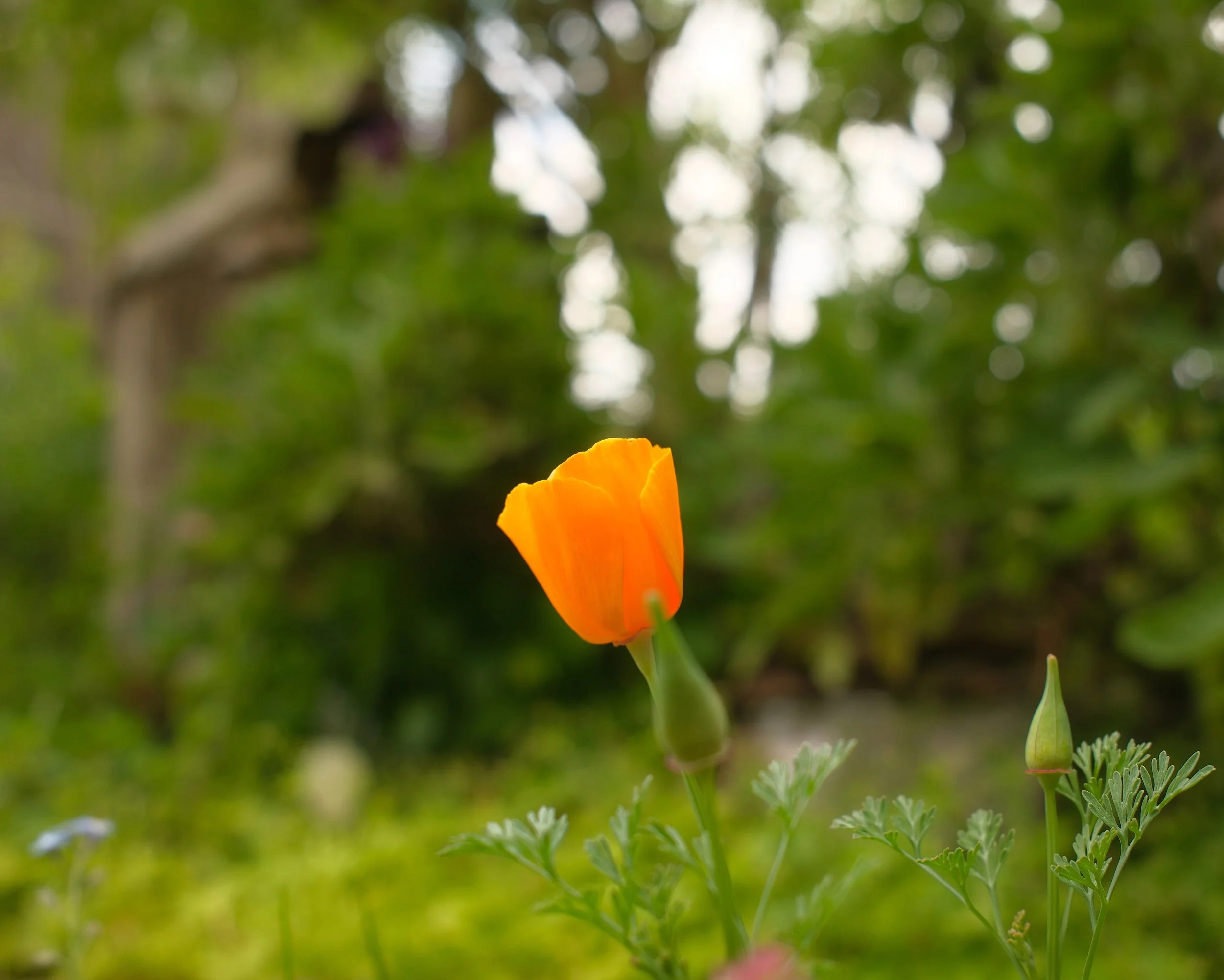
Berlin: a California poppy, approached up close. CW – Simple Standard.
In dialogue with Alex Coghe, on Leica, the X100vi, and what actually matters
Can a camera carry a philosophy? Or does philosophy always belong to the person holding the camera, whatever they happen to be holding?
This question stayed with me after reading a piece published on Fstoppers, where a photographer argues that Leica has never really sold cameras: the brand, he suggests, sells a way of staying attentive to the world, of favoring the encounter over the capture. I largely agree with this reading. But I think the philosophy he describes reaches well beyond a single brand.
The piece is titled Leica Was Never Really About Cameras, written by Alex Coghe, an Italian photographer partly based in Mexico. His argument deserves to be taken seriously before it's nuanced.
Alex describes a distinct culture of Leica users: people who choose proximity over distance, who accept the friction of the rangefinder and manual focus because that friction keeps them present to what they're photographing. He speaks of a responsibility toward the observed subject, of a slowness chosen rather than endured. On all of this, I have no objection. It's an accurate reading, and it echoes several things I've tried to express on this site since it began.
One detail in his piece caught my attention more than the rest. Alex's Leica experience wasn't built around an M, the legendary rangefinder at the heart of the myth, but around an X2, a fixed-lens APS-C compact. In the comments beneath his own article, some readers remind him of this: to a purist, an X2 isn't quite a Leica.
This detail struck me as revealing. My own path toward this philosophy didn't run through an M either. It ran through a Leica X Typ 113, the same kind of camera as Alex's: compact, fixed lens, APS-C sensor, no rangefinder.
Maybe that attention never needed a rangefinder to exist. Maybe it was already there, before it even had a name.
The X100vi itself, independent of any recipe, already carries this same discipline in its design: a fixed focal length that forces movement rather than zooming, a physical aperture ring and shutter speed dial, a hybrid viewfinder that allows a choice between optical and electronic depending on the moment. None of this is incidental. These are choices that deliberately slow down the act of shooting, in the same spirit as the friction Alex describes.
This friction doesn't stop at the camera either. It extends into the choice of the moment itself: some of the photos accompanying this piece required more waiting, recomposing, or patience than others, well before the shutter was ever pressed.
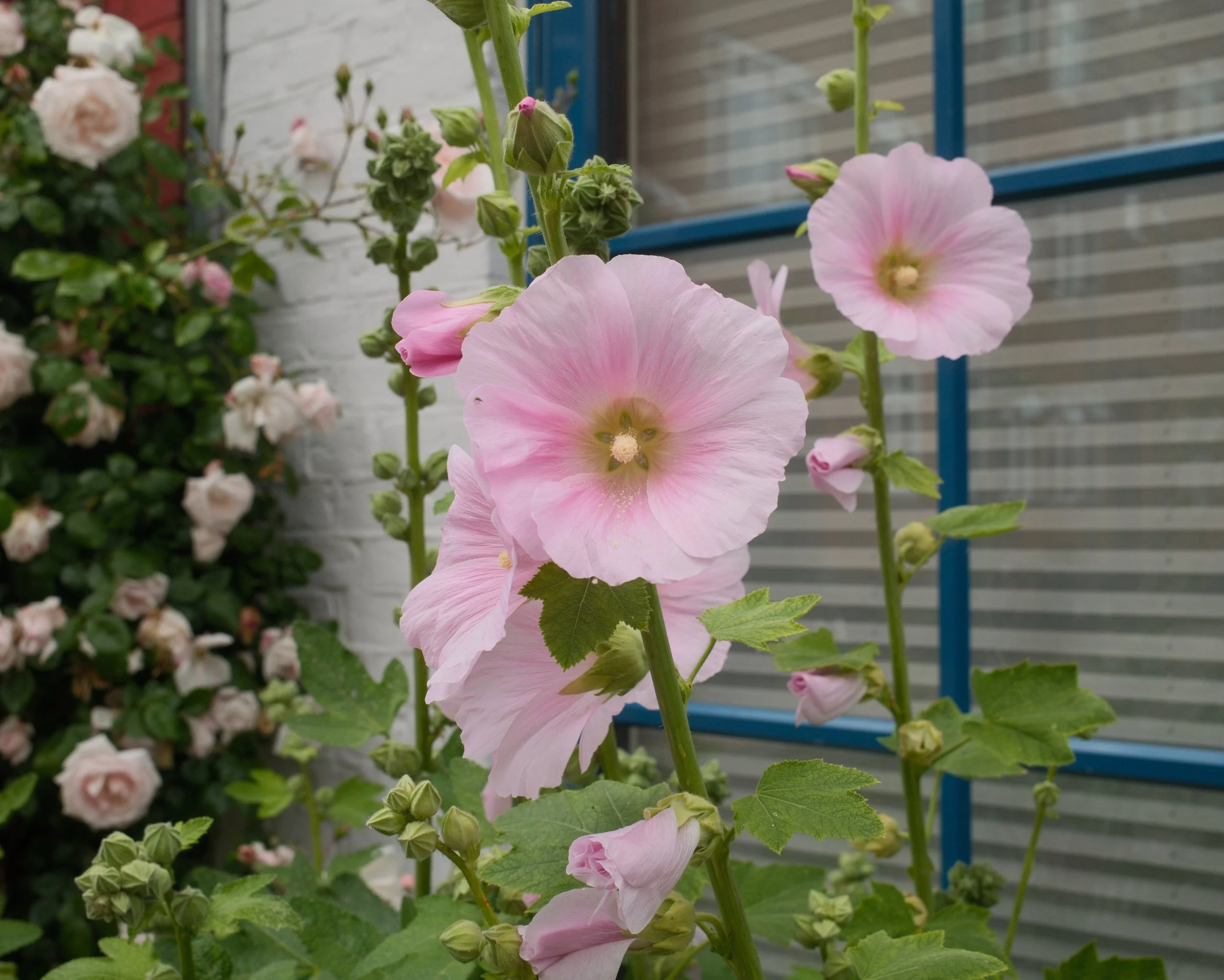
Aarhus: hollyhocks against a façade. CW – Typ 113.
Ask what makes a tool serious, and the usual answer points to hand-polished glass, mechanical tolerances, a century of optical heritage. But there's another kind of heritage, just as rigorous: that of film chemistry itself. Provia, Acros, Astia, Reala, and Velvia are not marketing inventions dreamed up by Fujifilm. They are real films, whose color science was studied and refined over decades before being translated into digital simulations.
A heritage that deserves the same consideration as glass and metal, simply passed down through a different path.
There's a difference between knowing a camera by hand and knowing it by eye alone. The Typ 113, I can hold, fire, compare one file against another the same day. The M9 and the Q3, I've never owned; my access to their rendering comes entirely from what other photographers have observed and shared, whole communities devoted to these cameras, whose images I've studied with the same rigor I'd apply to my own files.
Two methods, one requirement: observe before creating, regardless of the distance separating the photographer from the original camera.
This discipline runs through the whole CW series, and beyond, well before any question of Leica. CW - Simple Standard, CW - Mono Simple, CW - Victor Séguin, CW - VS Mono Soft : none of these recipes pays homage to any particular camera. Their material for observation lies elsewhere, in a light, an emulsion, an intuition that precedes any question of brand. NS – Céladon, more recent, extends the same method in yet another direction, born from a colored cup rather than a camera body.
As it happened, part of this same discipline crossed paths with Leica's history three times. CW – Typ 113 was built from the compact I could observe directly. CW – CCD KAF-18500 was built from the M9, approached through research and the observation of a body of images. CW – Q3 Analog was built from the brand's current model, its precision and three-dimensionality.
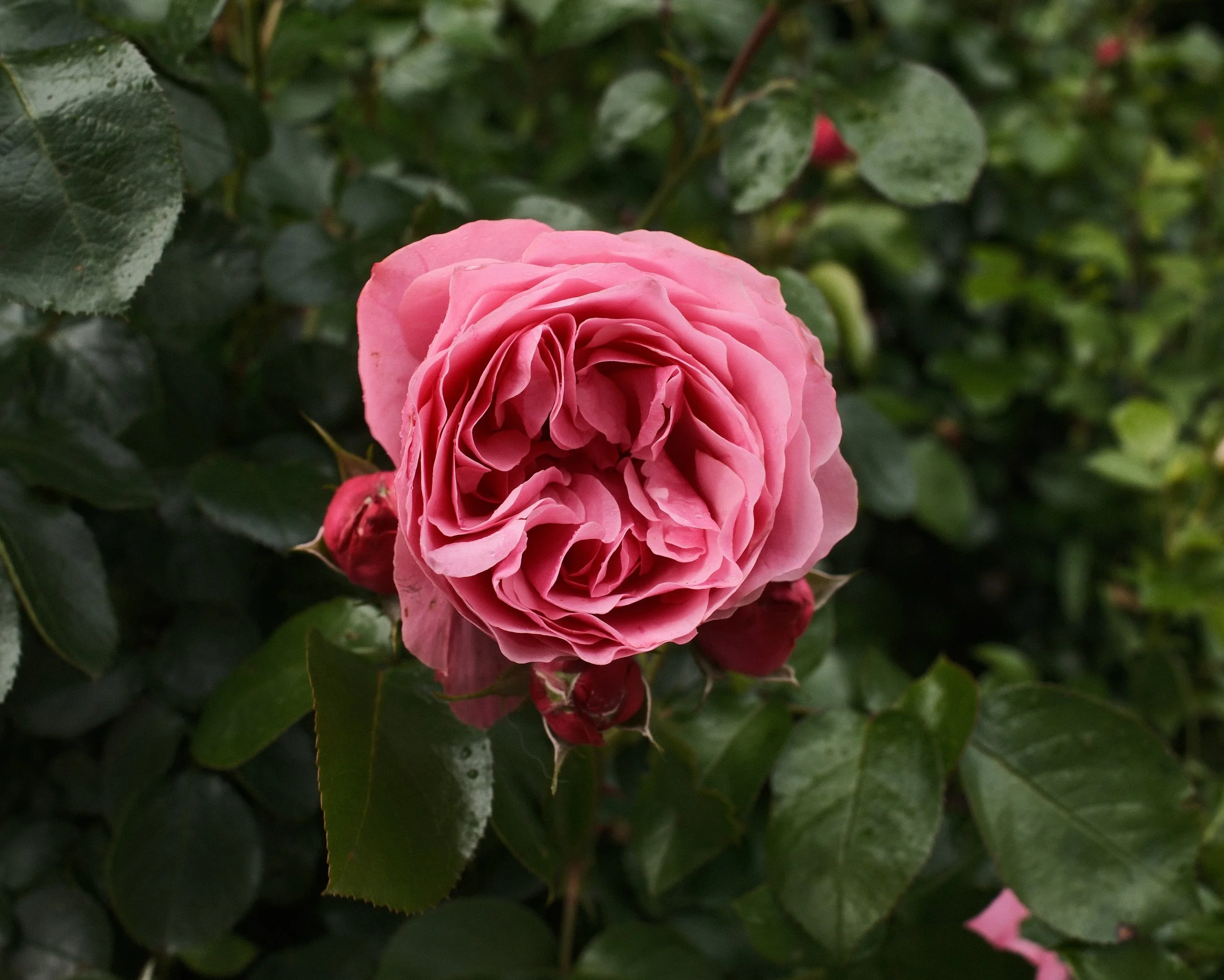
Laboe: a rose, in close-up. CW – CCD KAF-18500.
Three recipes out of seven, plus an entire family besides: attention never needed Leica to exist. It simply, on occasion, crossed its path.
Alex is right about the essential point: what matters isn't the camera, it's the proximity it allows. That proximity is attention paid to what's alive, presence in the world rather than its interruption. This site has sought the same thing since its first post. The recipes, the settings, the occasional homages to Leica: none of it has ever been an end in itself. They are means of arriving at the same thing Alex describes, staying close to what's alive, to light, to the moment, without technique intruding.
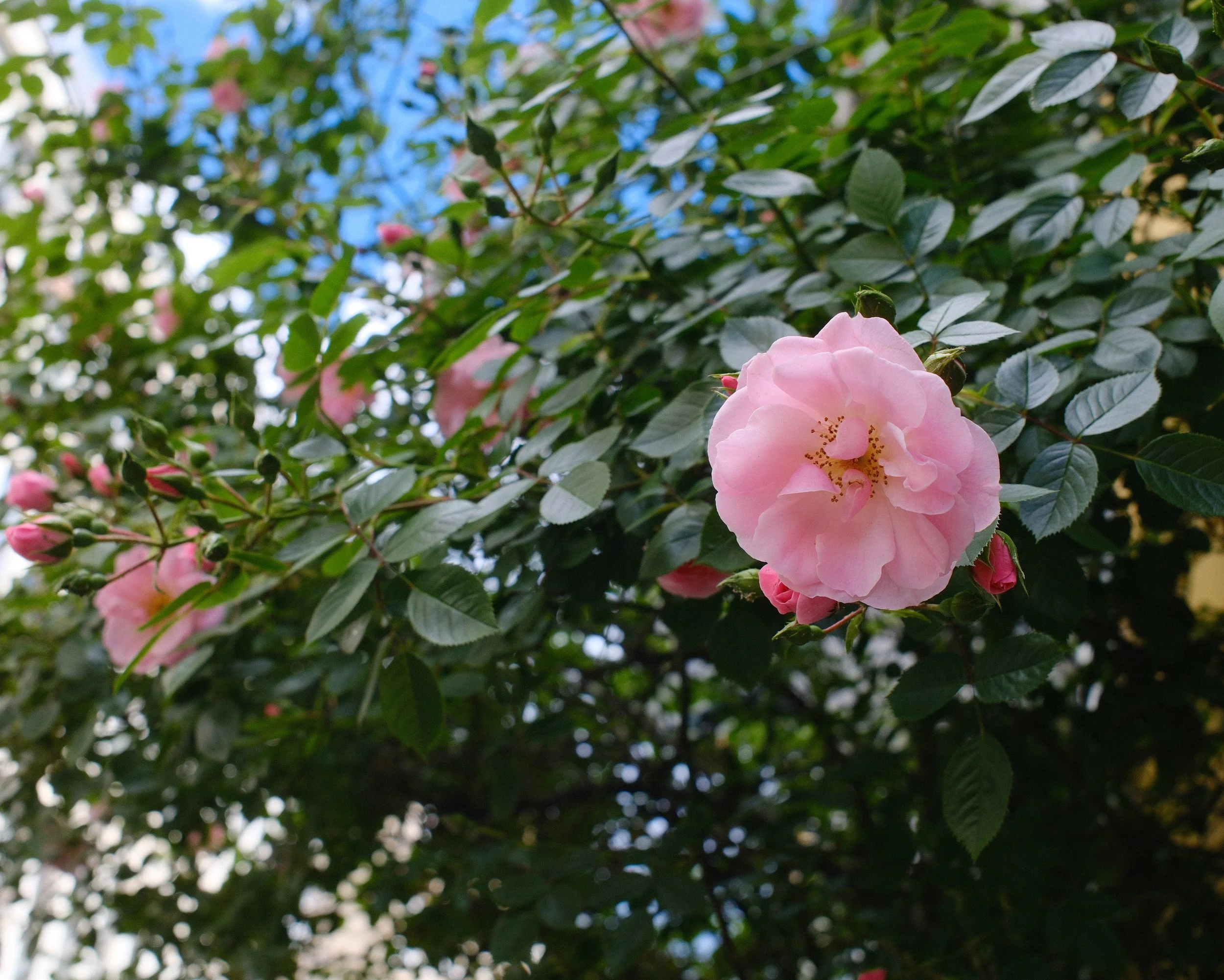
Copenhagen: wild roses against the sky. CW – Q3 Analog.
Attention doesn't follow the price of a tool. It precedes it, or it never comes at all.
The seriousness of a tool, then, isn't measured by its myth, but by what it allows an attentive user to build over time. On this exact point, the X100vi need not envy anyone.
- Louis-Martin Ouellet