
You Don't Wake What Never Slept
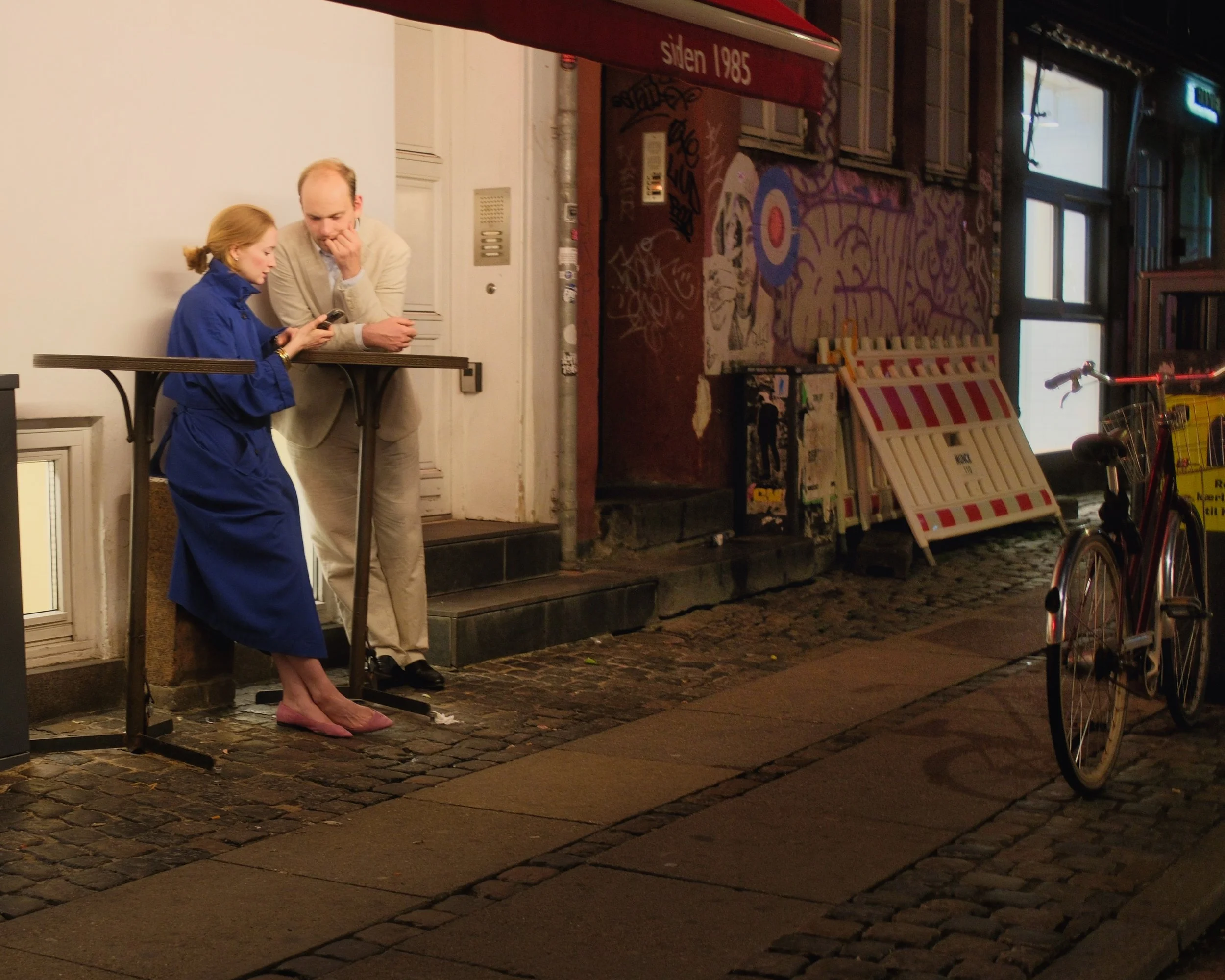
Copenhagen : A couple at a table under an awning, phone in hand, cobblestones and graffiti. (CW - Typ 113)
I capture the scene in a fraction of a second, without thinking twice: a couple at a table beneath an awning, their faces well defined in the ambient light, night fallen over the cobblestones. The kind of moment that vanishes as soon as one hesitates. No tripod, only the X100vi, and the certainty that it will do the job even if my hands are not perfectly still.
It's this photo, taken almost handheld in the dark, that I look at again a few weeks later, thinking back to the time it took me before I could get this camera: a reasonable wait compared to that of other buyers, but long enough to reflect on what one really expects from a camera.
It's that same week that an article from DPReview catches my eye: « Is the camera industry waking up to enthusiast demand? » My first reaction was to smile. The X100vi, for its part, never needed to wake up.
The article cites the Panasonic L10, the Sony RX1R III, the Sony RX10 V and the Canon PowerShot V1 as evidence of this renewed interest. Four cameras, three manufacturers, and yet one name is missing from the list: Fujifilm. If the compact industry is only now waking up to enthusiast demand in 2026, how do we explain that the X100v went viral as early as 2022, with wait times of six to nine months? Or that the X100vi, launched in 2024, broke, on the very day of its launch, every preorder record ever set, across all brands?
And then there is Ricoh. I have never held this camera, but I owe it the same honesty, given how much good I hear about it. Its GR line has existed since 1996 on film, even before digital, and its GR III kept the public's favor for seven years, a price that climbs rather than falls, a trend that seems to be repeating itself with the new generation, the GR IV. It is not a camera inferior to the X100vi: it is a different camera, designed for those who want the most discreet and most compact camera possible, even if it means giving up certain features to get there.
The real pretext for this post is IBIS. In 2024, Fujifilm brought stabilization into the very body of the X100vi, a five-axis mechanism offering up to six stops of compensation, a first for the series. The feat is having done it without betraying its compactness: forty-three grams more and two millimeters of additional thickness, barely perceptible in hand. The kind of engineering feat that goes almost unnoticed because it is so well integrated, and one that deserves attention even before we talk about price, because it concretely changes what one can photograph handheld.
The Leica Q3 and the Sony RX1R III, for their part, have neither one nor the other of this stabilization. The former sells for around four times the price of the X100vi, with a lens stabilized optically rather than a sensor stabilized mechanically, a lens that has remained essentially the same since the first Q, in 2015. The latter sells for around three times that price and offers no stabilization at all, with a lens and a design carried over almost intact from the RX1R II, also from 2015. Yet this is not a technical impossibility: the Sony a7C II houses a full-frame sensor and a five-axis, seven-stop stabilization system in a camera barely bigger than an APS-C camera. Paying a premium for a brand or a heritage is easily justified. But the gap becomes harder to explain once isolated from the sheer photographic quality produced, in difficult conditions, by a camera at a fraction of the price.
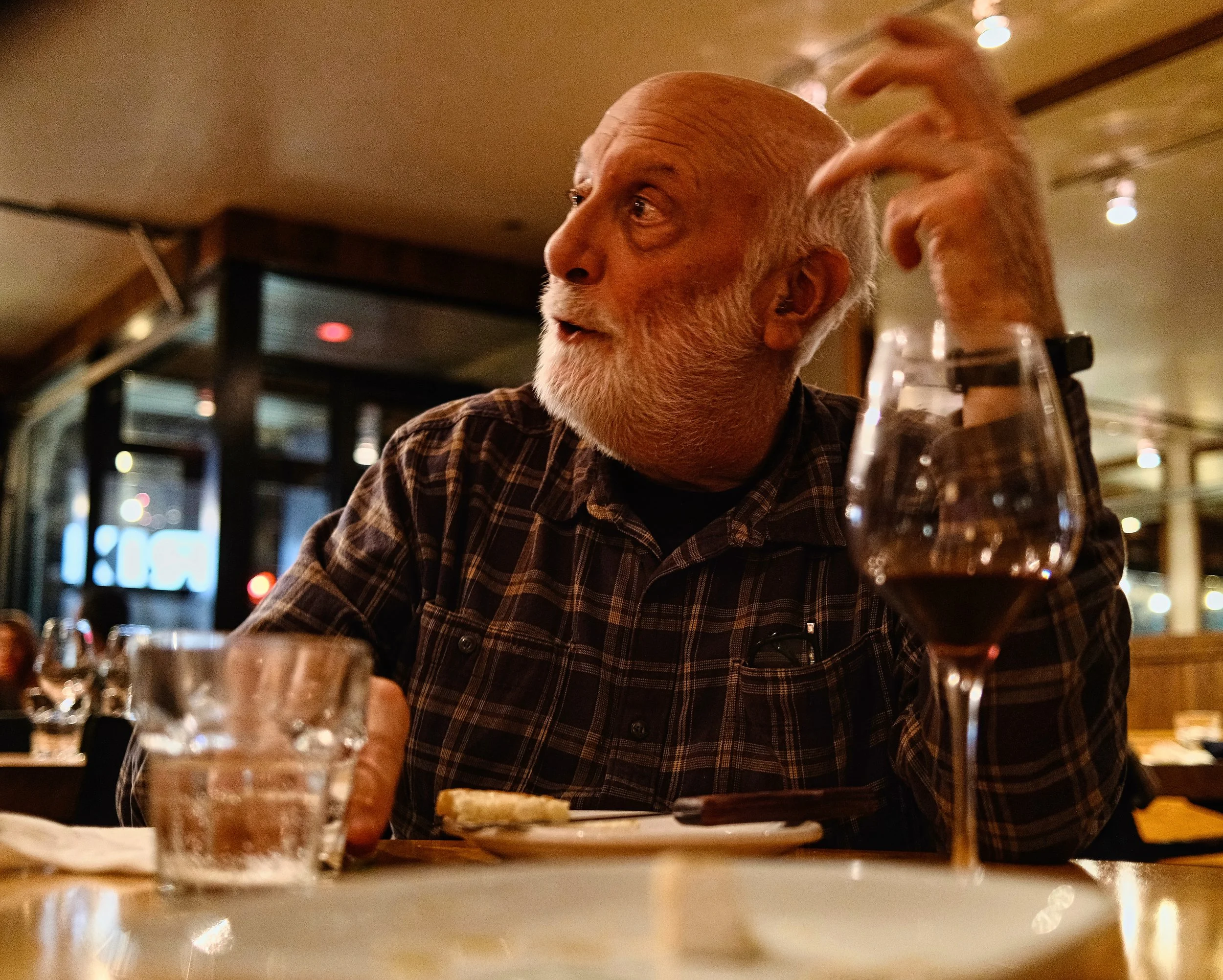
Restaurant Les Canailles : Marc making his case (CW - CCD KAF-18500)
There are also these table photos, taken one evening when the only light came from the ambient reflection in the glasses and the falling glow of a streetlamp, outside, with no flash. The kind of dim light where the scene tells itself more than it documents itself. With a Leica Q3 or a Sony RX1R III in hand, I would perhaps have needed a tripod, certainly a higher ISO, and even sometimes had to give up on the photo. The X100vi, for its part, simply let me go on living the evening.
I speak here only of the X100vi because it is my camera, the one I know by heart. But what I am describing, these honest trade-offs between price, functionality and quality, is not an exception specific to this model: it is a constant at Fujifilm, found just as much across the X-T, the X-E, or even the medium-format GFX.
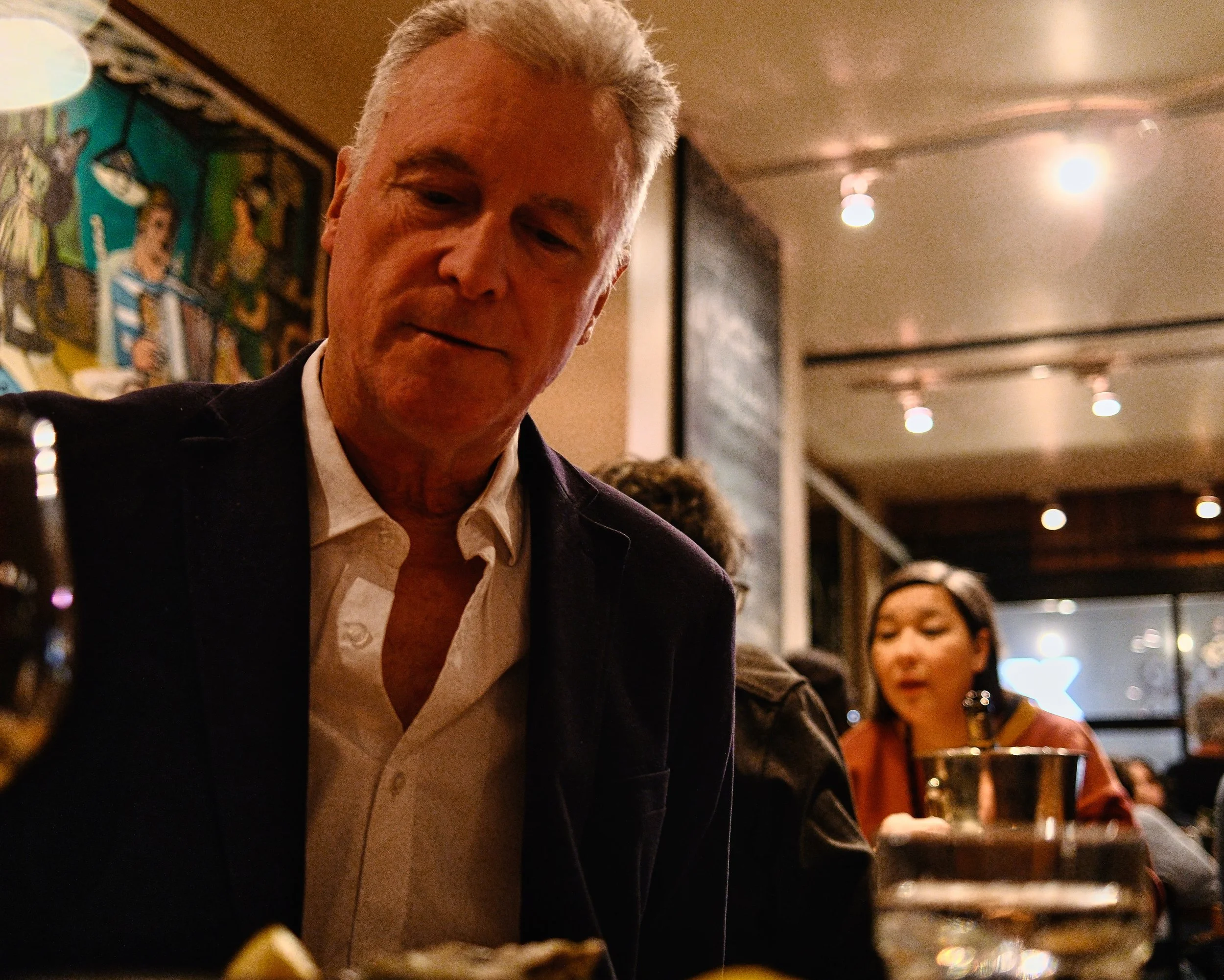
Restaurant Les Canailles : Marco, sharp in his Italian jacket (CW - CCD KAF-18500)
In the end, this very absence speaks volumes: a company that has no need to be mentioned in an article about an industry waking up, because it never had to fall asleep. It is a serious company, one that offers features that truly matter rather than a checklist. Enough to allow a photographer to fully express themselves as a photographer, and to develop real confidence in what they produce.
This blog is written for you, whichever Fujifilm camera you own: it exists to help you know it well enough to draw your own recipes from it. Your camera, whatever it may be, has nothing to be ashamed of by comparison. It has everything it needs to produce photos of exceptional quality, and to do so in keeping with your own signature.
- Louis-Martin Ouellet