
CW – Q3 Analog
A recipe built on research, homage, and an honest gap
By the time I reached the seventh recipe, a pattern had emerged that I hadn't planned.
The cameras that inspired this series fell into two categories. Those I had held in my hands : the Leica X Typ 113, borrowed from my brother's shelf of forgotten objects, whose files had seized me one December afternoon. And those I had only known through the accounts of others : the Leica M9 and its legendary CCD sensor, reconstructed from forum posts and photographer testimonials into something I could approximate but never verify.
The Leica Q3 belongs to the second category. I have never owned one. Perhaps one day, who knows? But before considering anything, I asked myself the same question as with the M9: could I approximate its character with enough rigor that the recipe might spare me the purchase? Or, on the contrary, that the exercise might convince me the original is worth it? What I know about its rendering comes entirely from the photographers who use it : their descriptions of its precision, its three-dimensionality and its particular quality of rendering light as something honest and unmanipulated.
And yet it belonged in this series. Not despite never having used it, but because of everything it represents.
The compact philosophy
Look at the cameras that appear across theses articles and a preference becomes visible. The Fujifilm X100vi, a compact with a fixed lens. The Leica X Typ 113, a compact with a fixed lens. The Leica M9, the one exception, an interchangeable-lens rangefinder whose system philosophy is not mine. I have no interest in carrying multiple lenses or building a system around optical variety.
The Leica Q3 is a compact with a fixed lens. It belongs here.
It also represents the contemporary end of the spectrum this series traces, from the gentle imperfection of a 2014 sensor to the precise, modern rendering of one of the most technically accomplished compact cameras currently made.
OWH Analog and the acknowledged homage
Øyvind Nordhagen is a street and documentary photographer based in Oslo who publishes recipes and photographic essays on Medium. His recipe OWH Analog — built on Astia, with Auto White Priority white balance and a distinctive approach to noise reduction — had been part of my X100vi's rotation for some time. I used it regularly. I liked what it did: modern colors with an organic quality, skin tones that felt honest, a rendering that sat comfortably between clean and warm.
When I reached the seventh slot in my camera — the last position not yet occupied by a CW recipe — I wanted to build something that honored OWH Analog while making it fully my own. A variation that kept its soul while pushing the rendering closer to what I was reading about the Q3: precise, three-dimensional, honest light.
Øyvind Nordhagen's original recipe is available on his Medium page. I have chosen not to reproduce his exact parameters here out of respect for his work.
A recipe built to last
This is the only recipe in this series that arrived without a single defining anecdote, no borrowed camera, no missed photographs on a Mediterranean crossing, no garage full of cousins and no film that seized me in a darkened theatre.
And perhaps that is appropriate. The recipes that preceded it each carried the weight of a specific moment, a specific light, a specific realization. CW – Q3 Analog carries something different: the accumulated logic of everything that came before it.
It is built on research, on a deep respect for someone else's work, and on the belief that a series about slow photography should conclude not with drama but with quiet intention. An image that feels considered rather than filtered. Like it was taken with a good lens and good light, and left mostly alone.
That phrase — an image that feels considered rather than filtered — appears in Øyvind Nordhagen's description of his own recipe. I could not have said it better. I kept it as my guiding principle.
The seven recipes in this series trace a journey from technical foundation to cinematic inspiration to historical archaeology to humble homage. CW – Q3 Analog is where that journey arrives, not at a destination, but at a disposition. A way of seeing that has been refined, tested, and distilled into seven slots in a compact camera.
Slow photography. Images that whisper rather than shout.
That is what this series has always been about. And that is what this recipe, in the end, is for.
The adjustments and their intent
Dynamic Range DR200 allows the sensor to respond naturally to light without excessive intervention, producing a tonal range that feels alive rather than managed.
Tone curve at H+0 / S+0 returns to neutral, letting the light speak without added drama, in keeping with how Leica profiles treat natural light.
Sharpness +2 anchors the rendering in a precision that honors the optical quality this recipe seeks to evoke.
Color +2 moves toward something naturalistic and documentary, present without being aggressive.
WB offset R+1 / B+0, just a whisper of warmth, keeping things neutral enough for interiors and overcast light.
Grain: Weak / Small adds fine, organic texture, present without ever distracting.
Color Chrome FX Blue: Weak keeps blues and shadows from drifting into cyan, particularly useful in overcast conditions and golden hour.
Full settings
- Film Simulation: Astia
- Dynamic Range: DR200
- Tone Curve: H+0 / S+0
- Sharpness: +2
- Color: +2
- White Balance: Auto White Priority, R+1 / B+0
- Clarity: +1
- Grain: Weak / Small
- ISO: Auto, 250 - 3200
- Noise Reduction: –4
- Color Chrome Effect: Weak
- Color Chrome FX Blue: Weak
- Exposure Compensation: +1/3 to +2/3 EV
When to use it
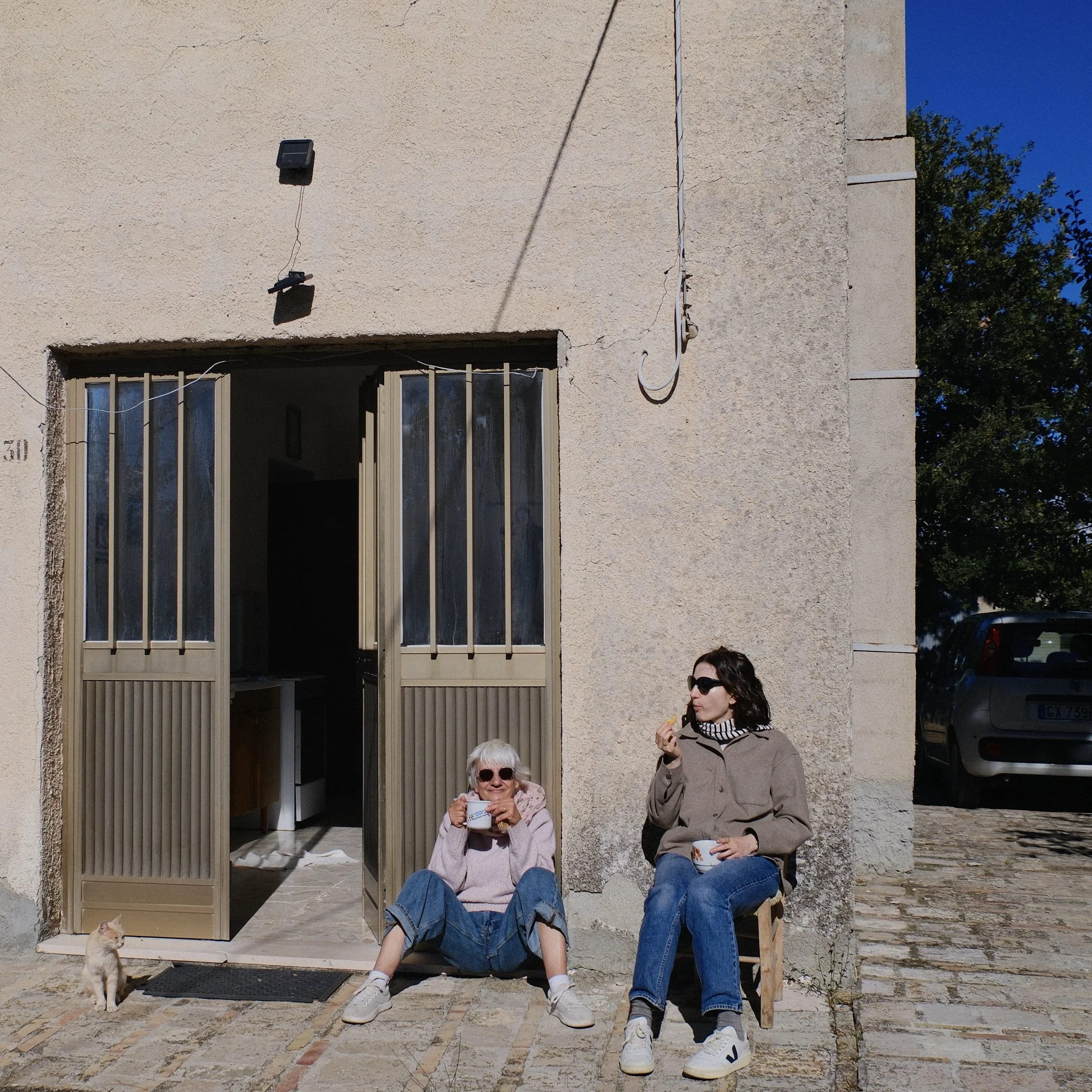
CW – Q3 Analog is a versatile and generous recipe. It performs well indoors and out, in overcast conditions as well as in the warm light of late afternoon. It is the recipe you reach for when you want a modern, organic, and honest rendering, without trying to impose any particular mood.
It is a shoot and keep recipe. The files it produces are already complete at the moment of the shutter press.
Which is, in the end, the whole point of a recipe.