
Afterword
On Seeing Slowly : The X100vi, seven simulations and the meaning of CW
A compact camera with a fixed lens is, among other things, a discipline.
It cannot zoom. It cannot change its perspective through the choice of a different focal length. It asks the photographer to move — physically, deliberately — or to accept the frame as it is. For some photographers, this is a limitation. For others — those who believe that constraints liberate rather than restrict, that a single focal length is an invitation to see more deeply rather than more broadly — it is something closer to a gift. The Fujifilm X100vi belongs to this second philosophy. Forty megapixels in a body that fits in a jacket pocket. A lens that sees the world at 35mm equivalent, close to how the human eye naturally frames a scene. Seven customizable recipe slots that allow the camera to shift character completely depending on what the moment calls for.
Seven slots. Seven simulations. Seven different cameras in one.
On the choice of simulations
Each recipe in this series is built on a different Fujifilm film simulation. The choice of simulation for each recipe was never arbitrary, Each one was selected for what it does that no other simulation quite replicates.
Provia, the most neutral and balanced of Fujifilm's color simulations, became the foundation for clean, honest everyday color. Monochrome+R, with its enhanced tonal separation in warm-toned subjects, provided the right tool for a modern, precise black and white. Reala Ace, with its natural and organic color rendering, came closest to the gentle character of a beloved Leica. PRO Neg Std, soft and skin-tone oriented, carried the cinematic naturalism of a film that moved me. ACROS, Fujifilm's most sophisticated monochrome simulation, brought the warmth and film-like tonal transitions that a cinematic black and white demanded. Eterna Cinema, designed for motion picture work, offered the tonal transitions and highlight rolloff closest to what a CCD sensor does at a hardware level. And Astia, warm and three-dimensional, provided the organic foundation for a recipe built on homage and careful listening.
Classic Chrome — Fujifilm's most widely used simulation, the one that appears in the majority of recipes circulating online — does not appear once in this series. This too was deliberate. Classic Chrome is excellent. But it has become so prevalent that it risks becoming a reflex rather than a choice — a filter rather than a vision. The intention here was always to treat each simulation as a distinct instrument, chosen for its specific character rather than its familiarity.
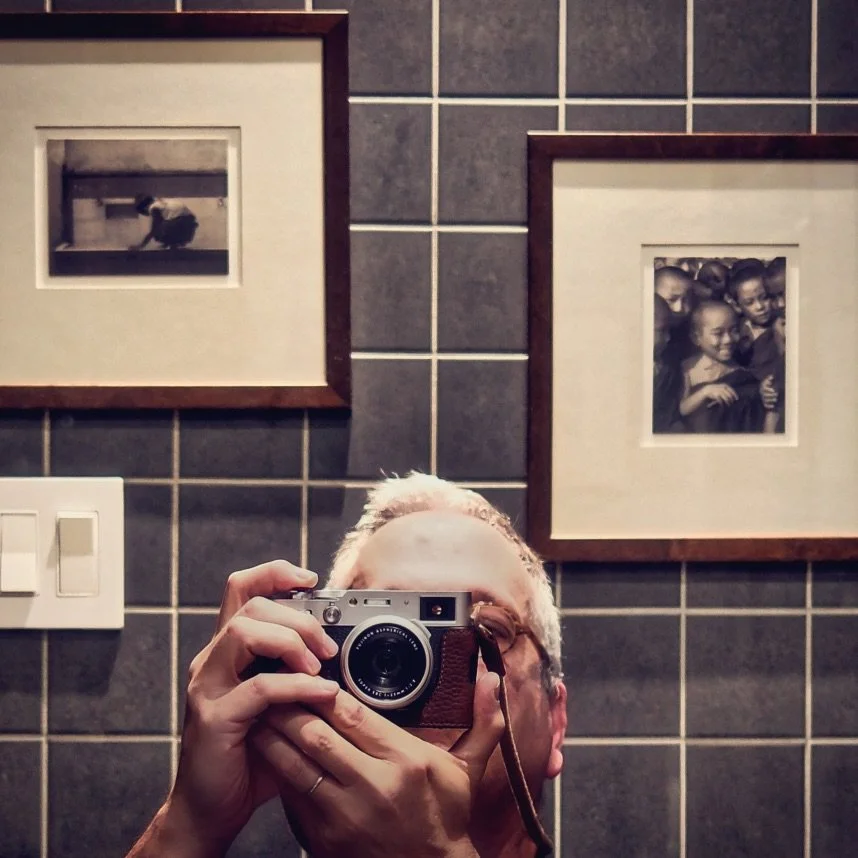
What CW means
Throughout this series, the prefix CW has appeared on every recipe without explanation. It is my personal signature, nothing more, I said, and nothing less.
That was true, and it was also incomplete.
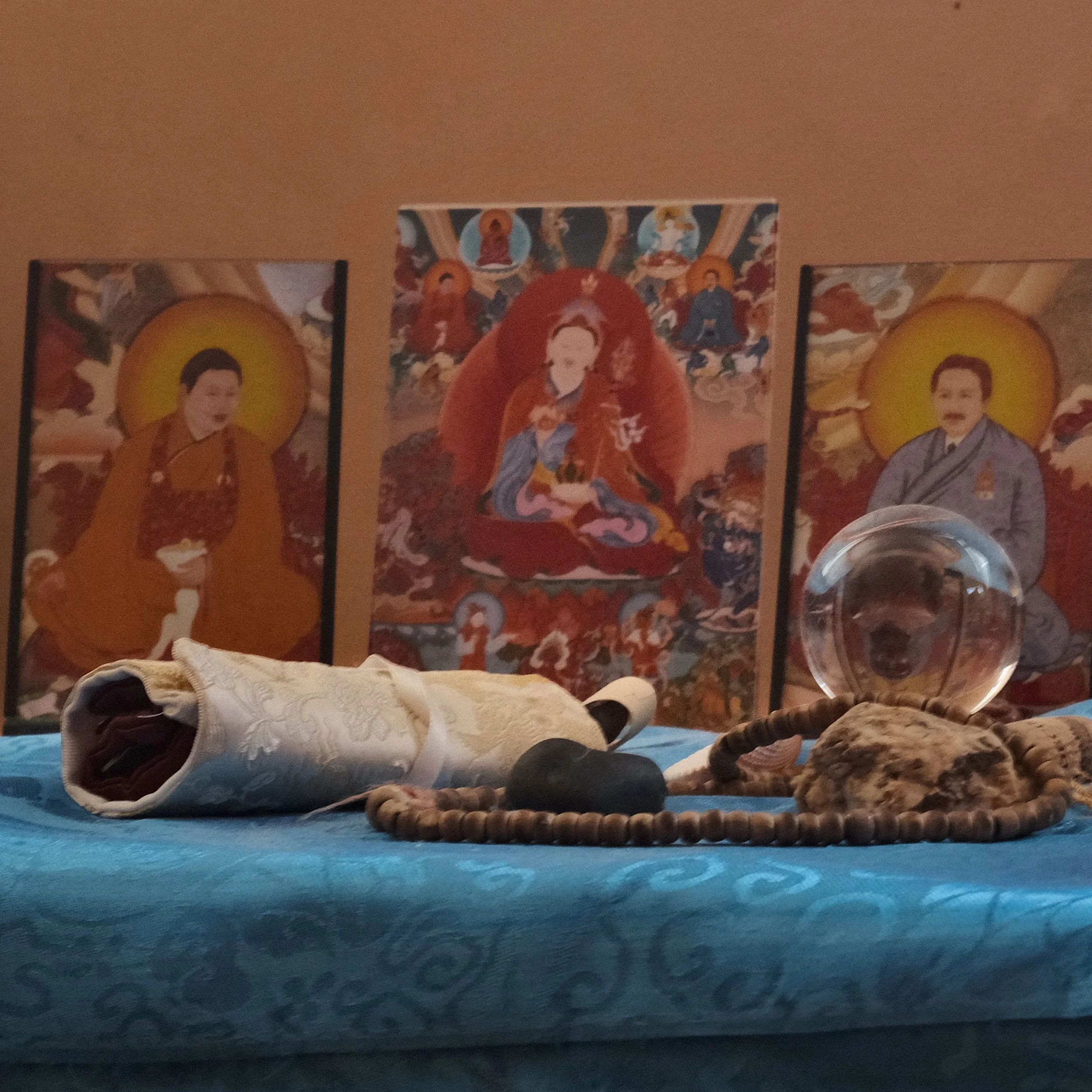
CW stands for Crazy Wisdom, the name of a lineage within Tibetan Buddhism introduced to North America by Chögyam Trungpa Rinpoche, one of the most influential Buddhist teachers of the twentieth century. I am a student of this tradition. The initials are a quiet acknowledgment of who I am, embedded in the work without announcing itself.
I mention it here because it turns out to be more relevant than I initially let on.
Miksang — the good eye
Among Chögyam Trungpa's many contributions to Western culture was his development of what he called Dharma Art , a contemplative approach to artistic practice rooted in direct perception rather than concept or ambition. From these teachings, a discipline of photography emerged: Miksang, a Tibetan word meaning good eye.
Miksang contemplative photography is built on a deceptively simple premise: that the most important training for a photographer is not technical, but perceptual. Before composition, before exposure, before choosing the recipe or the simulation, there is seeing. Seeing clearly — directly and without mediation — the world as it actually appears, before the mind begins its work of labeling, judging, preferring, and interpreting.
In Miksang, the camera is not a tool for capturing what you have already decided is worth capturing. It is an instrument for making visible what direct perception has already seen : a translation of clear seeing into a physical image.
The practice asks the photographer to slow down. To be present. To resist the impulse to hunt for the decisive moment, the dramatic composition, the technically perfect image. To trust, instead, the ordinary magic of what is actually there.
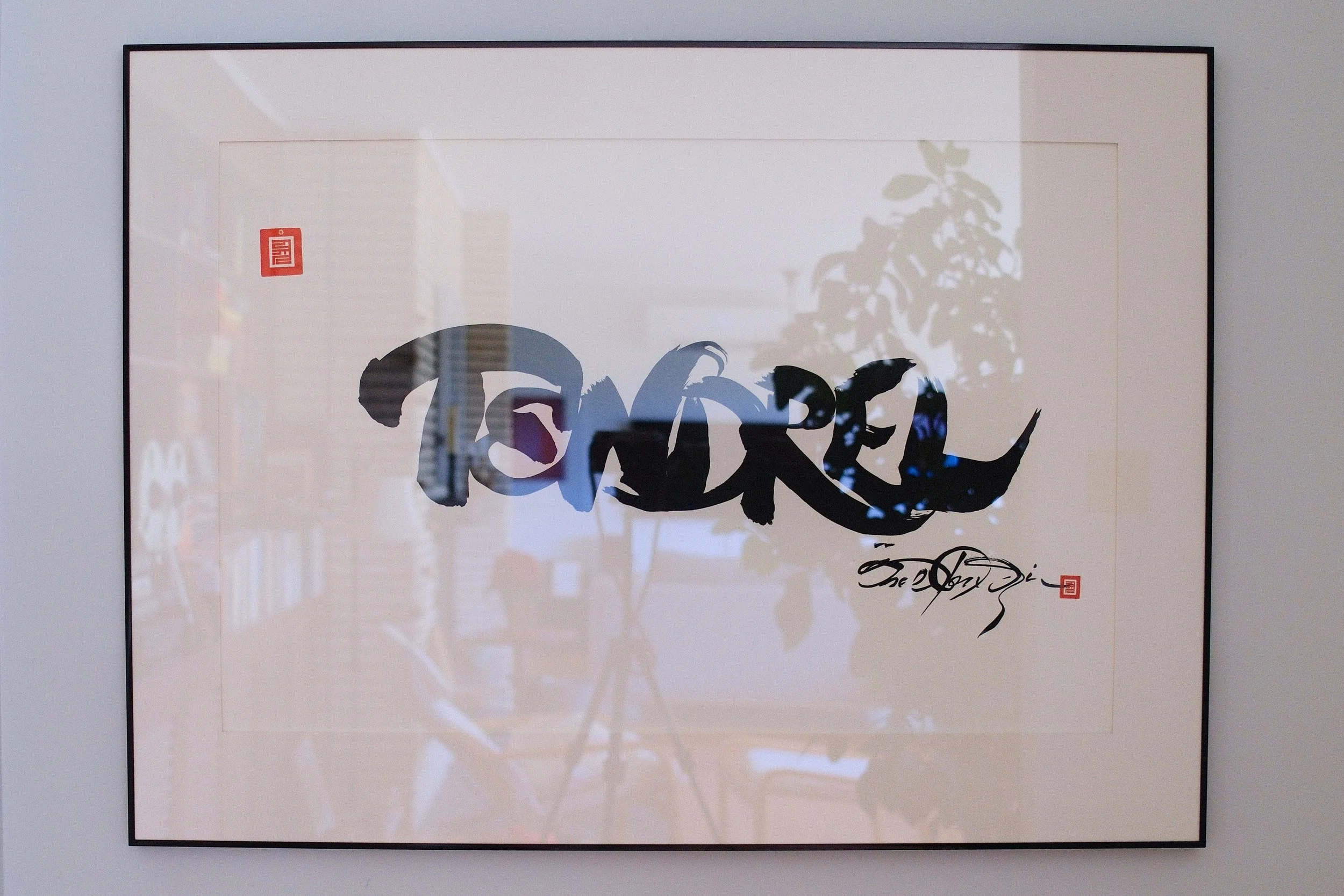
The connection that was always there
Reading back through these nine articles, I recognize Miksang everywhere, not because I planned it, but because it was already present in how I photograph.
The table photographs. The borrowed afternoon light through sheer curtains. The oysters in a garage. The amber of a glass of Scotch. A woman's face in December. None of these are dramatic subjects. None of them announce themselves as photographs worth taking. They are ordinary moments, seen clearly, held long enough to be worthy of a shutter press.
Images that whisper rather than shout — the phrase I have used throughout this series — is, I now realize, a description of Miksang practice translated into the language of film simulation recipes.
The X100vi, with its fixed lens and its seven recipe slots, turns out to be an almost ideal instrument for contemplative photography. It does not invite the restless switching of lenses or the pursuit of optical variety. It asks for presence. It rewards patience. It produces its best images when the photographer is already still.
The CW recipes are, in this sense, not just aesthetic choices. They are preparations for a particular quality of attention. A way of arriving at a scene already open to what is there, rather than imposing what one hoped to find.
An invitation
Chögyam Trungpa described the contemplative approach to perception in terms that have stayed with me: to relax into a cloud by seeing it. Not to analyze it, not to photograph it because it is beautiful, not to wait for it to become more dramatic, but simply to be with it, fully, in the moment of perception.
That quality of relaxed, open attention is what I hope these recipes make possible, not just technically, but experientially. A recipe that produces soft highlights and natural skin tones is also, in a small way, an invitation to slow down. To be present with the light. To trust what is already there.
Slow photography. The good eye. A compact camera, seven simulations, and the quiet practice of seeing clearly.
That is what CW has always meant.
Thank you for reading.
I hope you find something useful, or at least something that makes you want to go outside, slow down, and look.