
The Leica X Typ 113: the camera nobody looks at
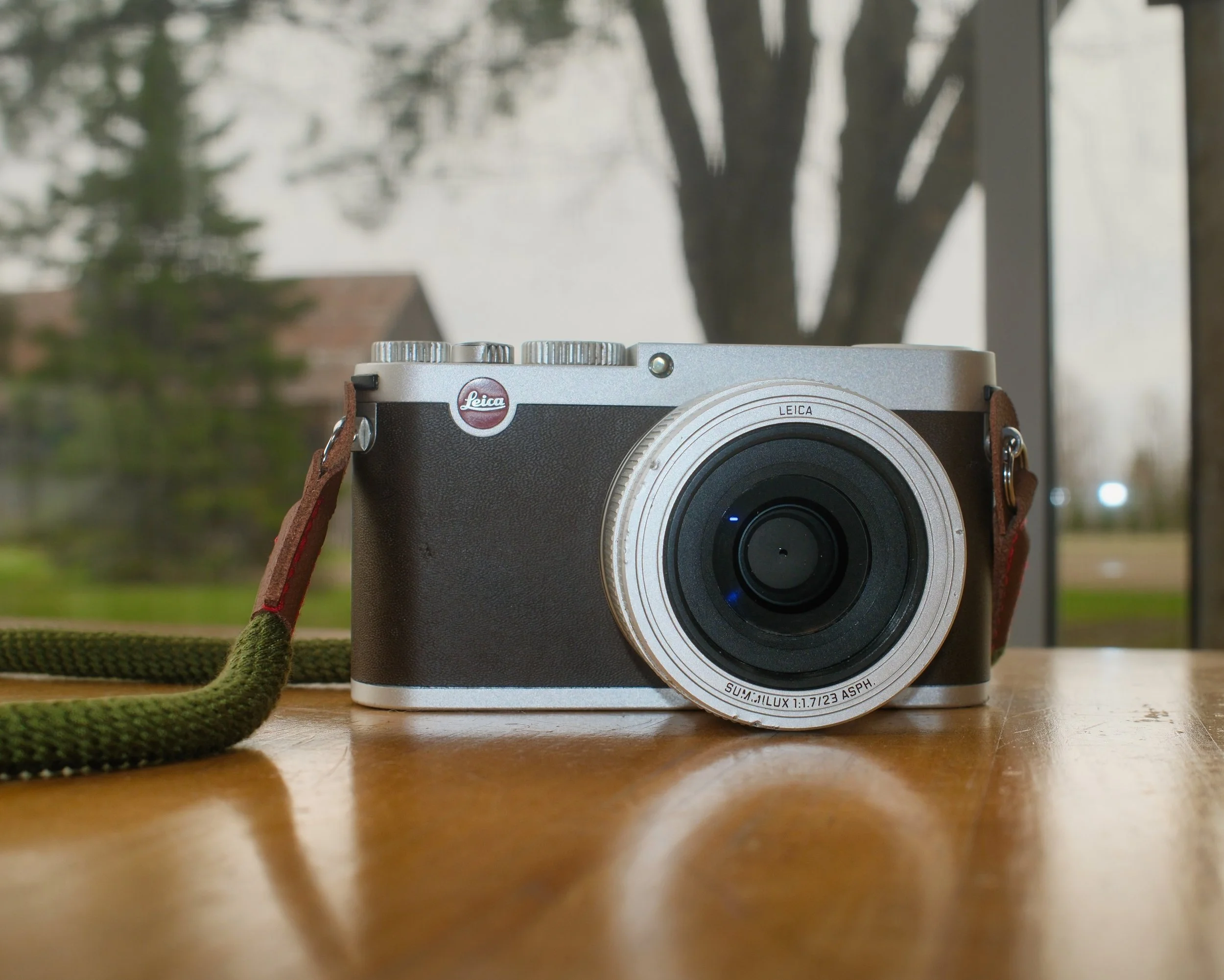
The Leica X (Typ 113). Photo taken with an X100vi and its built-in flash (Film recipe CW - Typ 113).
Some cameras make a lot of noise
Launches, reviews, YouTube videos and Reddit threads that never seem to end. And then there are others that exist in silence, that appeared quietly, produced remarkable images, and were put away on a shelf without anyone really paying attention.
The Leica X Typ 113 is one of those.
Launched in September 2014, fitted with a fixed Summilux 23mm f/1.7 lens — the equivalent of a 35mm in full frame — and a 16-megapixel APS-C sensor, it had barely nine months of existence before the Leica Q arrived with its full-frame sensor, built-in electronic viewfinder and 28mm f/1.7 lens. In the Leica community, that launch eclipsed everything. The Typ 113, already overshadowed by faster and better-equipped competitors, simply never had time to exist.
What nobody said loudly enough at the time is that it produces images of extraordinary tonal quality. And what I still cannot understand is why this camera remains so little known today, among Leica enthusiasts and on social media in general. A camera that produces such images deserves better than obscurity.
Under the radar, and for good reasons
The Typ 113 never received a firmware update. Not one. For some, that is a sign of abandonment. For me, it is exactly the opposite.
When a camera ships without ever needing a correction, two readings are possible: either nobody cared, or the product was finished from the start. In the case of the Typ 113, I lean toward the second. My reading is that Leica had a precise goal, a clear vision of the rendering they wanted, and delivered exactly what they had planned. The original firmware is the final firmware. There was nothing to fix because there was nothing to improve in the direction they had set for themselves.
That is a rare form of coherence.
A successful marriage between lens and sensor
What gives this camera its character is not any single component. It is the dialogue between them.
The Summilux 23mm f/1.7 lens is excellent: sharp at the centre from wide open, with soft and warm out-of-focus areas, and a quality of light transmission that recalls the great Leica optics of an earlier era. The sensor renders colour with a restraint and depth that modern sensors often struggle to match. Their superiority in resolution and noise performance changes nothing about that. The warm tones of my cat’s coat are rendered with a naturalness that few modern sensors can match. Highlights surrender their detail slowly and gracefully. Blacks are rich without being crushed.
Sixteen megapixels, an APS-C sensor and a camera from 2014: on paper, nothing impressive. In practice, a hidden treasure, provided the lens and sensor have been carefully tuned to work together. And that is precisely what Leica did.
There is also something ironic worth noting. Leica no longer offers this configuration today. Neither the Q3 nor the Q3 43 provide a fixed lens equivalent to 35mm in a compact body. The Typ 113 remains, to this day, the only fixed-lens compact camera the brand has ever offered at this focal length. For anyone looking for exactly that in the Leica world, the used market is the only answer.
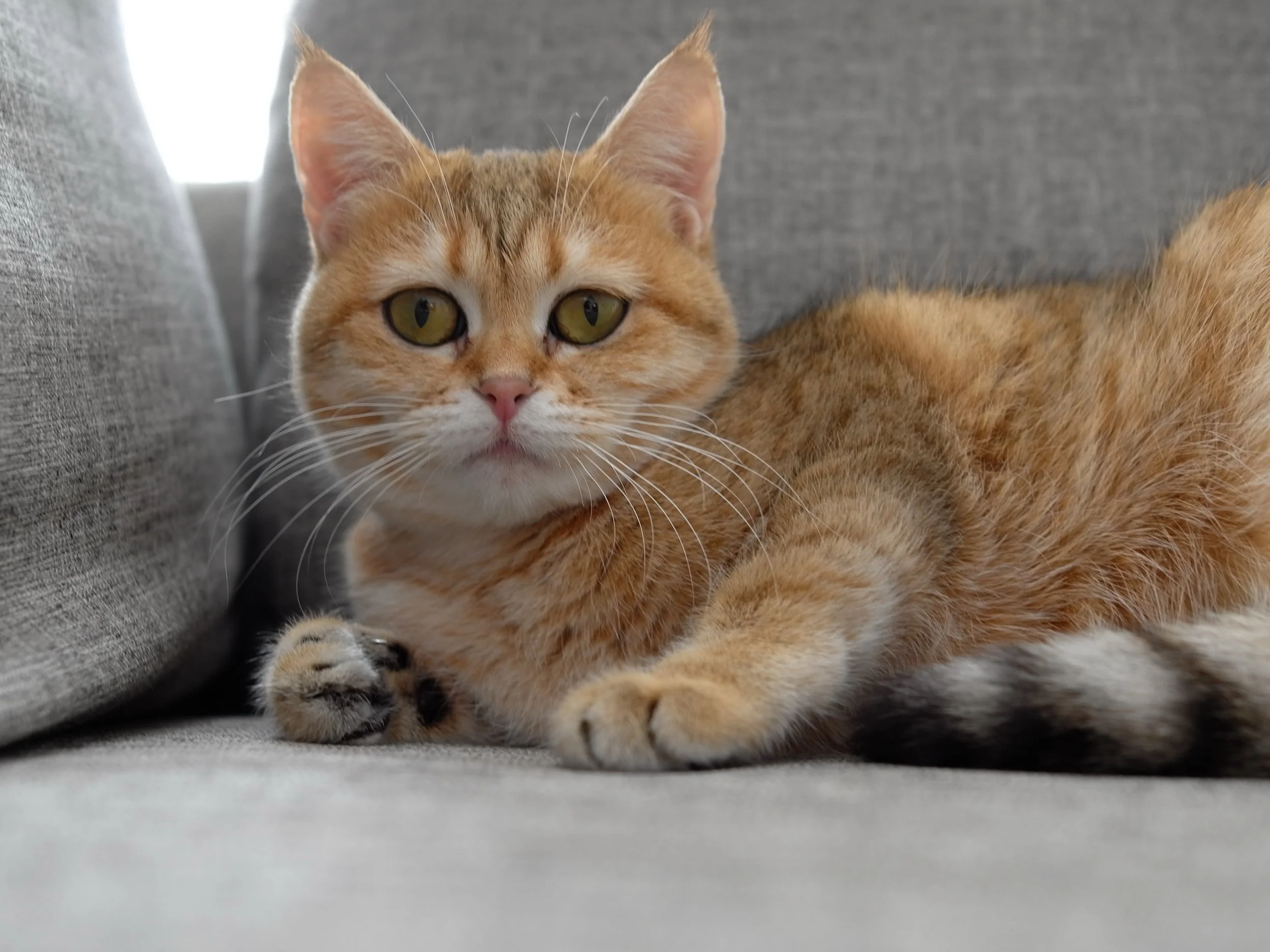
Beth, my cat. A stunning rendering produced by the Typ 113. Due to the proximity of the subject, the camera, set to f/1.7, self-adjusted to f/2.8.
The lens behaviour at close range
There is one aspect of the Typ 113 that frustrated many critics at the time and that deserves, in my view, a different reading.
If you select f/1.7 on the aperture dial and focus on a subject closer than about 1.2 metres, the camera does not obey. It progressively stops down as you get closer, reaching f/2.8 at the minimum focusing distance of 20 centimetres. This behaviour occurs in A and P modes. In fully manual mode, the camera lets you stay at f/1.7 at any distance. And if you try it, you will understand why Leica probably chose to prevent it by default.
My interpretation is this: at f/1.7 and at close range, the lens does not meet the standard Leica had set for itself. Rather than letting the photographer discover that limit on their own, the camera makes the decision for them. One can debate the philosophy. A purist will say it is the photographer's call. But there is another way to read this choice: Leica knew exactly what this lens could offer, at what distance and at what aperture, and designed the camera accordingly.
That is coherence, not limitation.
What this camera taught me
Shooting with the Typ 113 gave me something I did not expect: a new sensitivity to a certain kind of rendering. Images that are soft, natural and rooted in real light rather than in a digital interpretation of light. I began to recognise that quality elsewhere, to look for it and to find it beautiful and calming.
It is that acquired sensitivity that allowed me to fully appreciate the work of Victor Séguin in Les enfants vont bien, a cinematography of rare restraint that I might not have noticed with the same eye before. And it is that eye, sharpened by the Typ 113, that led to CW–Typ 113, CW–Victor Séguin and CW–VS Mono Soft.
A camera from 2014, borrowed for a few weeks, is at the origin of three recipes in the series.
That is not nothing.
— Louis-Martin