
NS – Grès de Böttger and Six Hundred Photographs Without Autofocus
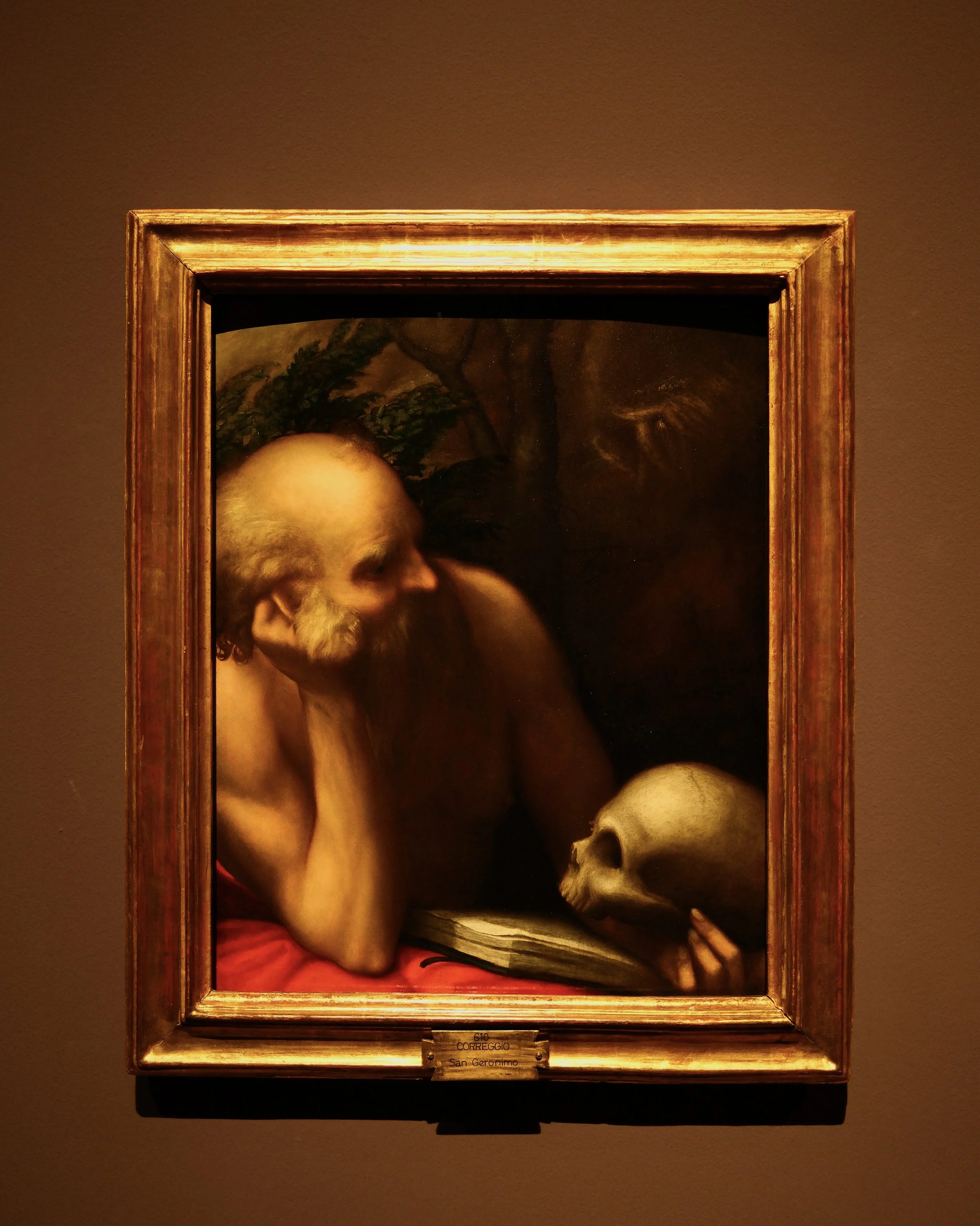
Dresden, Gemäldegalerie Alte Meister, October 2026
No One Grows Impatient
In Montreal, Beth wouldn't stay still. In Dresden, the one I'm photographing will never move again.
In the half-light of the Gemäldegalerie, Saint Jerome, painted by Correggio, rests his cheek against his hand and gazes at the skull he holds in the other, on a red drape. I raise the X100vi, my eye to the optical viewfinder. I barely turn the ring, and in the small window in the corner, the outline of the skull lights up red.
No flash, no autofocus. No one grows impatient, neither he nor I.
Far and Near
At a distance, the ring barely moves. On the Brühl Terrace, the Elbe stretched out beyond the linden trees, and focusing came down to checking that the ring had stayed at infinity. That was the case for most of my photographs.
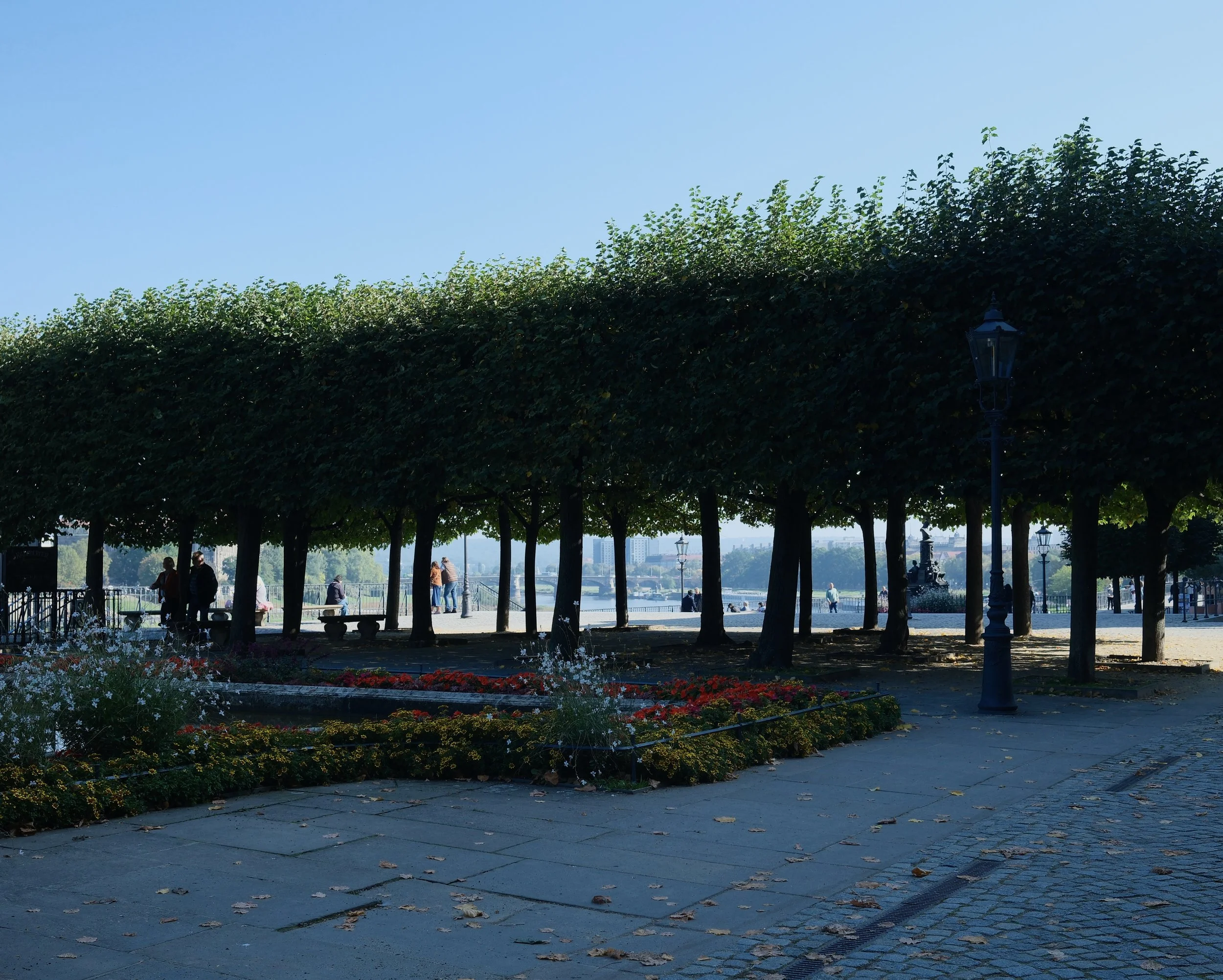
Dresden, Brühl Terrace, October 2026
Up close, the ring becomes a gesture again. On a painting, on a single plane, sharpness falls exactly where the hand has placed it. I came to believe it falls there more surely than with autofocus. It's an impression, not a measurement, but the sharpness of the files never proved me wrong.
And sometimes it's the hand that chooses. In Pillnitz, between the foliage and the pavilion, I had to decide what would be sharp. I didn't let the camera decide for me.
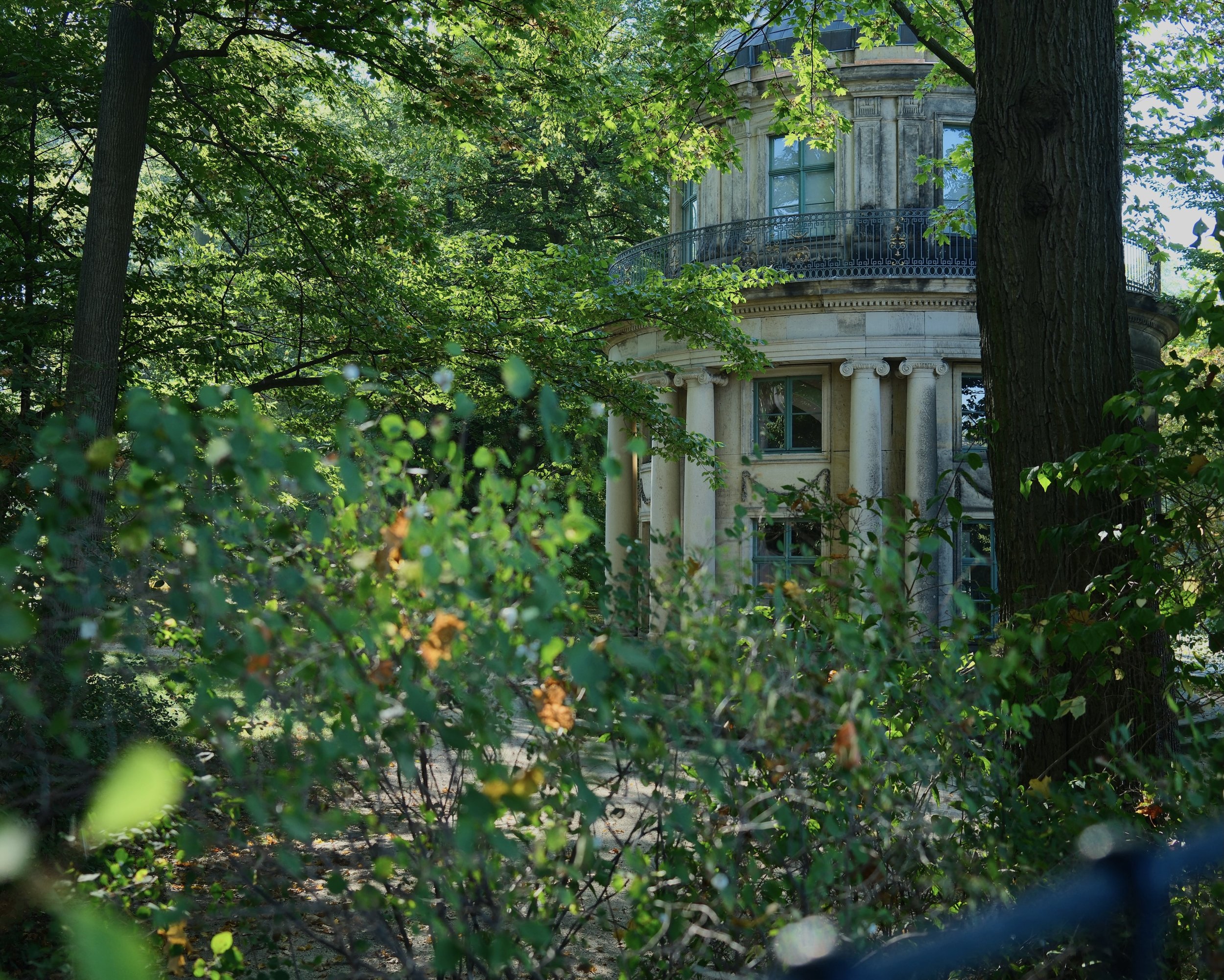
Pillnitz, pavilion on a private estate near the palace, October 2026
When Focus Peaking Fades
Focus peaking does have a limit, though. When the light gets truly low, the red outlines grow timid. They appear here and there, then vanish, and you have to guess at them more than read them.
In Weimar, in the hall of the Bauhaus Museum, I relied on the image itself. In the small window in the corner, I watched the letters tighten and the edges harden, the way we once watched the ground glass of a reflex. Focus peaking points, the image confirms. When one falls silent, the other is enough.
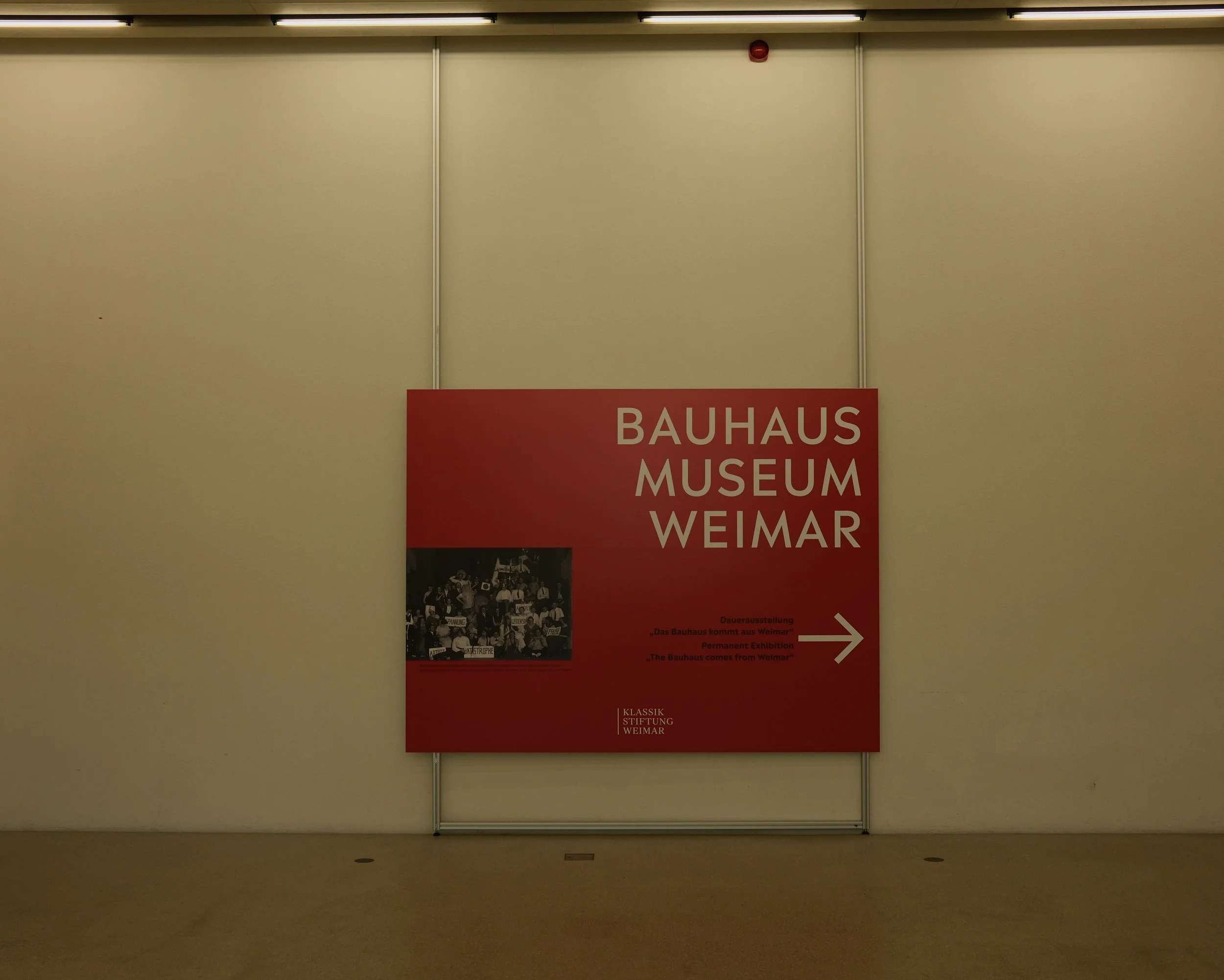
Weimar, Bauhaus Museum, October 2026
The Still Thumb
Last week, I wrote that autofocus had stayed under my thumb. It stayed there to the very end. Even in the streets of Leipzig, where people move, talk and pass by, the ring was enough. Most of the time, it was already in the right zone before the scene arrived.
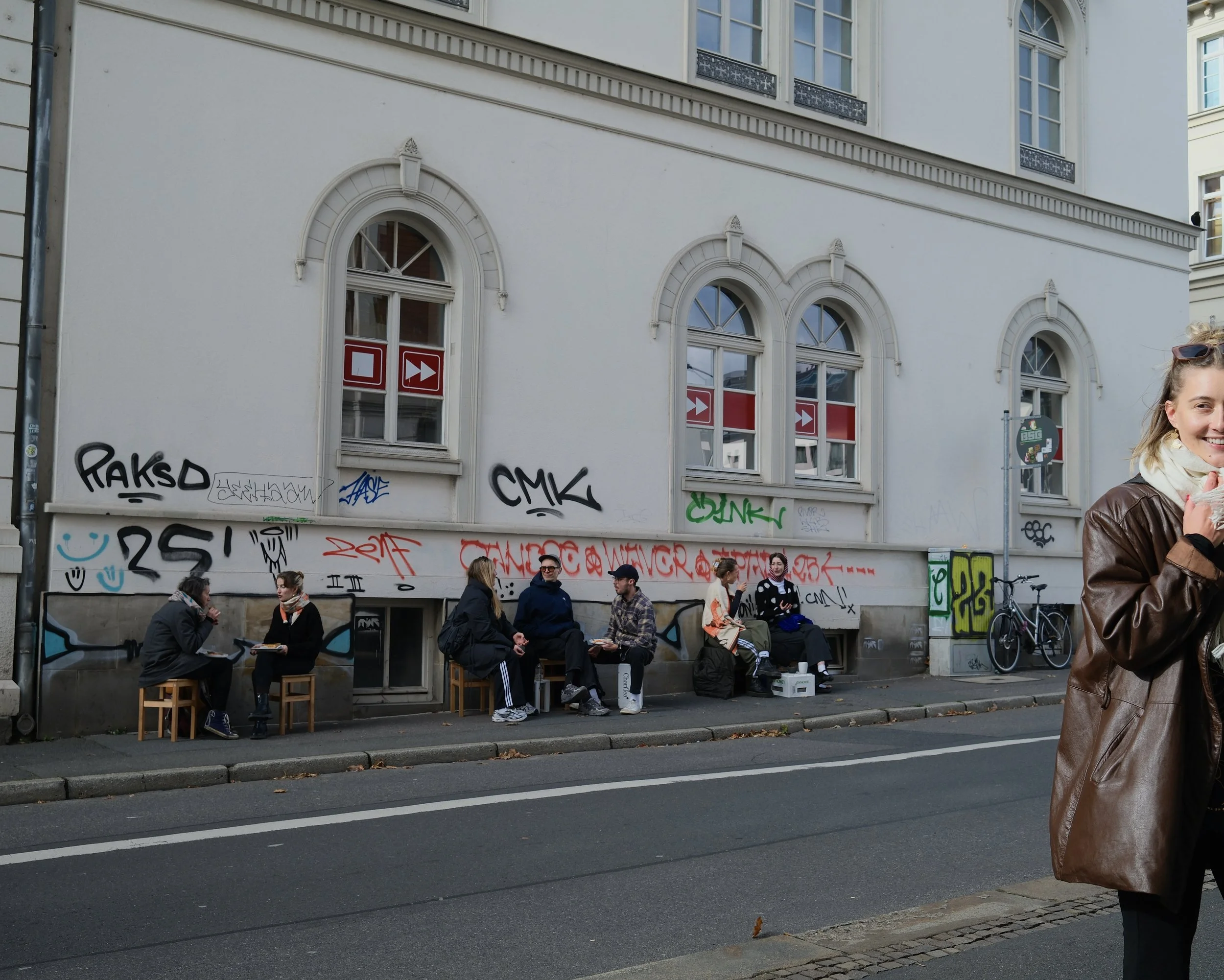
Leipzig, Fix Coffee's terrace, October 2026
Out of more than six hundred photographs, barely two missed their focus. The number matters less than what it changed: I no longer doubted. And without doubt, photographing became far more pleasant. The gesture slows down, but it doesn't weigh.
A Red Wall in Calpe
It's time to keep last week's promise. The recipe behind all these photographs was born far from here, in front of a red wall.
La Muralla Roja, in Calpe, is a red and pink complex by Ricardo Bofill, set facing the Mediterranean. I discovered it in an article by an Italian photographer on Fuji X Passion. Her photographs made me want to find that rendering again through a recipe, and I wrote to tell her so.
At first, I thought I recognized Classic Neg. The photographer set me straight: she processed her RAF files in Lightroom and used no film simulation at all. So I took the most neutral of them all, Provia, and pushed it toward her reds.
As irony would have it, Virginia sees Reala Ace in the rendering of this recipe, even though it was built from Provia. A recipe born from an edit, which brings to mind a simulation other than its own: there could be no better proof that a recipe never quite copies what it looks at.
In Dresden, another red wall was waiting for it.
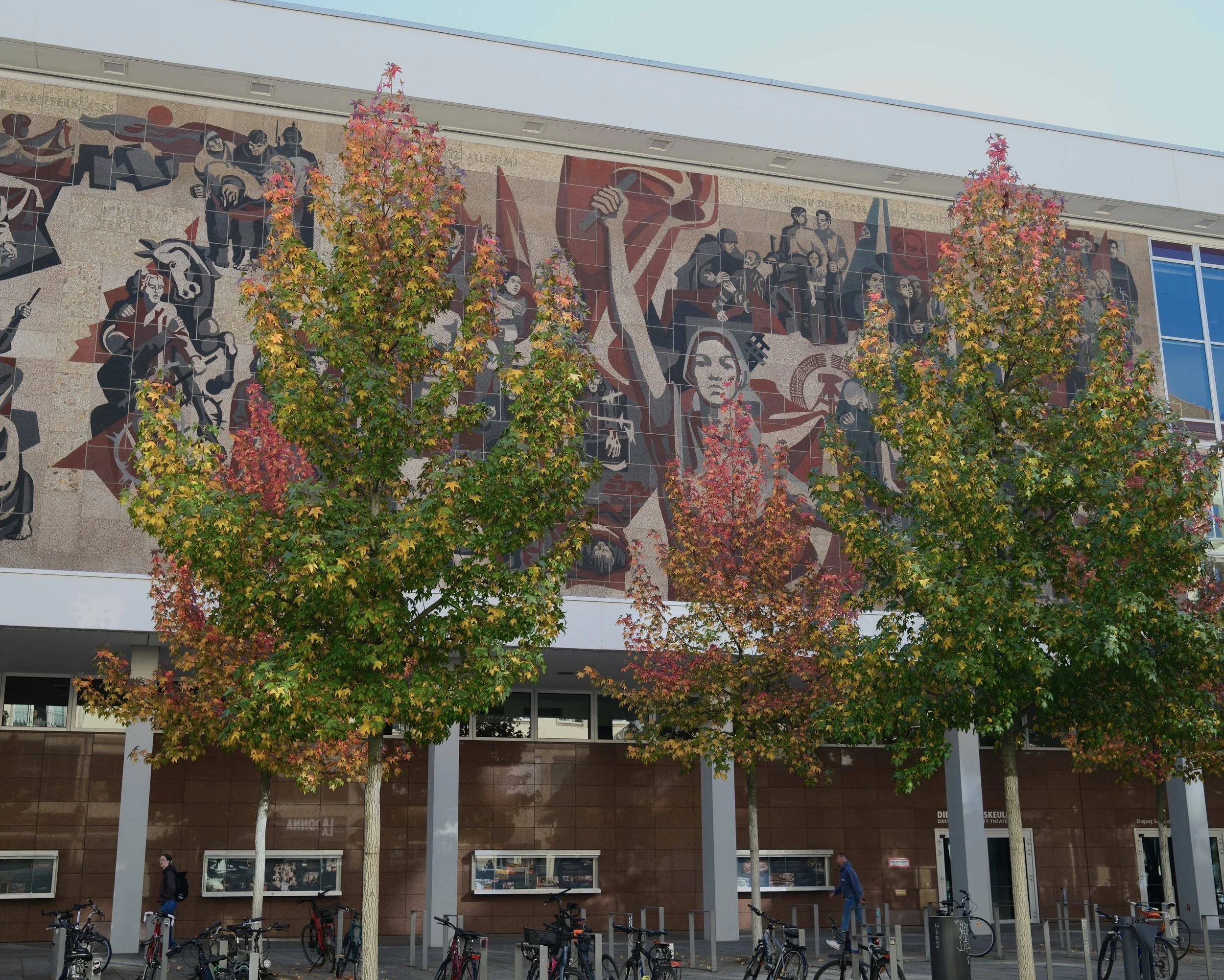
Dresden, Kulturpalast, the mural "Der Weg der roten Fahne", October 2026
Red Before White
On the Fürstenzug, in Dresden, twenty-three thousand Meissen porcelain tiles parade the princes of Saxony. The day I passed by, that white was being restored. It has a history, and it begins with a red.
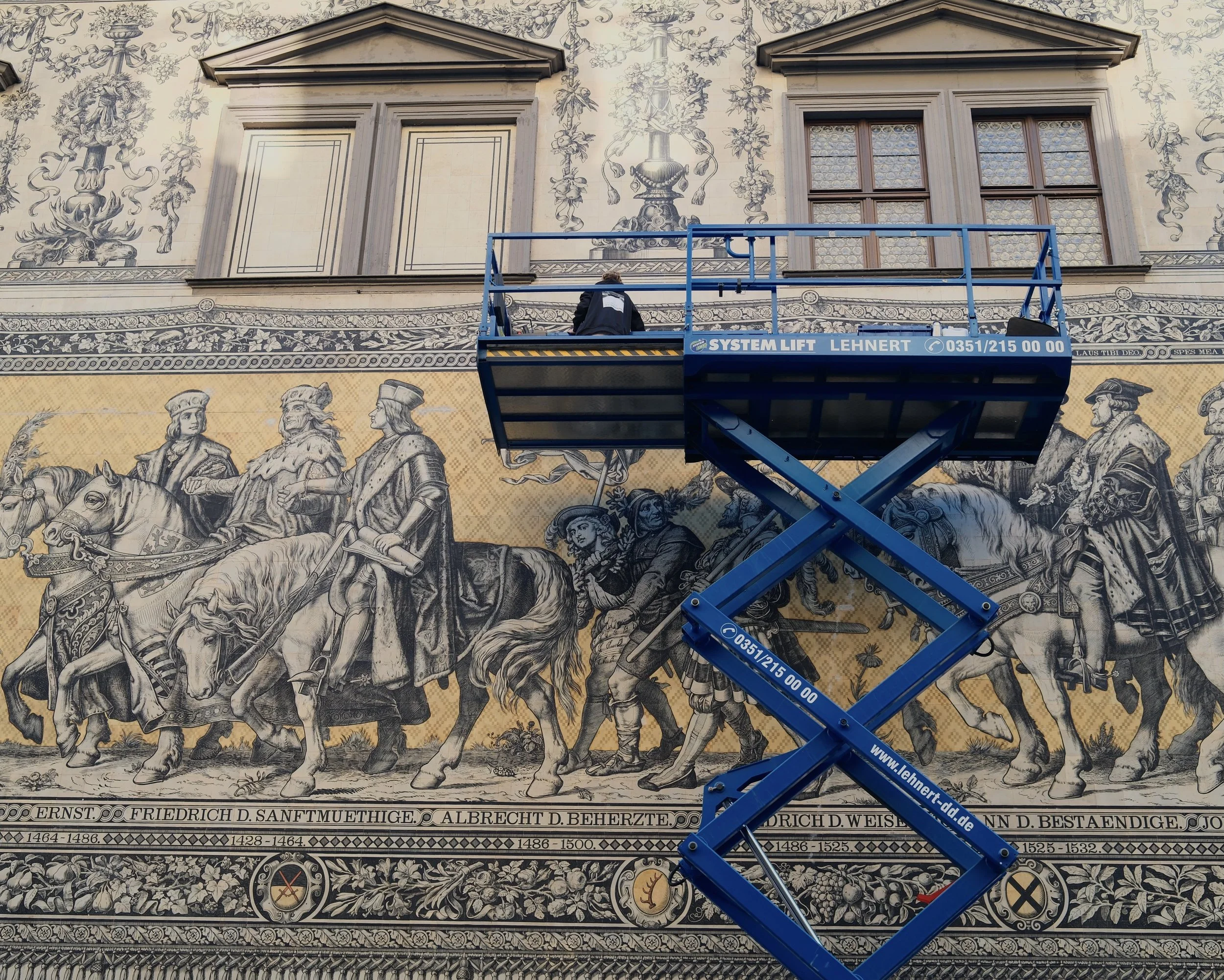
Dresden, restoration of the Fürstenzug, October 2026
In the early eighteenth century, a young alchemist, Johann Friedrich Böttger, claimed he knew how to make gold. Augustus the Strong, Elector of Saxony, had him confined in Dresden so that he would keep his word. Lacking gold, he found something else. In 1707, he fired red clays from the surrounding area and drew from them a very hard stoneware, a brick red that takes on an almost metallic sheen when polished. Two years later, he discovered the secret of white porcelain, the first in Europe.
Red, then, before white.
Böttger was born in Thuringia, grew up in Magdeburg and made his discovery in Saxony: the three Länder of my trip. My recipe, for its part, had never seen the Mediterranean. With NS - Bleu de Faïence, I had established that a name belongs to what a recipe has become, not necessarily to what inspired it. So it won't be called Calpe, but NS – Grès de Böttger.
Under an Eastern Sky
What remained was to see what the recipe would make of this light.
In Magdeburg, Hundertwasser's Green Citadel has nothing green about it but the trees on its roofs. Its facade is pink, broken by ceramic columns and windows rimmed in blue. In front of it, I thought of Calpe: the same pinks, the same blue, under a sky that had nothing Mediterranean about it.
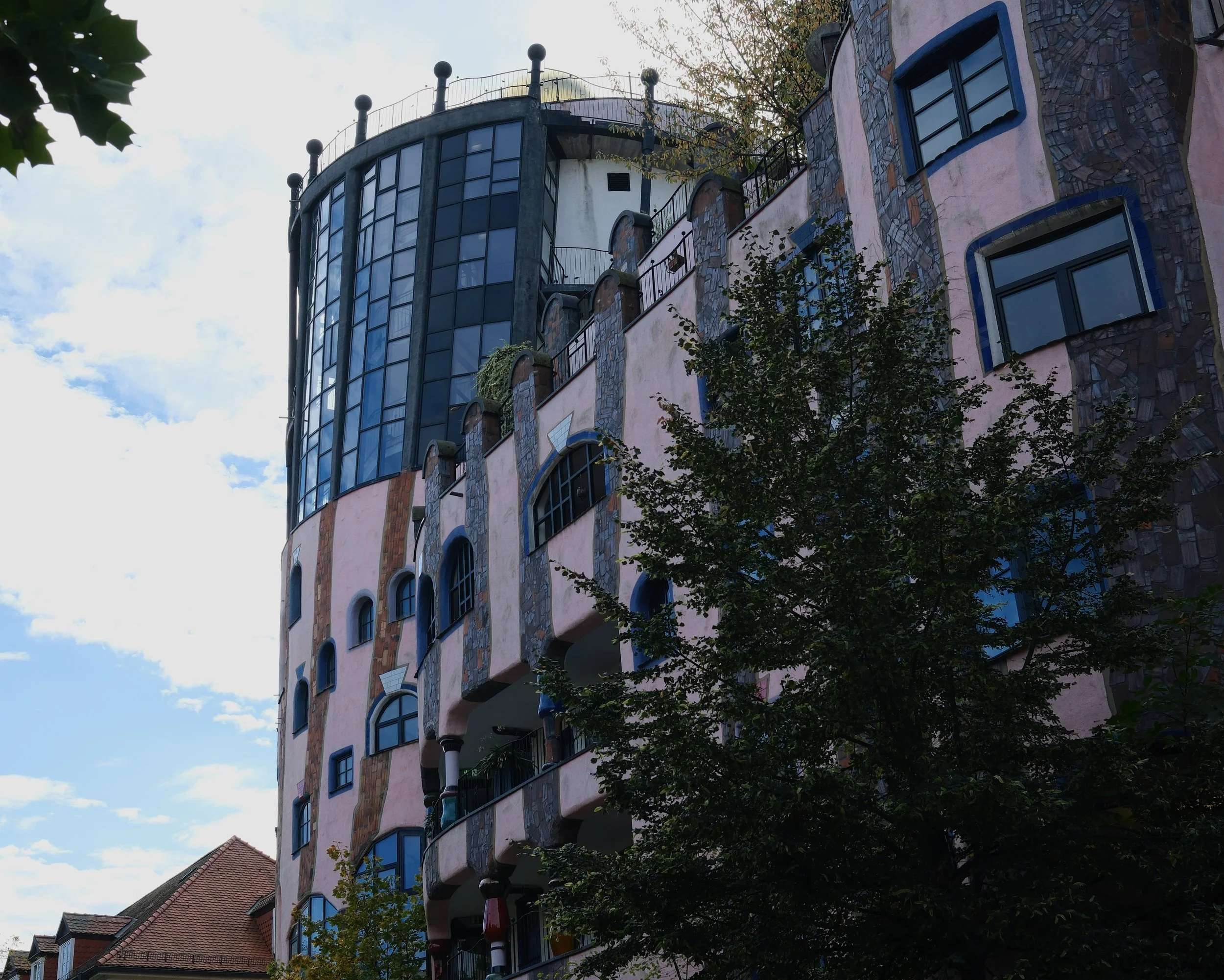
Magdeburg, Green Citadel, October 2026
Autumn did the rest. In the garden of the Kunstmuseum, chestnut leaves covered the ground in brown and rust, between the shade of the trees and full sun. The recipe loves that chiaroscuro.
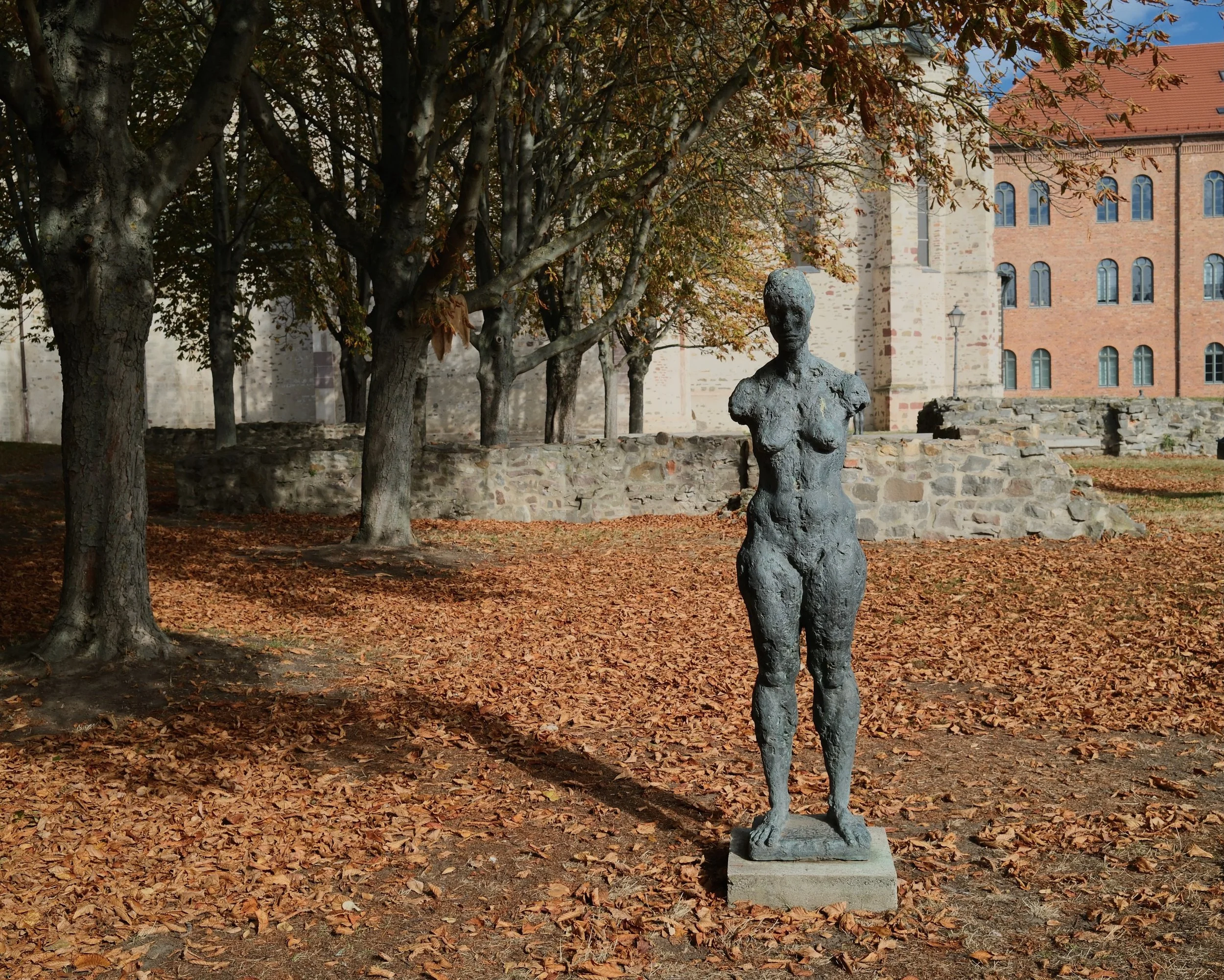
Magdeburg, garden of the Kunstmuseum (Monastery of Our Lady), October 2026
And when the sky cleared, its blue turned deep, almost ink, against the aluminum of the former Centrum department store.
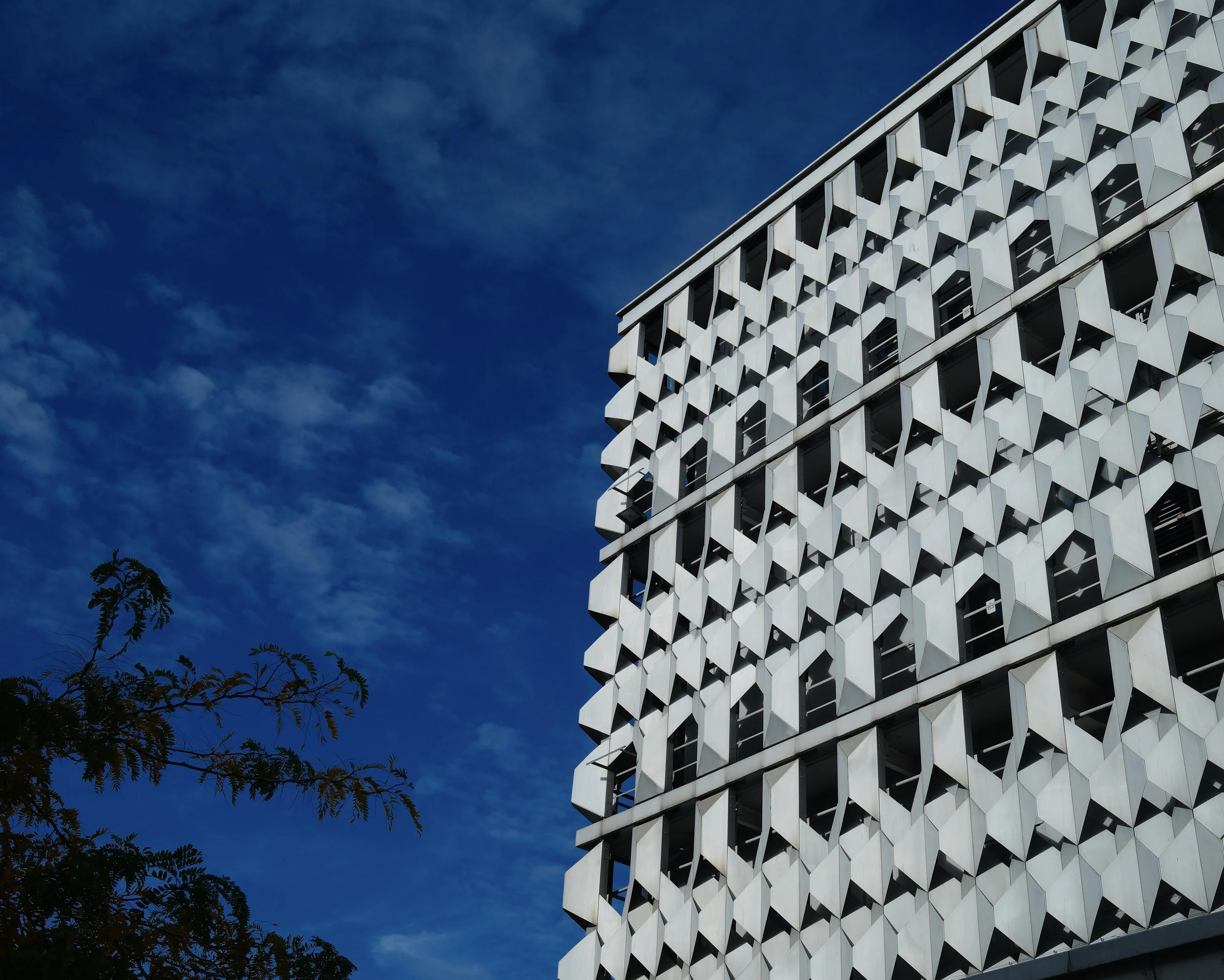
Magdeburg, former Centrum department store (Centrum Warenhaus), October 2026
Najat, who is no expert, looked at these images knowing nothing of their settings. She spoke of the colors, the contrast and the sharpness. It's the finest compliment a recipe can receive: people see the photographs, not the recipe.
I won't say it suits everything. But for the light and the colors of the former GDR, it suits them very well.
Always Beside
In Leipzig, a storm had just passed. The park was still wet, and in the distance the facades caught the sun under an almost black sky. I raised the X100vi, the ring at infinity.
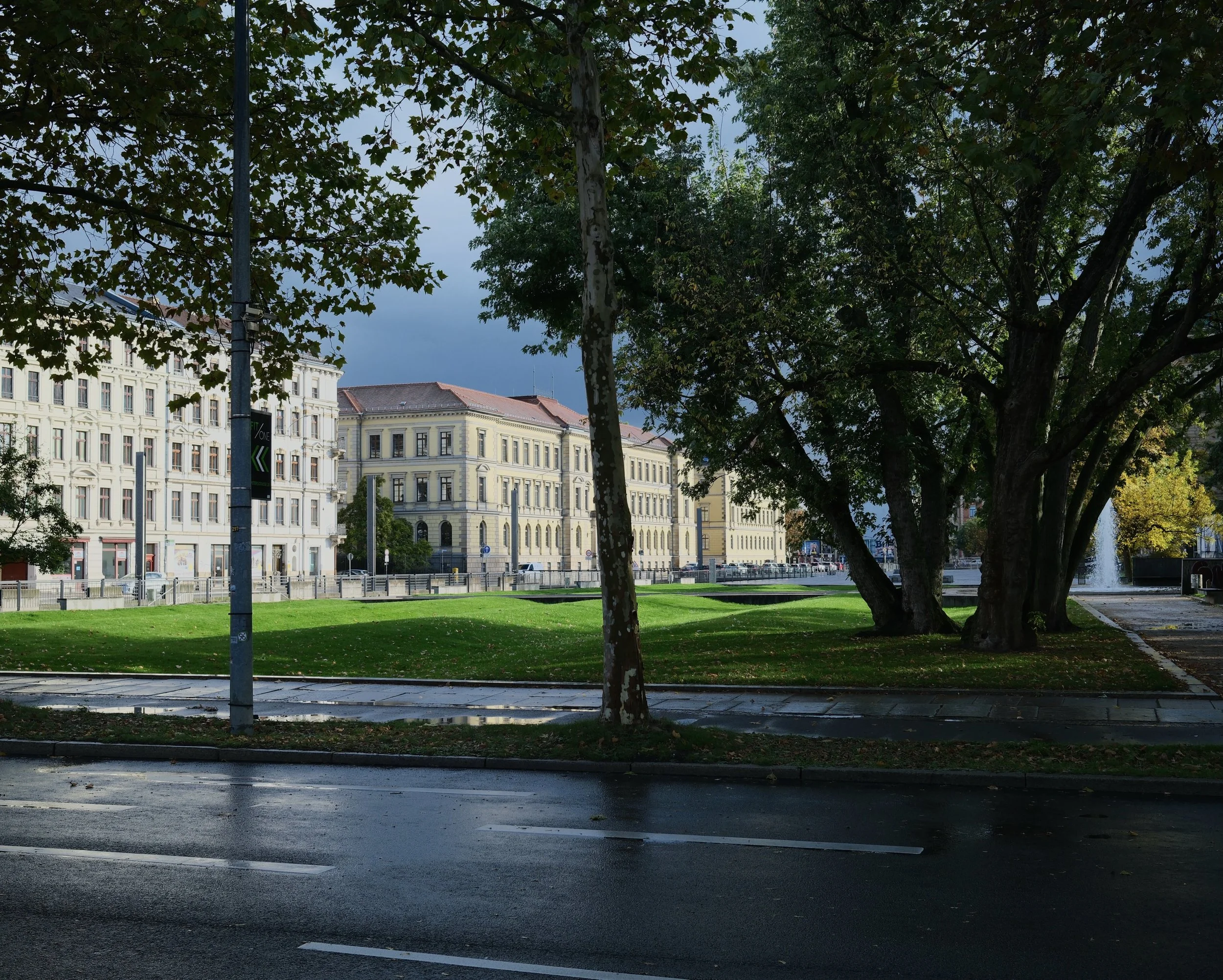
Leipzig, October 2026
Six hundred photographs later, I know something I didn't know when I left. It isn't sharpness I love in manual focus, it's the gesture: turning, waiting for the outline to light up, deciding. I understand better, now, why some photographers never part with their rangefinder.
I come home with one more recipe, and a way of looking that hasn't changed: always beside.
Back in Quebec, I didn't change it. In Mystic, the Walbridge Barn, red and twelve-sided, rises under the same deep blue as in Magdeburg, behind a brick wall capped in red. The recipe wasn't made for eastern Germany alone. It loves autumn, wherever it falls.
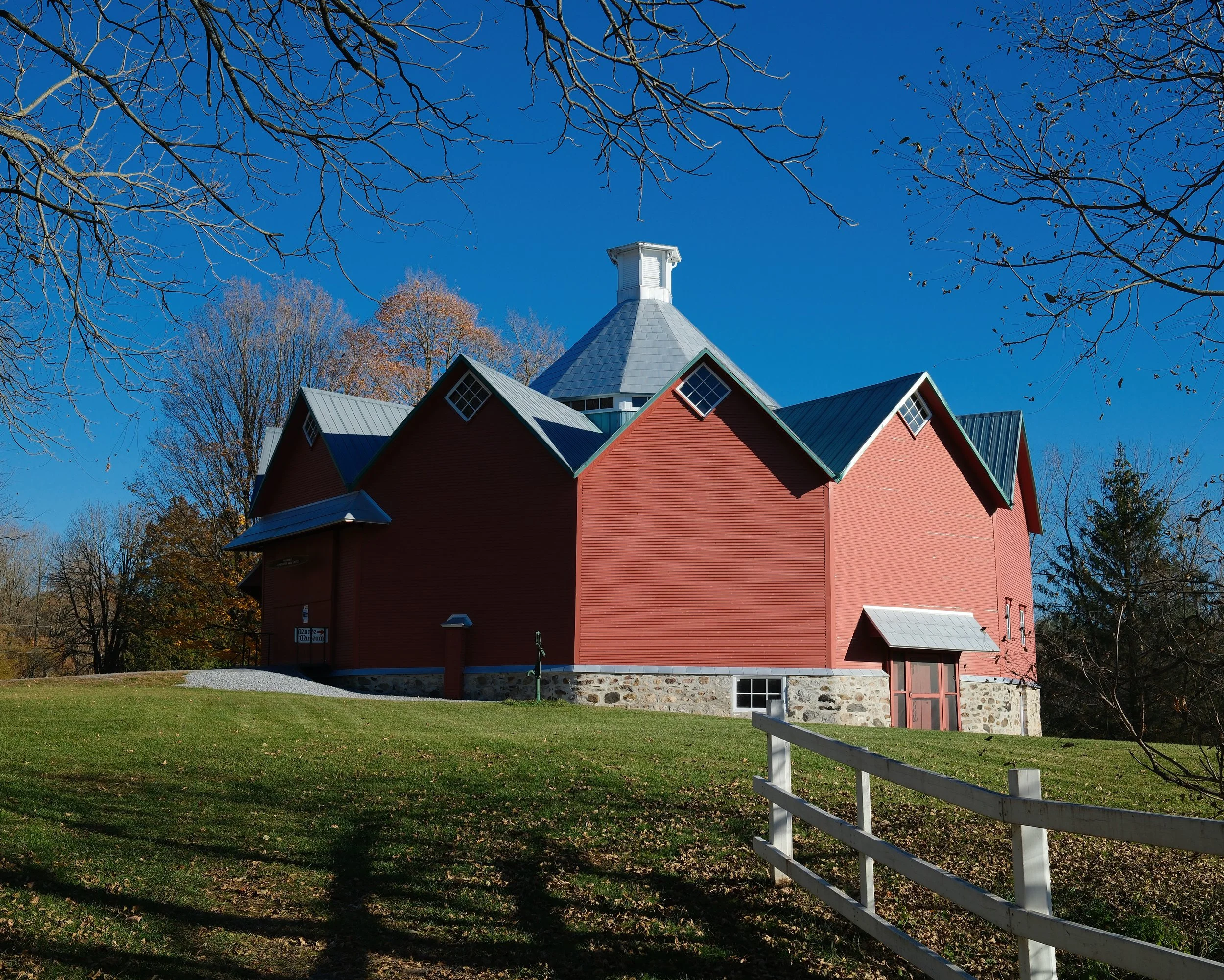
Mystic, Walbridge Barn, October 2026
Here is the recipe, laid out simply:
| Setting | Value |
| Film Simulation | Provia |
| Dynamic Range | DR200 (Auto ISO 250 to 1600) |
| Highlight Tone | −1 |
| Shadow Tone | 0 |
| Color | +2 |
| Color Chrome Effect | Strong |
| Color Chrome FX Blue | Strong |
| Clarity | 0 |
| Sharpness | +2 |
| High ISO NR | −2 |
| Grain Effect | Off |
| White Balance | Daylight, Red −1, Blue +1 |
| Exposure Compensation | −1/3 EV to 0 EV |
Tested without a Black Mist filter, with a simple UV filter.
— Louis-Martin Ouellet
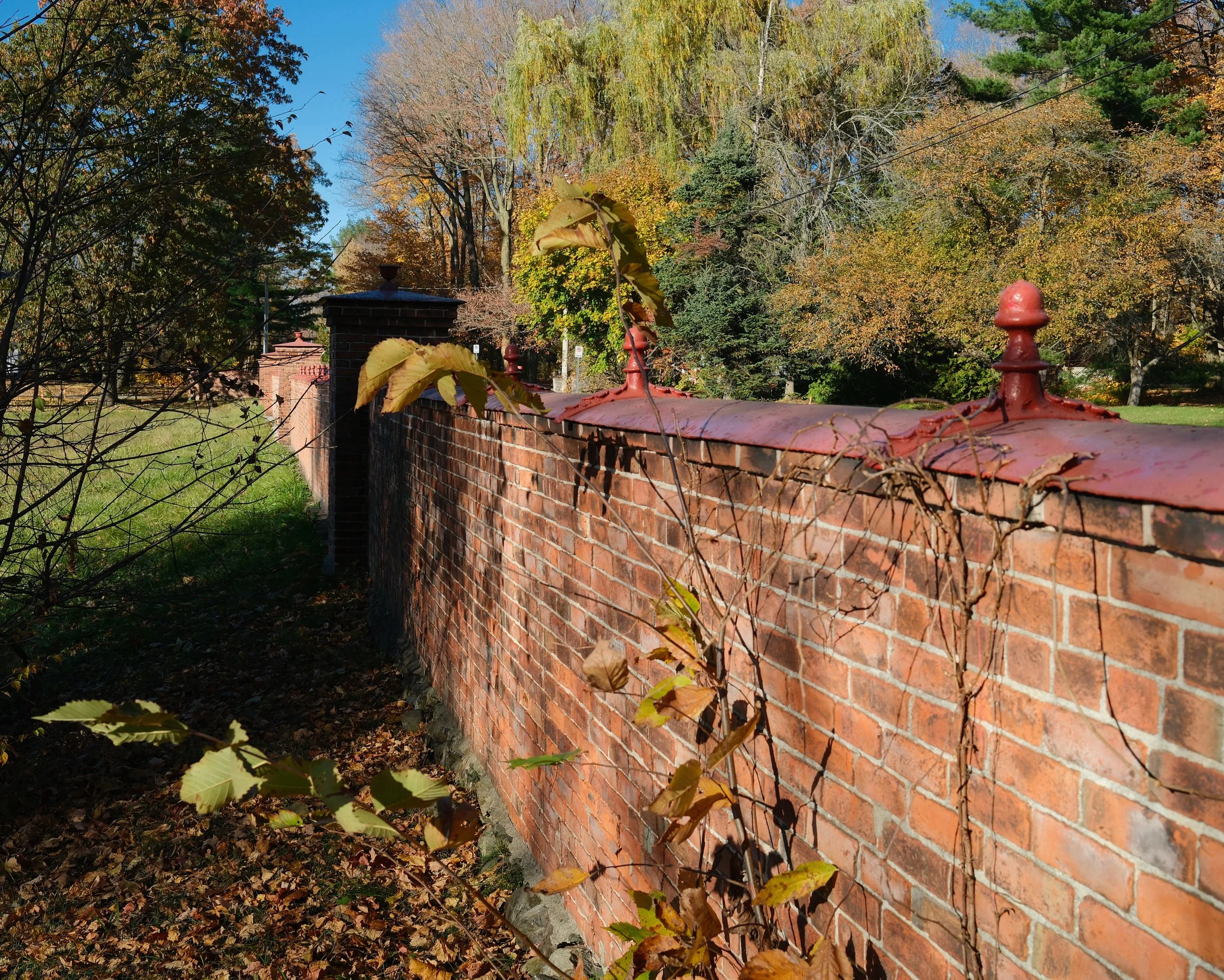
Mystic, brick wall near the Walbridge Barn, October 2026
All the photographs in this post, as well as those in the previous one, are SOOC: NS – Grès de Böttger settings.
This blog's thirteen recipes, the seven CW and the six NS, all live in the Recipe Cellar, a space where they simply wait to be discovered.