
NS - Jihong, the deep, velvety red of Imperial Chinese porcelain
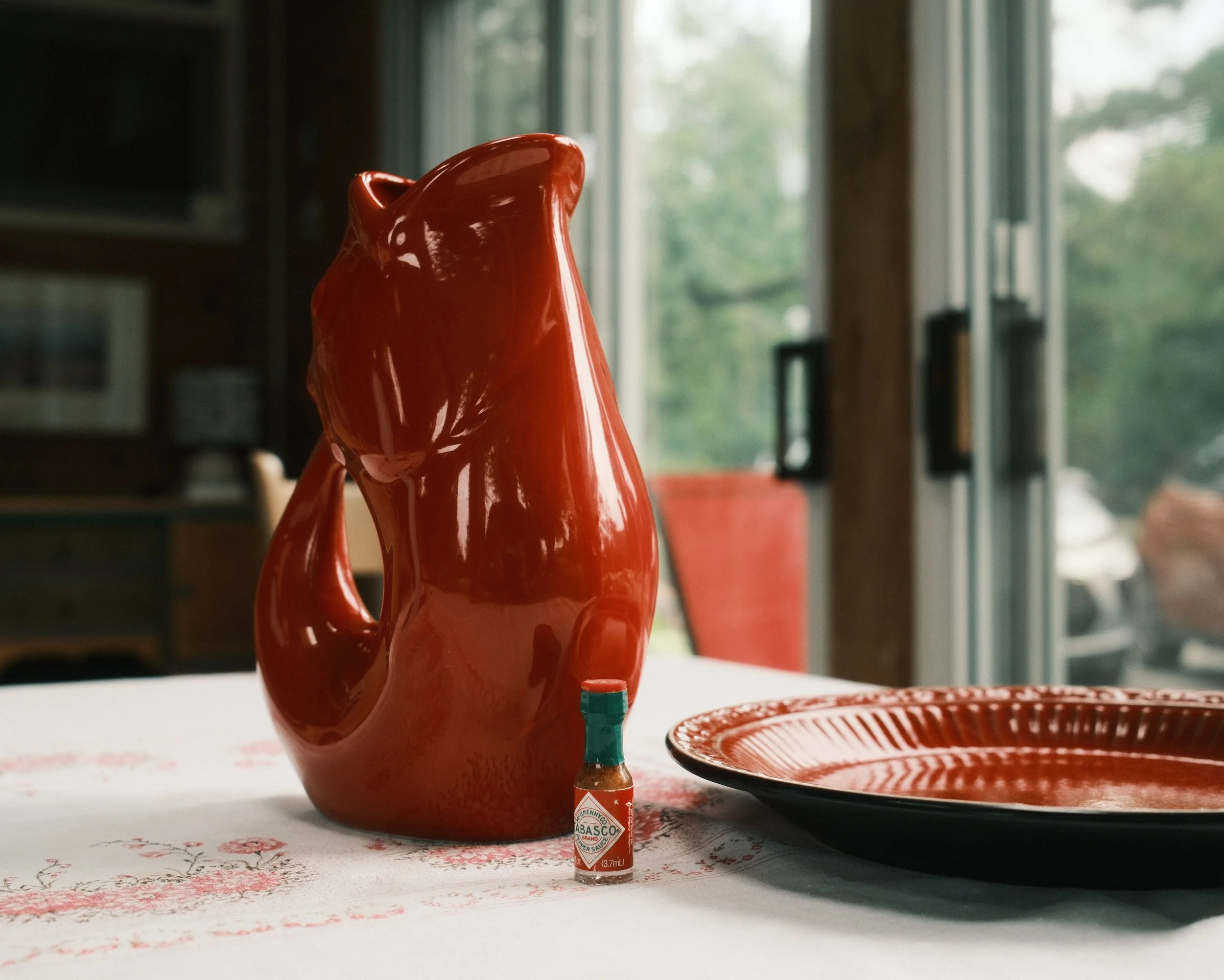
In lieu of real antique ceramics, I gathered whatever was reddest in my kitchen.
This isn't imperial porcelain. It's a fish-shaped pitcher in a bright red glaze that's been sitting in my kitchen for years, next to a mini bottle of Tabasco and a matching plate, on a flowered tablecloth. Glossy where historical jihong is matte, but from the same register of red: dense and generous.
Jihong (祭紅, "sacrificial red"), also called xianhong ("fresh red"), designates a monochrome copper glaze perfected under the Xuande reign of the Ming dynasty, between 1426 and 1435, and used for the ritual vessels of the Altar of the Sun in Beijing. Unlike sang-de-bœuf, which came later and is more crackled and flamboyant, jihong stays opaque and velvety, almost matte, with a texture sometimes called "orange peel." It's this restrained register, rather than a spectacular one, that guided this fourth recipe in the NS series, after NS – Céladon (the greens), NS – Bleu de faïence (the blues), and NS – Persimmon (the oranges).
The Recipe
NS – Jihong is the first recipe, in CW as in NS, to build on Classic Negative. Based on this simulation, it deepens reds without making them garish. Color Chrome Effect, pushed to Strong, preserves the non-uniformity proper to this type of glaze: darker toward the edges, almost brown in the shadows. The result evokes less a specific camera than a Summilux from another era, not the modern versions, but the ones once produced at the Leitz factory in Midland, Canada, under the direction of Walter Mandler, where the color seduces through restraint rather than brilliance.
Tested with the K&F Black Mist 1/8 filter mounted on the lens.
| Parameter | Value |
| Film Simulation | Classic Negative |
| Dynamic Range | DR400 |
| Grain Effect | Weak / Small |
| Color Chrome Effect | Strong |
| Color Chrome FX Blue | Off |
| White Balance | Daylight |
| WB Shift | R +1 / B −5 |
| Highlight | −1 with Black Mist filter / −2 without filter |
| Shadow | +1 |
| Color | −2 |
| Sharpness | −1 with Black Mist filter / −2 without filter |
| Clarity | 0 with Black Mist filter / −2 without filter |
| Noise Reduction | −4 |
| ISO | 500 to 1600 (Auto) |
| Exposure Compensation | +1/3 EV |
The +1/3 EV exposure compensation isn't one option among others: Classic Negative slightly darkens midtones, and without this correction, Color Chrome Effect on Strong pushes reds toward brown rather than toward the depth I'm after.
Without the filter: the values above remain theoretical, not confirmed in the field, but they follow the same compensation logic. The filter already softens microcontrast and slightly diffuses highlights; without it, the same direction applies, simply pushed further.
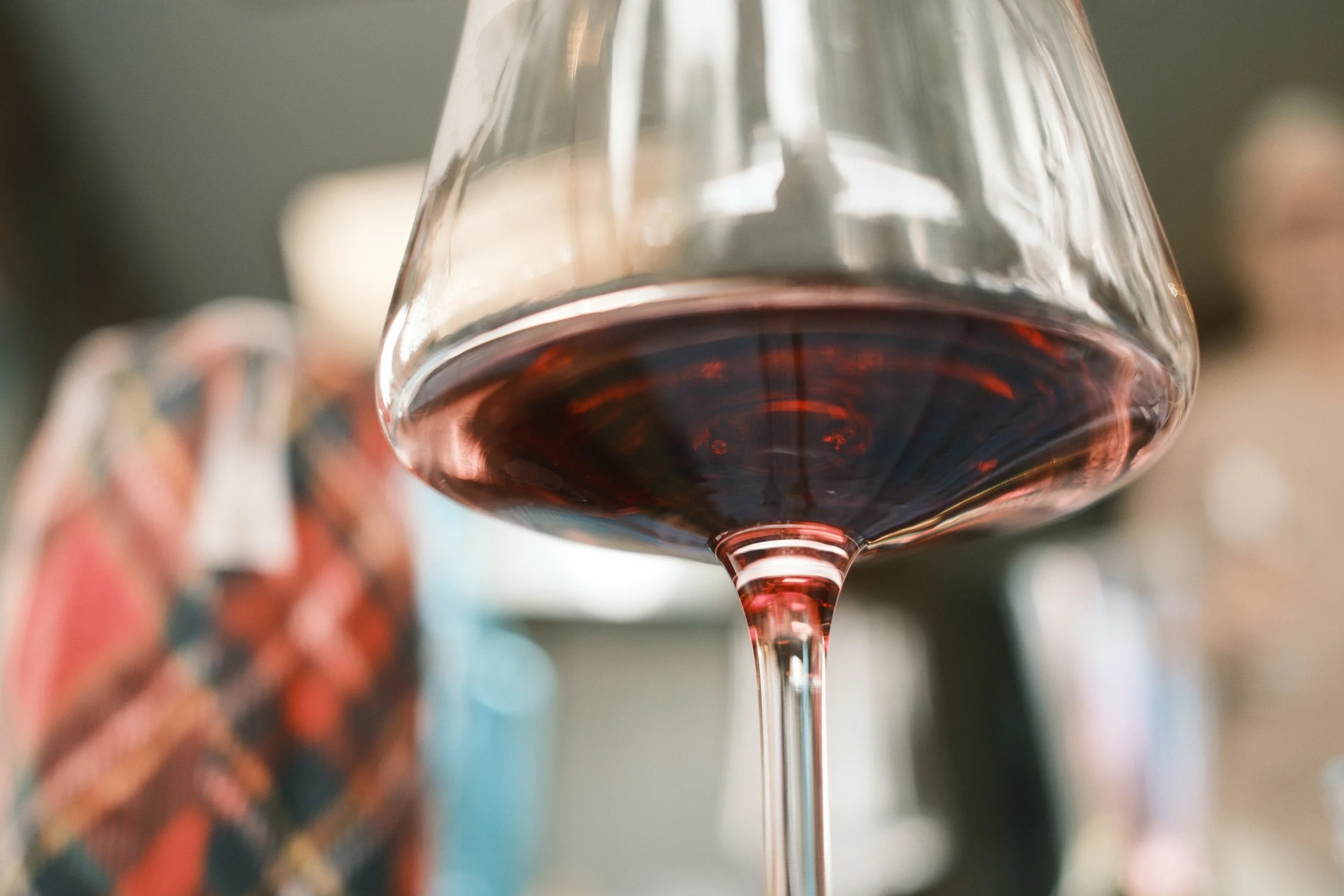
L'Allumée Rouge, by Anne Buiatti: a handcrafted wine, sharp, for a warm evening.
Who It's For, What It's For
NS – Jihong suits ceramics and red objects, warm still lifes, and daylight portraits, where it renders natural, unforced skin tones. The overall look has something of an expired roll of film about it: bold colors keep their punch, pastels fade back, and the whole thing carries the mark of a photo older than its date.
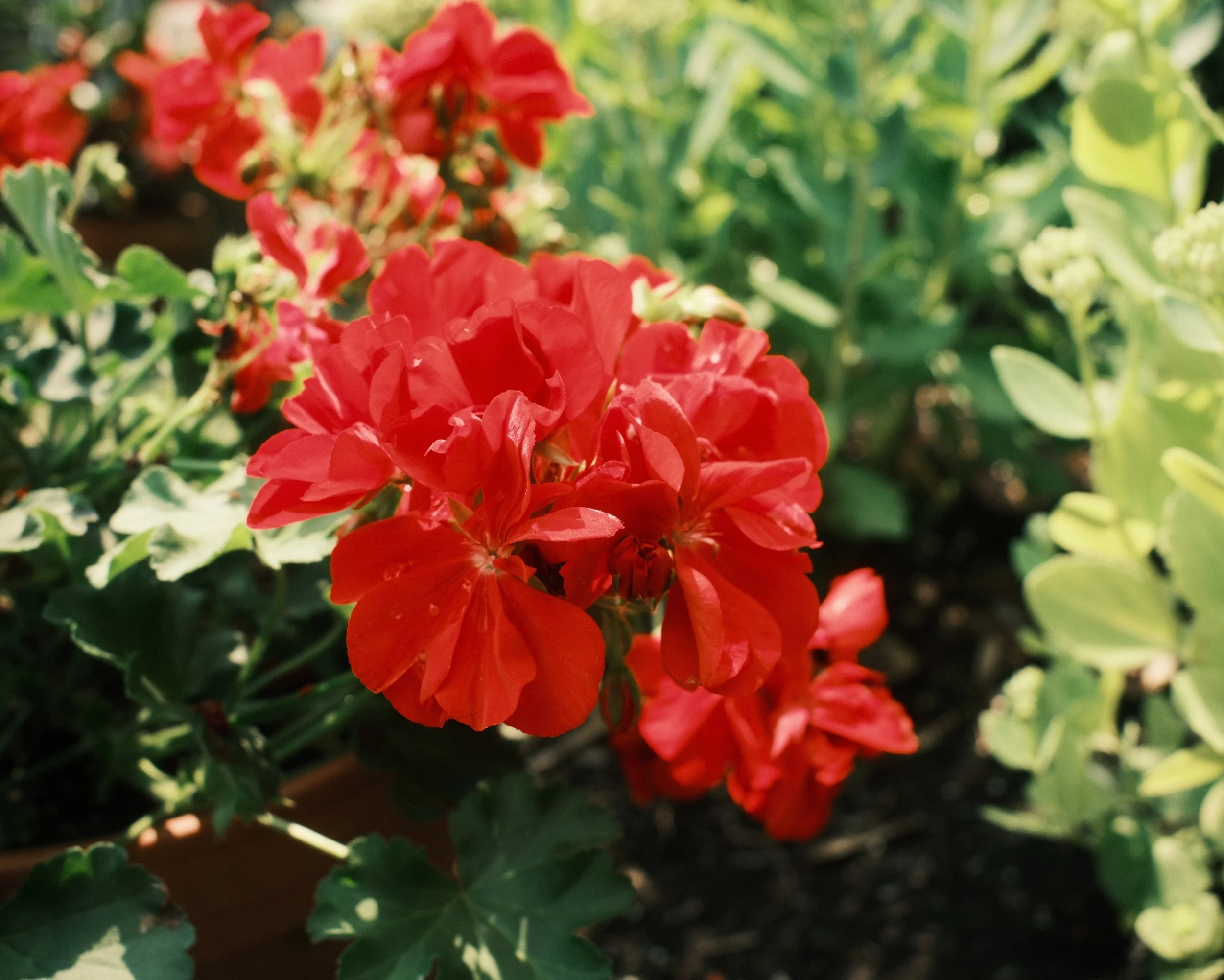
Red geranium, in full sun.
A reservation, owned rather than hidden. This recipe isn't versatile. It excels outdoors, in daylight, on warm subjects: reds, yellows, pinks, and magentas. Indoors, its fixed white balance becomes unpredictable from one room to the next, and cool tones like blue and violet come out washed out rather than flattered.
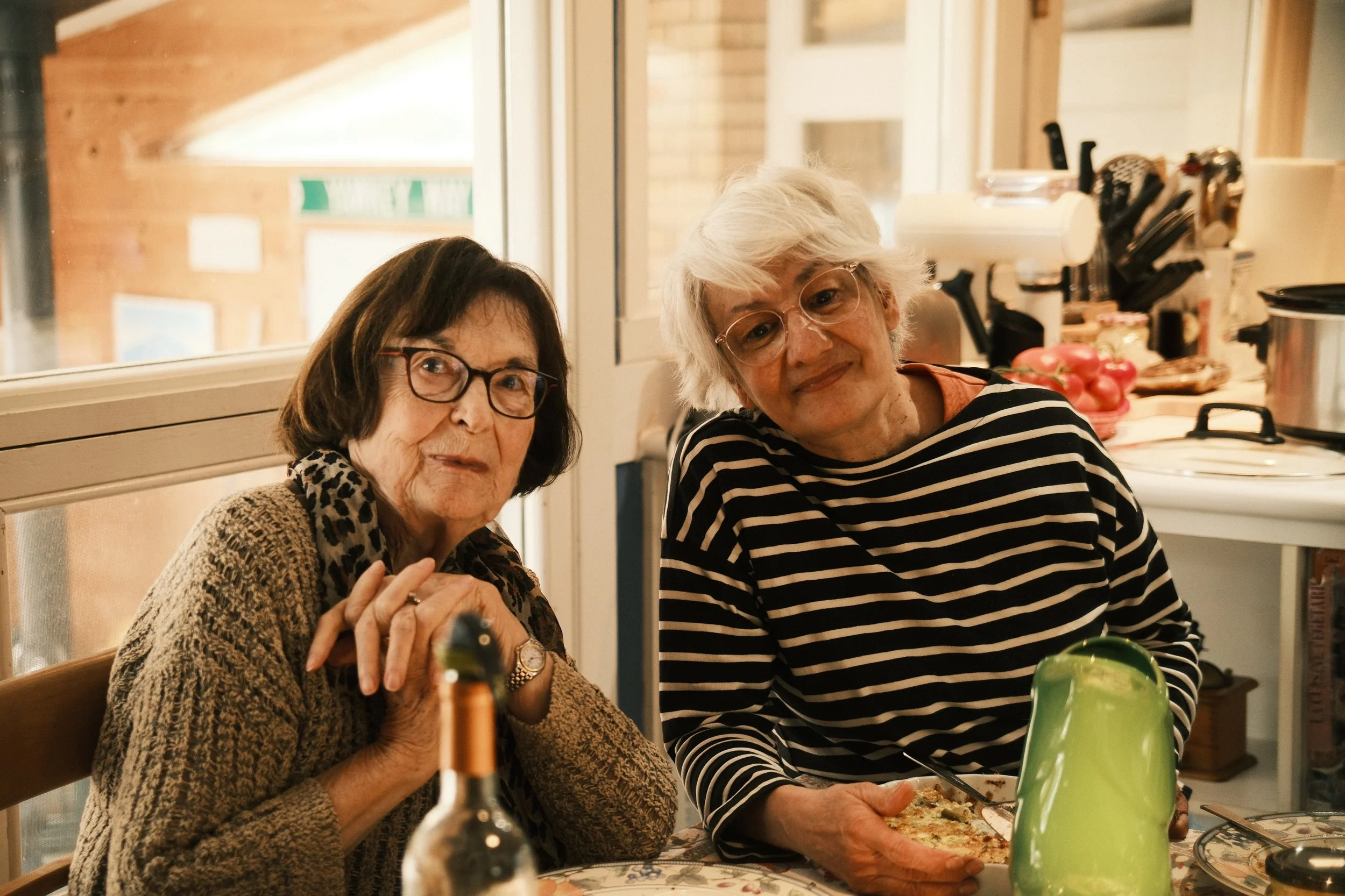
Two generations at the same table: Gilberte, my mother, and Giuseppina, my wife.
This choice of a fixed balance isn't accidental. In automatic mode, porcelain reds vary too much from one scene to the next to stay consistent from photo to photo: the same glaze can look orange in one shot and almost brown in the next, depending on what the camera decides to correct. A fixed balance removes that variation on the subject that matters, at the cost of predictability everywhere else. In another room, the same recipe can drift toward a far stronger warm cast.
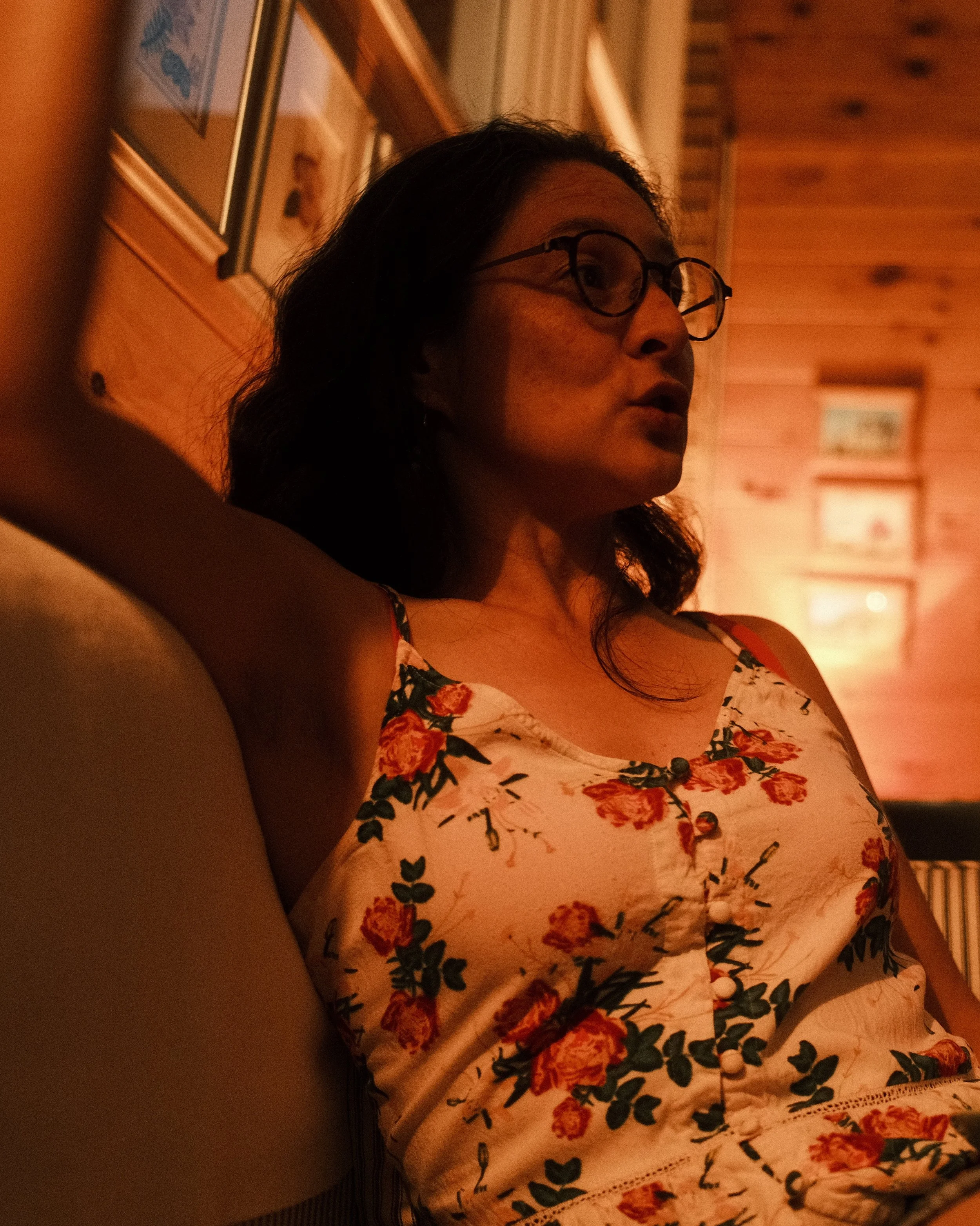
Natacha, mid-conversation, under warm, shifting light.
Cool tones, on the other hand, don't drift: they fade. Blue and violet lose their intensity rather than simply shifting cast.
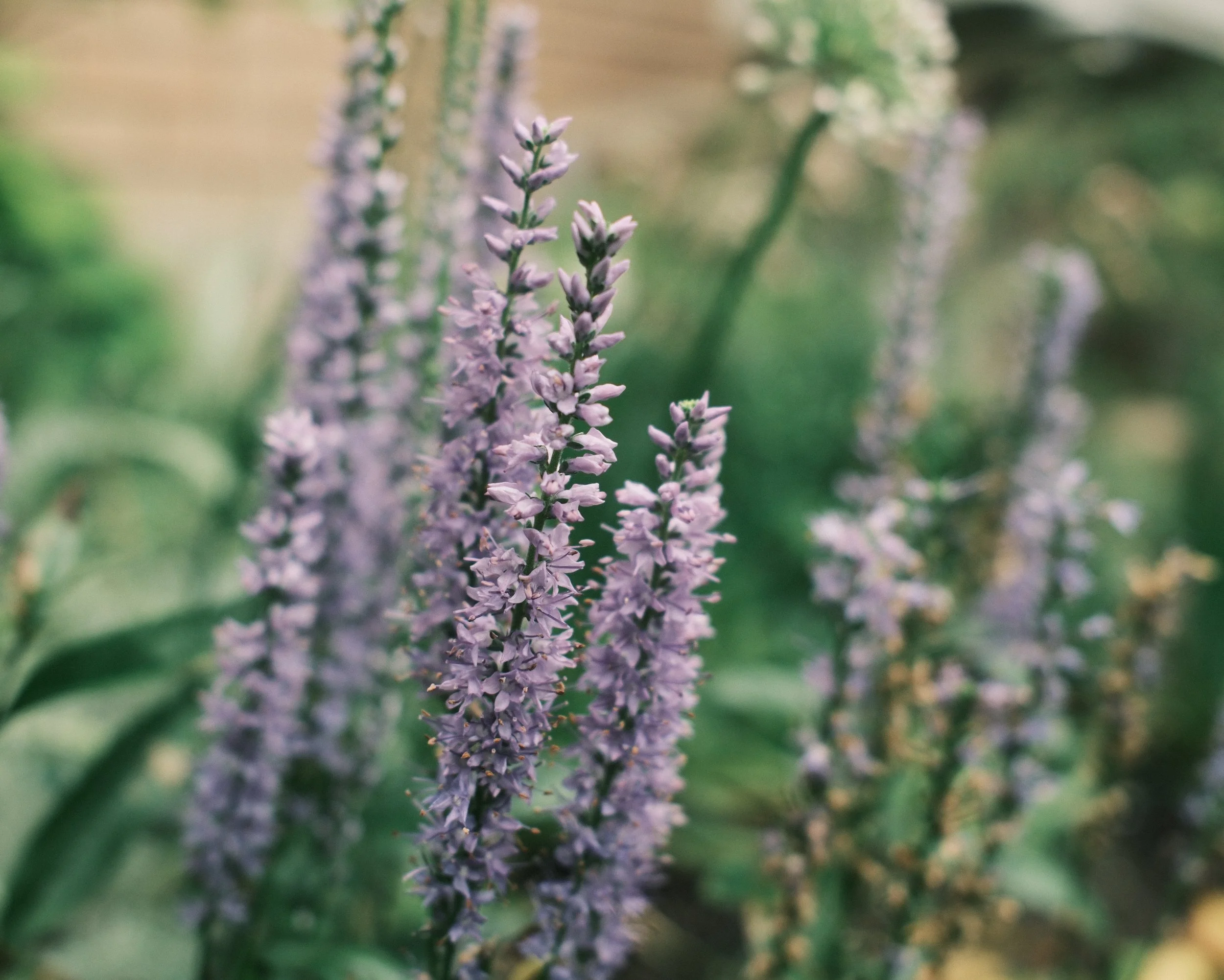
Veronica spicata, early morning.
It's a bit like certain Lomo films: less a constant experiment than a more specialized tool, precise within a narrow window of use. Outside that window, the result is uneven rather than artistic. A recipe for a specific need, not for every day.
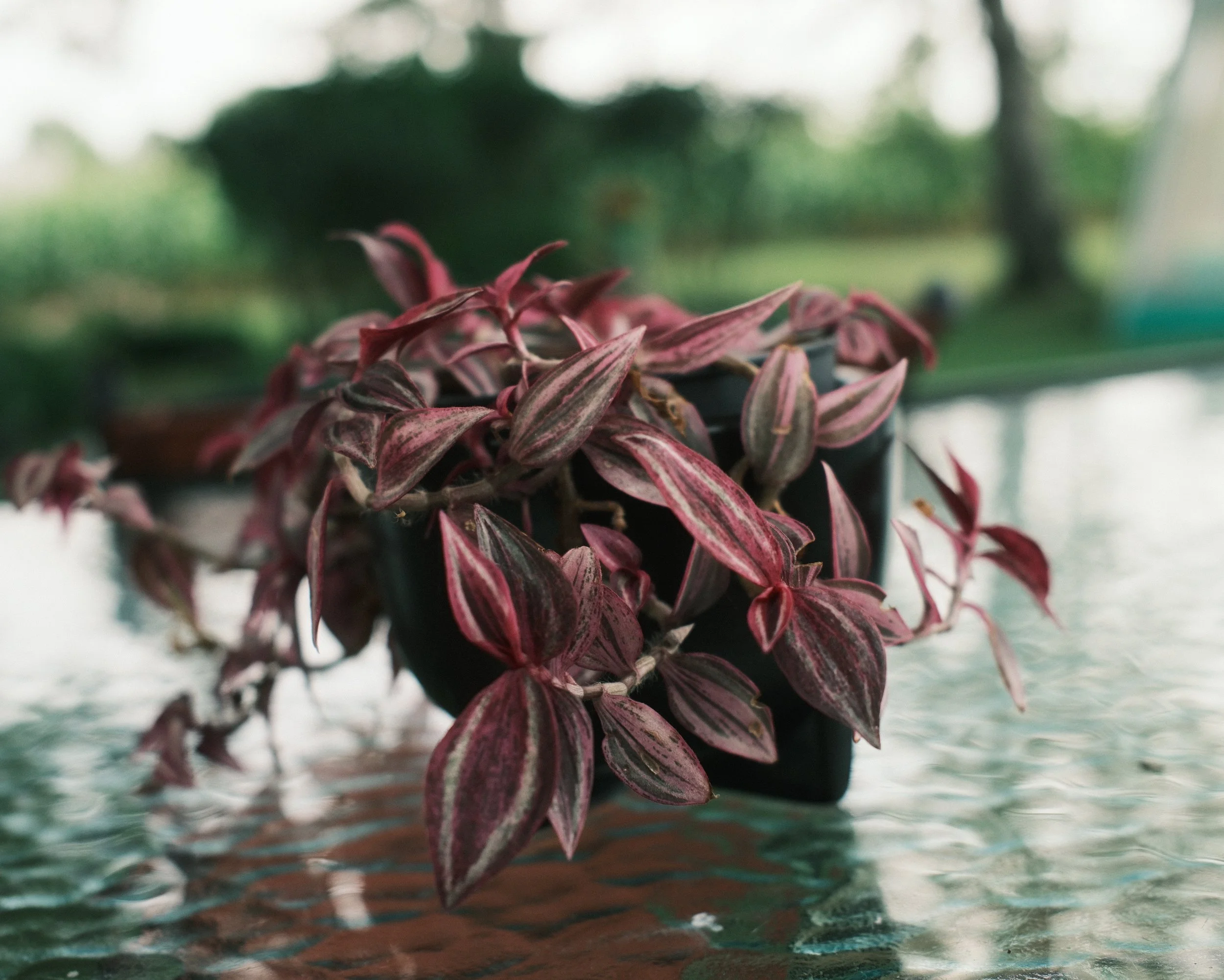
Tradescantia zebrina, on a frosted glass table.
Four Recipes, a Slow Practice
Historical jihong belongs to what ceramics calls a high-fire glaze: a single firing, with no second pass, where a few degrees too many is enough to lose everything. The imperial workshops of Jingdezhen, under the Xuande reign, burned entire batches to yield only a handful of pieces worthy of the Altar of the Sun. Nothing to fix once the kiln is opened: the result is what it is.
SOOC tries to recover that logic without reproducing its risk. It isn't so far from loading a roll of film and accepting in advance its grain, contrast, and color for the thirty-six frames ahead, without knowing what they'll look like before development. Building a recipe before heading out revisits the same discipline: deciding on the look before knowing what you'll photograph, rather than redoing it on screen afterward, one image at a time. It's a slower practice, more demanding upfront, but one that gives weight back to the moment of pressing the shutter.
Set beside the three before it, NS – Jihong closes a loop: the green of céladon, the blue of faïence, the orange of persimmon, and now the red of jihong. After those three colors, and the attachment I've kept for Leica rendering since the CW series, I couldn't not try a recipe built around reds. The NS family now counts four recipes. I don't yet know if there will be a fifth.
If you try NS – Jihong, you don't have to follow it to the letter. Once you know your camera and understand how the settings interact with each other, it's worth daring to make it your own: bend it to your needs, to your light, and tell me what you get.
— Louis-Martin Ouellet
All photographs in this post are SOOC — NS – Jihong settings.
This blog's eleven recipes — the seven CW and the four NS — all live in the Recipe Cellar, a space where they simply wait to be discovered.