
Travelling with the X100vi: my reference camera, and why it will stay that way
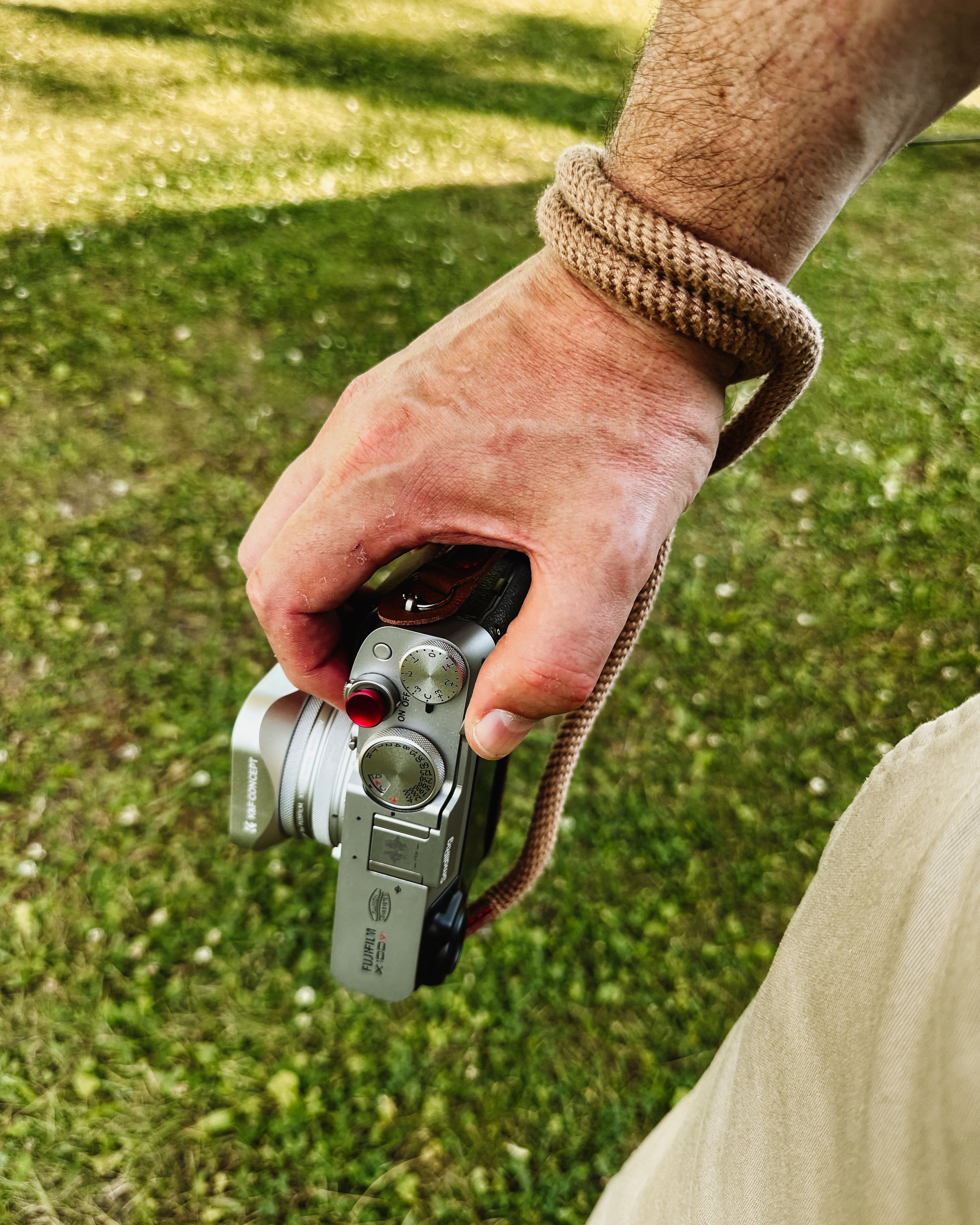
The X100VI in hand (Photo taken with an iPhone 14 Pro and reprocessed with Luminar Neo)
A few days before Denmark, some thoughts on trust and what it means to have one instrument you always come back to
There is something worth noting about the fact that the Fujifilm X100vi is still, to this day, hard to find in stores. The camera launched more than two years ago. Waiting lists persist. Delivery times stretch. And yet, in conversations between photographers, the enthusiasm shows no sign of fading.
That is not an accident. And it is certainly not the sign of a camera approaching obsolescence.
What sustains that interest, I think, has nothing to do with any particular specification, or with a passing trend. It is something harder to name: the feeling, for those who hold it, that the camera does exactly what it promises, with a consistency that is not easy to find.
What southern Italy taught me
My first long trip with the X100vi took me to the south of Italy. I came back with hundreds of files, images that had seemed right at the moment of exposure, but that I had captured with too little confidence in my settings: not enough conviction in the parameters chosen before leaving, too much hesitation after.
The return was time-consuming. Several images needed intervention. The warm light of Campania called for adjustments I hadn't known to anticipate. I spent hours at a screen doing what I had wanted not to have to do: correcting what could have been right from the start.
The work on recipes grew out of that experience. Seven film recipes, developed one by one to match specific lighting conditions, and to give me the confidence to shoot without second-guessing. Much of what the series Seven Recipes for Slow Light presents is the answer to that Italian journey.
Trusting the JPEG: what it actually changes
Shooting JPEG SOOC means making a commitment before the moment rather than after. The recipe is chosen, the settings are in place, and what the camera produces is what you accept. No systematic safety net. No correction session stretching into the evening.
What that trust produces, in practice, is a disposition to photograph more, not less. Not out of carelessness, but because the energy that would otherwise go toward processing files stays available for the act of shooting. You are more present in the moment, less preoccupied with what comes next.
This fits directly within the philosophy I have tried to describe in previous posts: the attention brought to the act of seeing, the willingness to receive what the light offers, without reaching for improvement afterward. SOOC is not a constraint. It is a form of coherence.
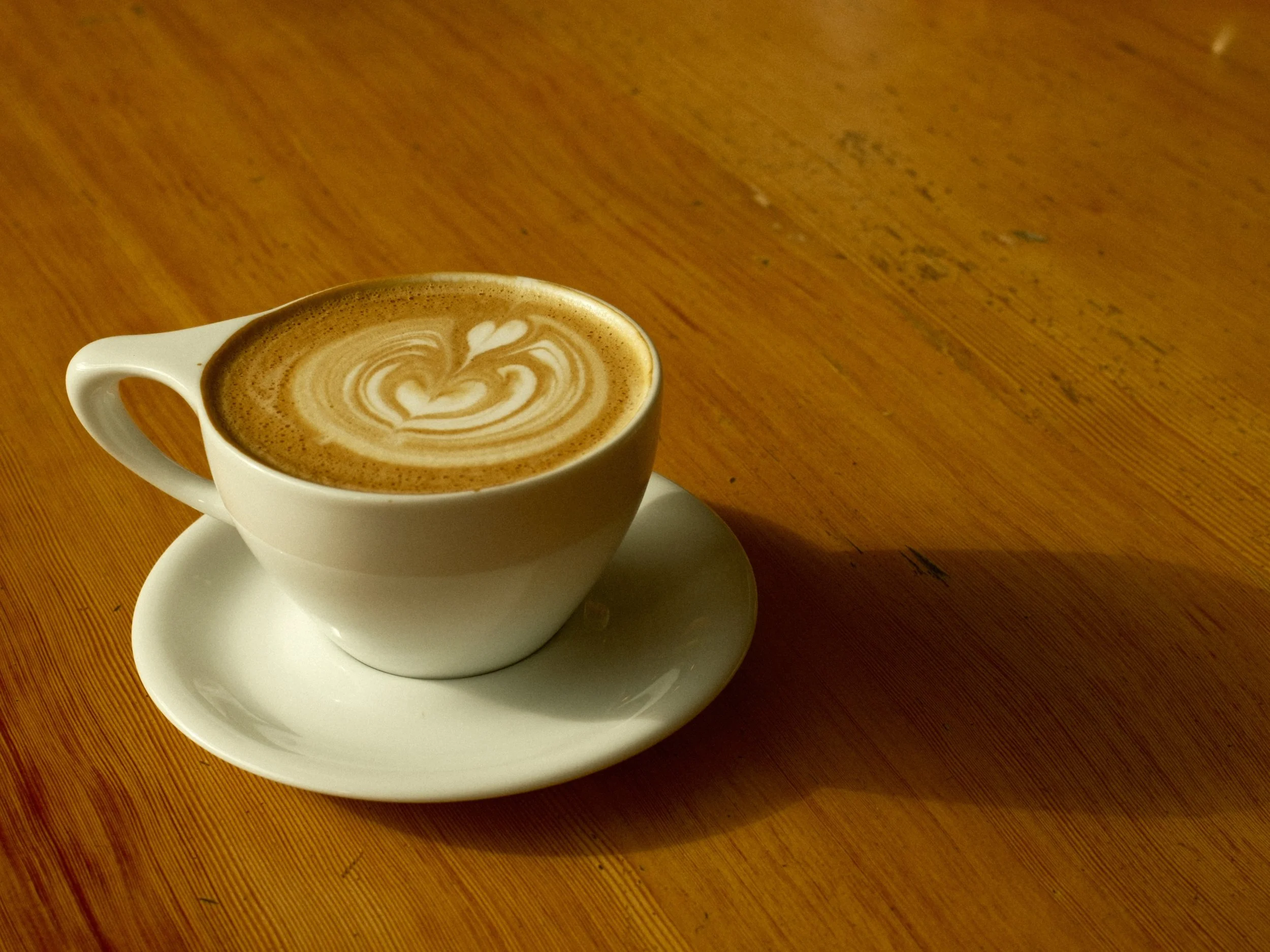
A flat white in a café on Rue Saint-Joseph in Old Quebec City (Film recipe: CW - Q3 Analog)
An honest aside
I always shoot RAF + JPEG. That is a decision I stand behind without apology.
Errors of judgment are always possible. A light misread, a recipe that does not quite match the situation, or a moment where a little more latitude in the highlights would have helped. These things happen, even when you are prepared, even when you trust your settings.
The RAF file is there for exactly that. Not as a regular working plan, but as a fallback when needed. X Raw Studio — which I wrote about in an earlier post — makes it possible to rework those files in the spirit of the CW recipes if the occasion calls for it. It is a quiet form of insurance, and there is no reason to do without it.
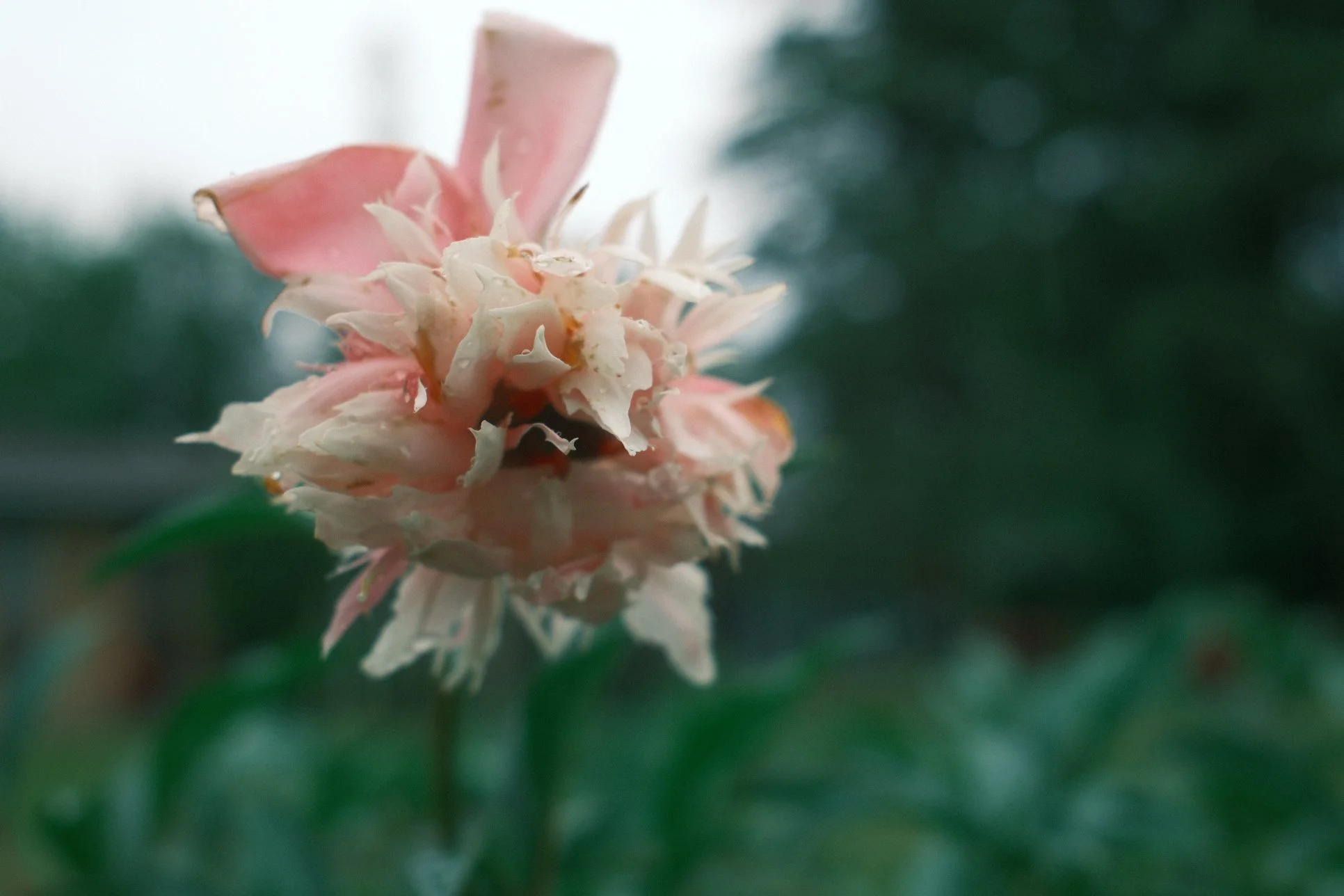
A peony at the end of its bloom (Film recipe: CW - CCD KAF-18500)
One camera among others, but the reference camera
In earlier posts, I have touched on other photographic practices and other instruments. Each brings something distinct: a particular constraint, a different way of seeing and a slowness that forces a rethinking of habits. These practices feed my photographic thinking. They sharpen it, sometimes correct it. They do not replace it.
But there is always a return to the X100vi. Not because it is the most versatile camera available, or because it outperforms everything comparable on technical grounds. It is my reference camera because it is the one I think photographically with.
That is what I mean when I say the X100vi is my default camera: it is the point I come back to, and from which everything else finds its place.
Denmark in June: what I'm expecting
On June 9th, my wife and I leave for Copenhagen. From there, the itinerary takes us to Hamburg, Berlin and Aarhus, before returning to Copenhagen on the 24th to close the trip.
I have never photographed at this latitude in June. What I expect, without yet having experienced it, is a long, raking light that stretches late into the evening, a northern light my seven recipes have not yet encountered. Will they hold up the way I hope? Will Copenhagen's light ask for adjustments I haven't anticipated?
I don't know yet. And that is precisely the point.
What the notion of yun — introduced in a recent post — has taught me is that you don't arrive somewhere with a production plan. You arrive with a disposition, a trusted instrument and the willingness to receive what the environment offers. The X100vi is the instrument. The disposition is mine to bring.
What I hope to bring back
This trip will become a post. Not a travel itinerary, but an account of what the northern light produced, what the recipes revealed in a context they hadn't yet crossed, and what the journey confirmed or called into question in the way I photograph.
If you know Copenhagen, Hamburg, Berlin or Aarhus, if you have photographed there, if you have a café worth lingering in, a neighbourhood, or a particular hour of light you would not want me to miss, write in the comments. That kind of guidance, from someone who knows a place, is worth more than any guide.
- Louis-Martin Ouellet