
Very small. Very Tokio.
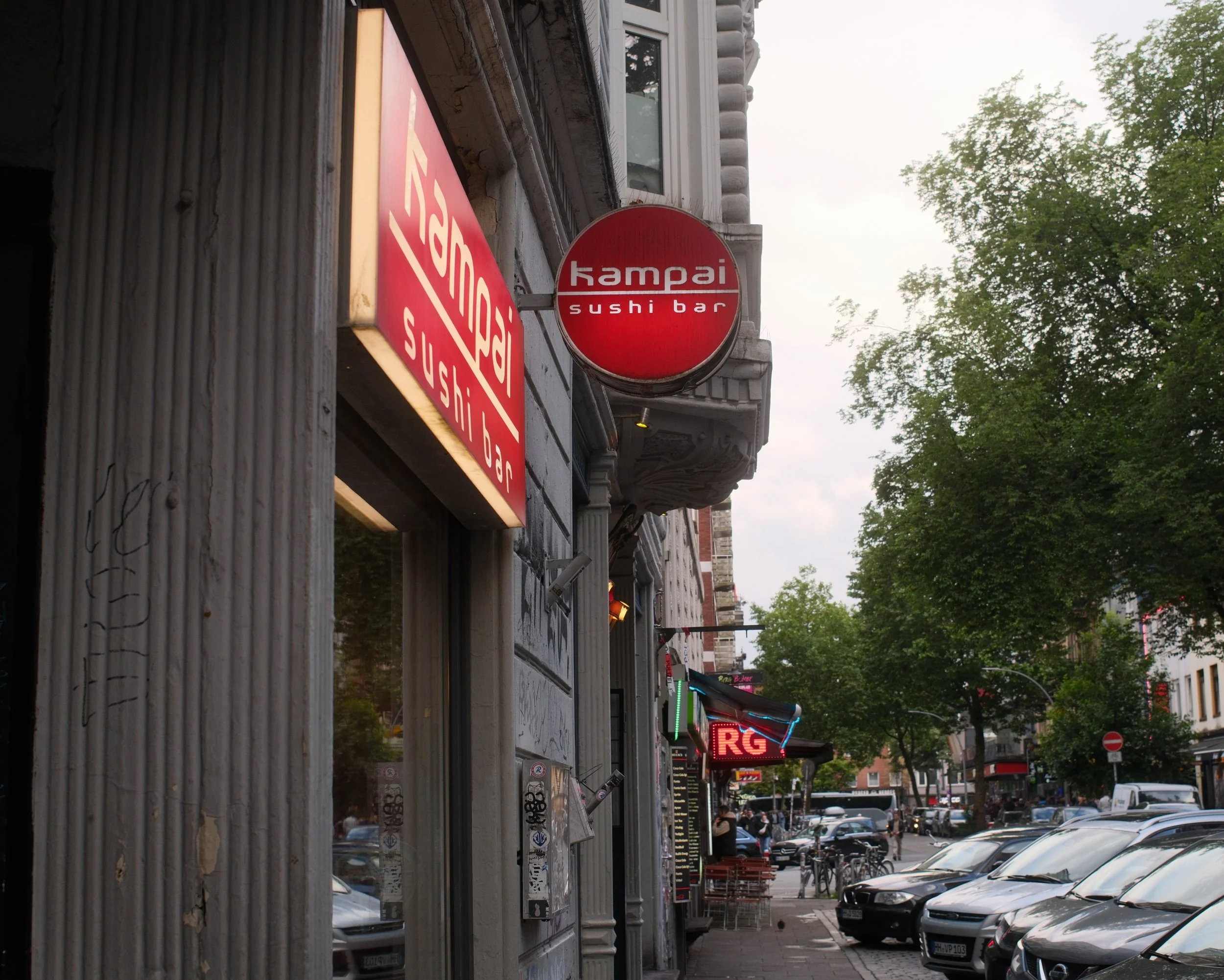
Kampai Sushi Shop in the Sankt Pauli neighbourhood, Hamburg (Film recipe CW - Typ 113)
Six guests, one chef, and presence on a plate
A few days ago, in Hamburg, I spent ninety minutes in a place so small you couldn't really say you walked into it. You simply found yourself inside, from the very first step.
Kampai Sushi Shop is located in the Sankt Pauli neighbourhood. Six guests at a time, no tables, only counters. The chef, Hiroshi Sumikawa, prepares the sushi in front of you. His assistant moves through the tiny space with an economy of gesture that borders on choreography. It says so on the restaurant's business card: Very small. Very Tokio. It isn't a tagline. It's an accurate description.
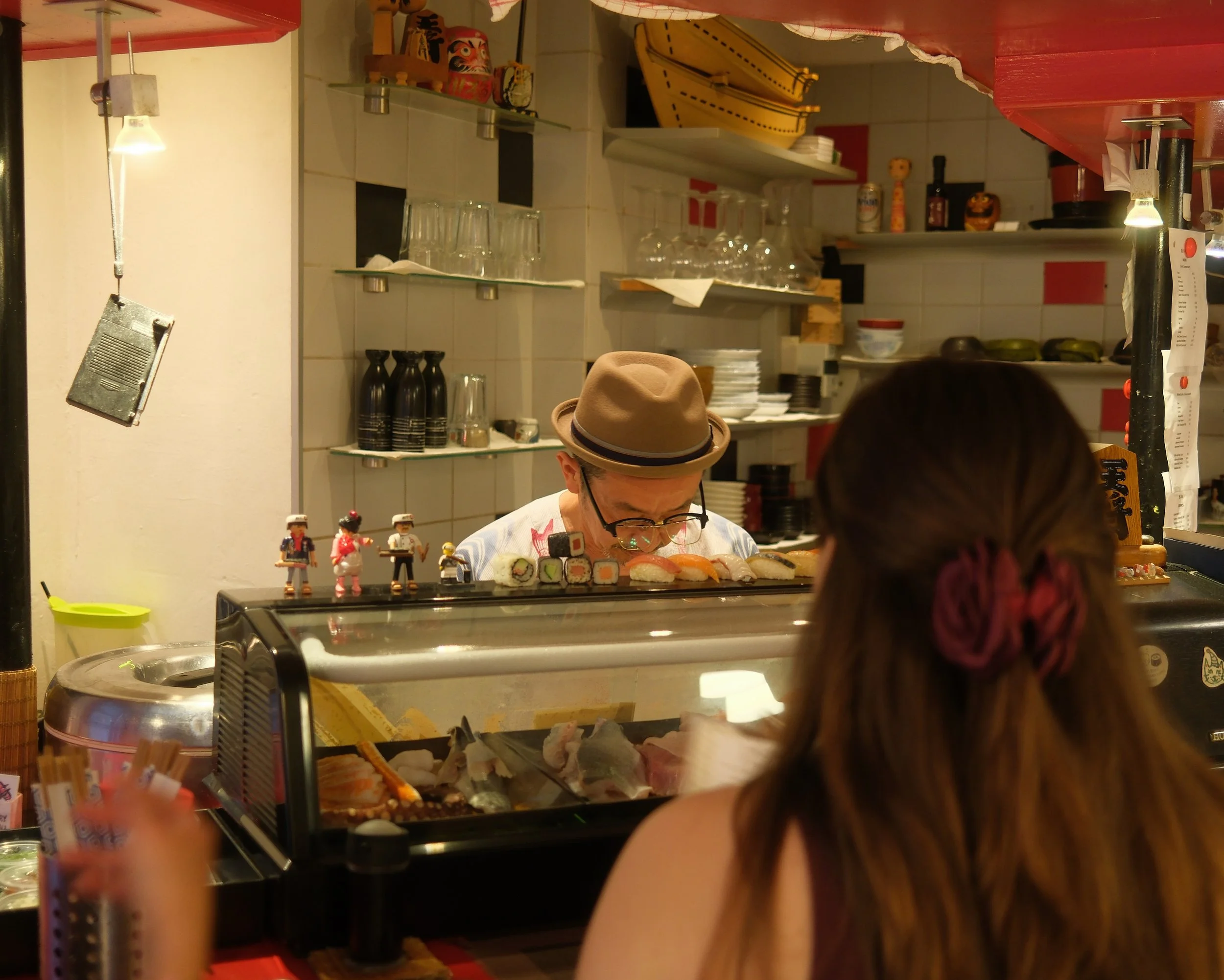
The itamae at work, in the few square metres that are enough. (Film recipe CW - Simple Standard)
How I found the place
I would probably never have heard of Kampai without photography. Somewhere online, a photographer was testing a digital camera in Hamburg. I think it was a Fujifilm GFX 100S, though I'm not entirely certain. What I do know is that somewhere in his images, he mentioned having photographed the sushi at Kampai. It was a blog post or a YouTube video; I can no longer find the source, and I never managed to track it down again. What stopped me was the photograph, not the camera.
When I learned that my itinerary would bring me to Hamburg, and that I'd be there on my birthday, I wrote early enough to ask for a table for two on a Saturday evening. I mentioned that I was coming from Montreal and that it would be my birthday dinner. I don't know whether that helped. His first question, when we arrived, was not a pleasantry: how did you hear about us?
I answered honestly. A source I can no longer find, a photographer, a photograph of sushi, and a stay in Hamburg that offered the chance to connect the two. He seemed to appreciate that the path to his door had passed through an image.
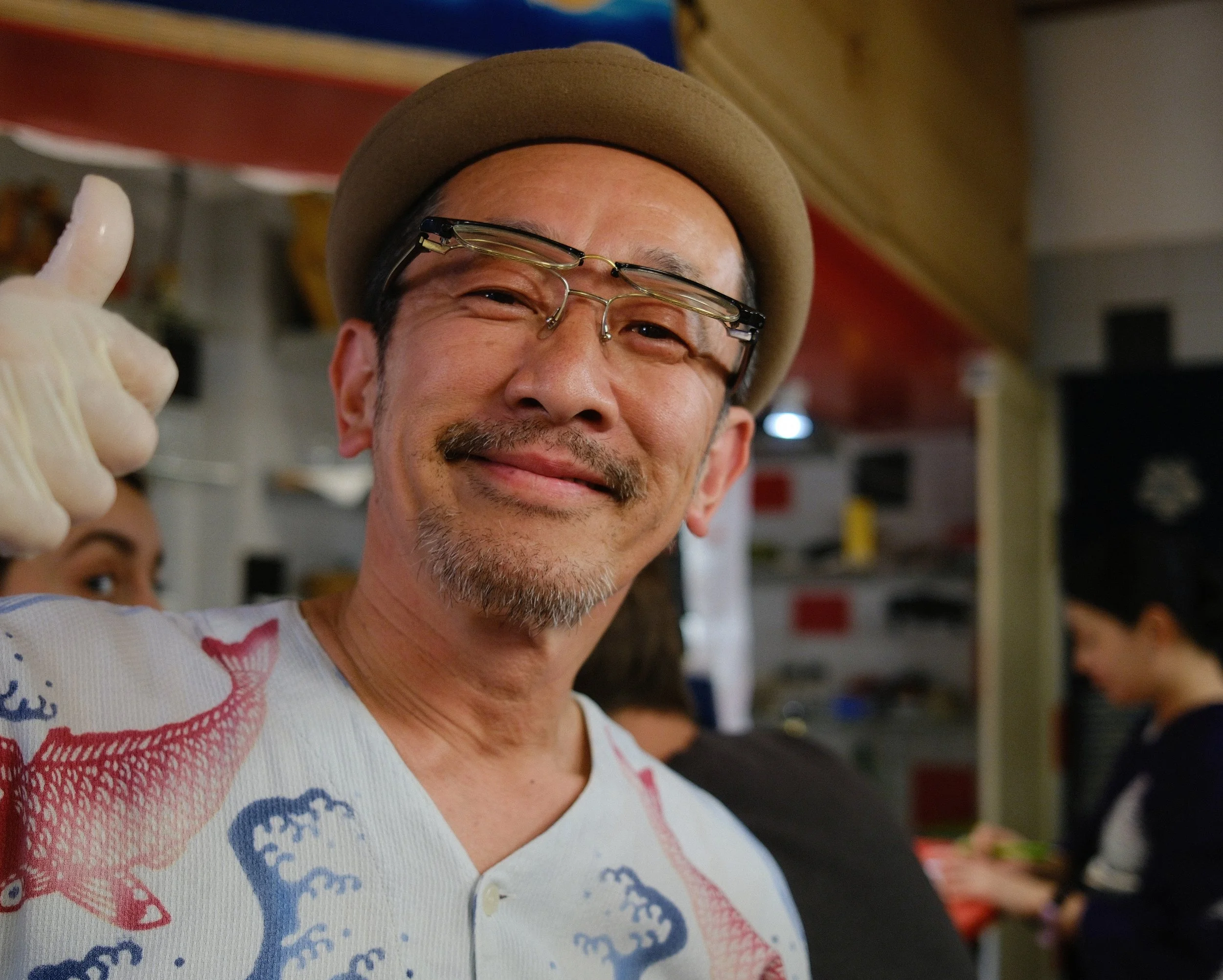
Hiroshi Sumikawa (Film recipe CW - Q3 Analog)
Inside something
We had a seat at 8:30 pm. The restaurant closes at 10. Those ninety minutes had the density of a full evening.
What happened in that tiny room was not a service in the usual sense. Hiroshi Sumikawa, his assistant, and the six guests present formed something that felt more like a symbiosis than a transaction. The smallness of the place had a lot to do with it: there was no room for distance. You were inside the experience, not facing it.
The chef came to ask which fish we preferred. Not knowing quite what to say, we put ourselves in his hands. He proposed a fantasy plate for two. It was the right answer, his and ours.
The sushi was excellent. But that isn't why I'm writing this post.
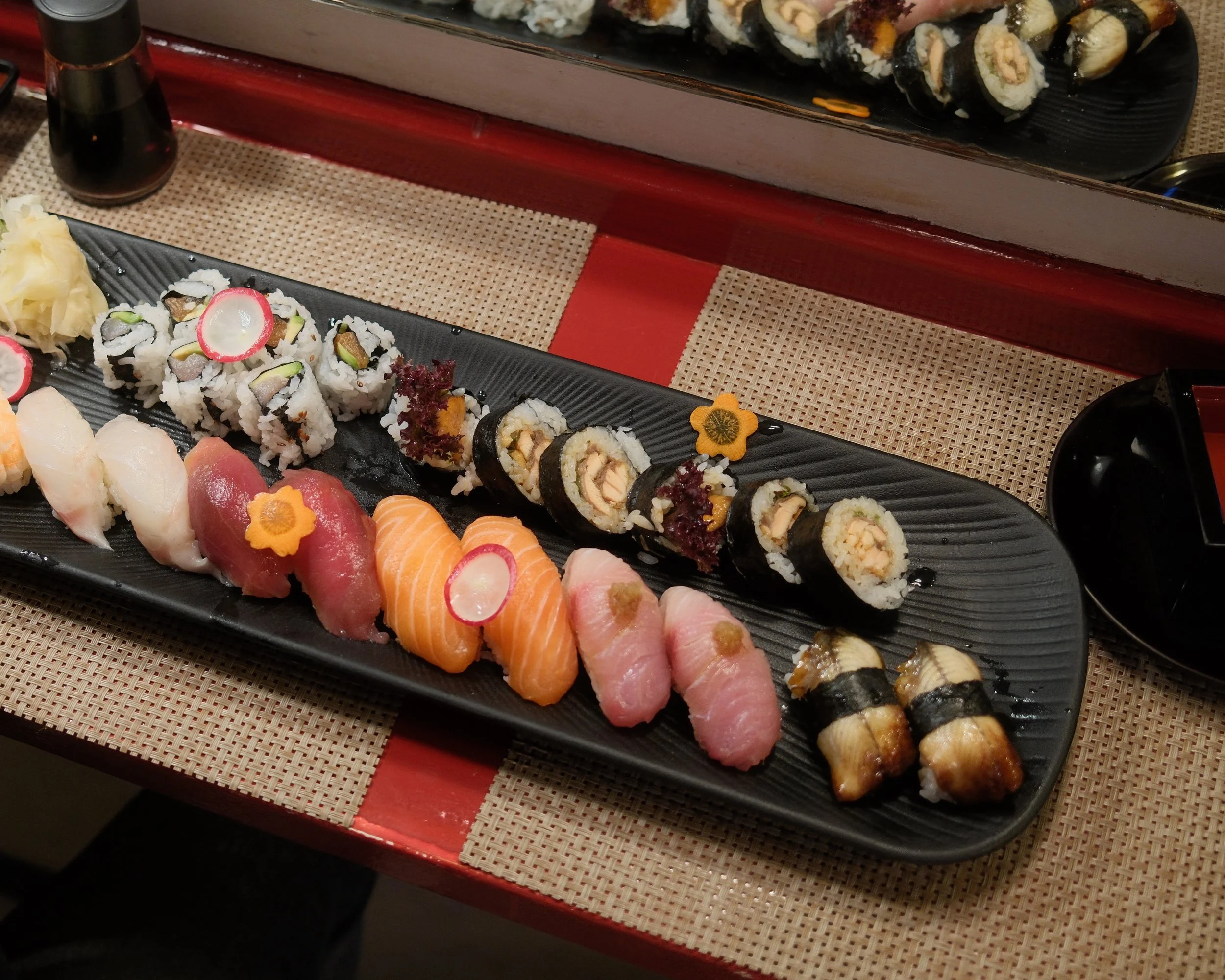
The fantasy plate my wife and I shared. (Film recipe CW - Typ 113)
What struck me was the ceremony of it. The precise preparation in front of us. The quiet exchanges between Hiroshi, his assistant, and the guests. The attention given to each piece and each gesture. And then, at the end of the meal, two nigiri of torched salmon that the chef set before us without being asked, followed by a fish soup he described, with a quiet smile, as the one that would cure all the ills of my present day.
It was my sixtieth birthday. I couldn't have asked for more.
The next morning, Hamburg woke under a sky I hadn't seen since my arrival. The previous days had been overcast, occasionally rainy. That morning, the light was clear and generous. Hiroshi's soup had perhaps kept its promise.
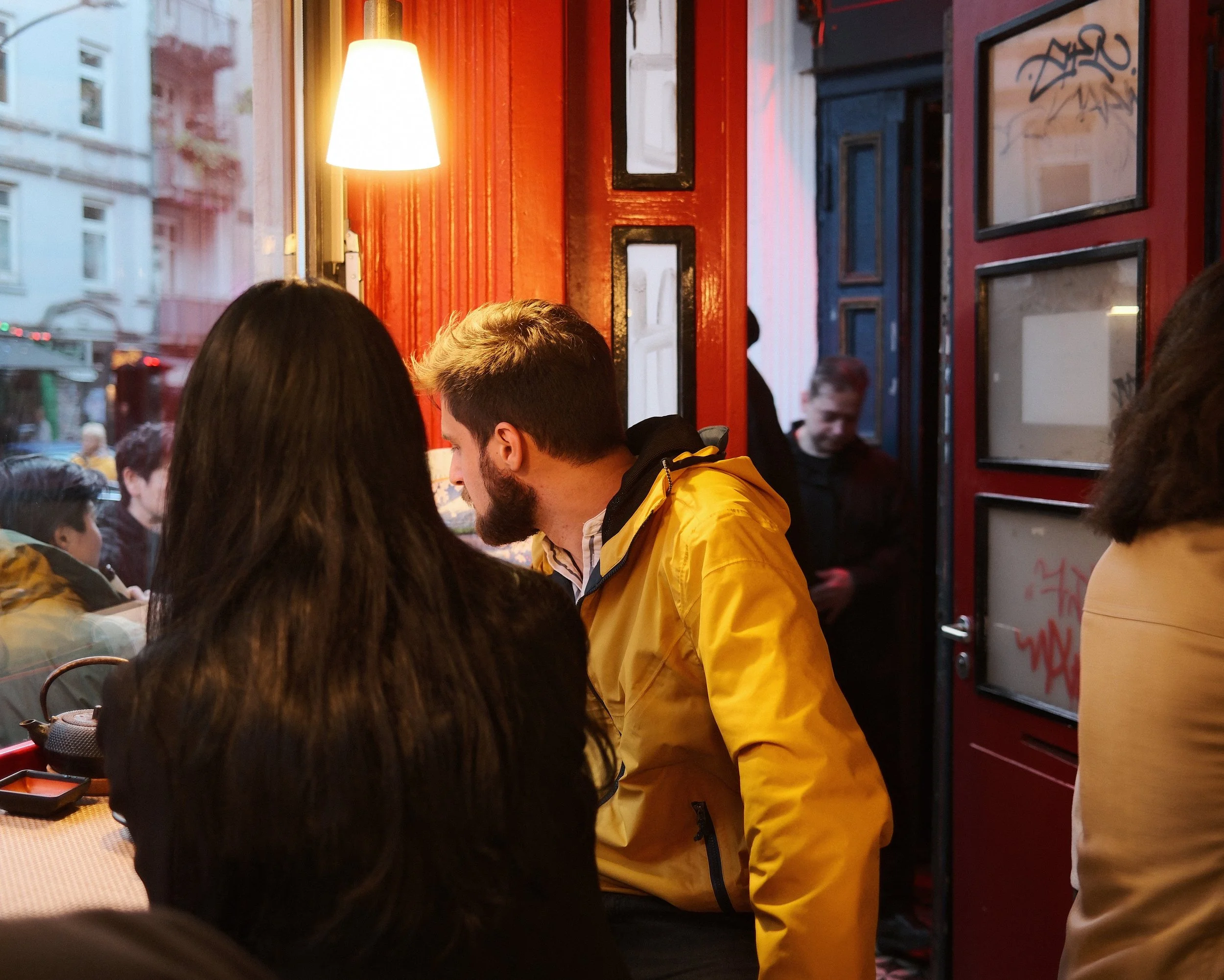
Guests who have their seat, and many others outside who wish they did. (Film recipe CW - CCD KAF - 18500)
The X100vi in a room without tables
I had my X100vi with me. I took a few photographs, the chef, his assistant, and the platter. But the space was so constrained that composition was nearly impossible. You couldn't really call them table shots, since there were none. The energy of the place felt more like a very intimate standing reception: close, upright, and inside the movement.
One of the guests that evening asked whether my X100vi was a film camera. It was the vintage look of the camera that had led him to that conclusion. He wanted to know how I managed to find film, since according to him it was very hard to come by in Hamburg. I smiled and explained. The conversation ended with suggestions for my last day in the city: take the ferries on the Elbe, inexpensive and unhurried, to see Hamburg from the water.
The following morning, we were at the Elbphilharmonie to hear Mari Fukumoto play the organ. A Japanese organist, in Hamburg's most celebrated concert hall, the day after an evening of sushi in Sankt Pauli. Hamburg had decided to extend the coincidence.
That afternoon, we took the ferries on the Elbe.
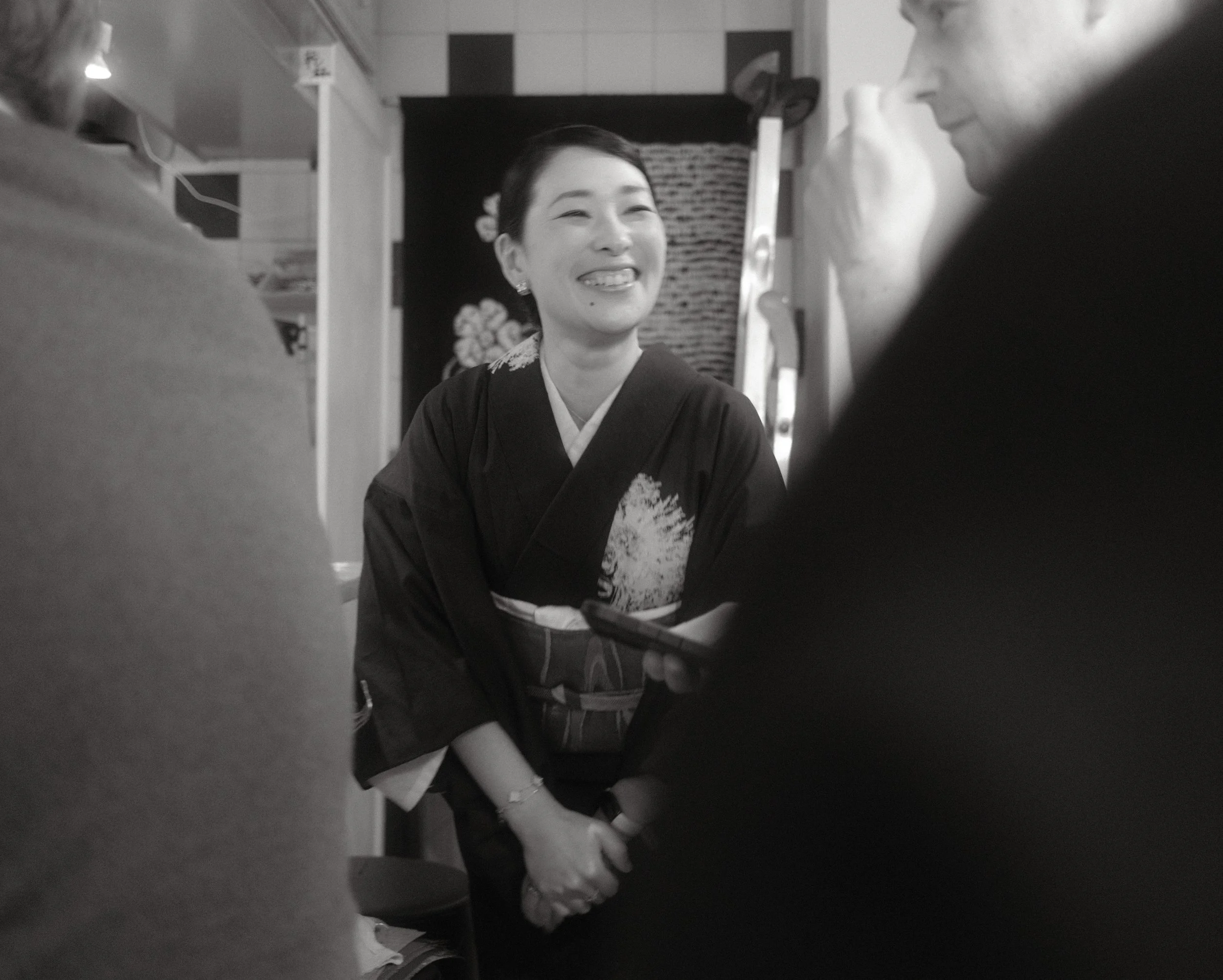
An attentive assistant among guests. (Film recipe CW - VS Mono Soft)
What Kampai reminded me of
Thinking back on that evening, I realized that what had moved me most about Kampai wasn't unrelated to what I look for when I photograph slowly.
There is, in both practices, the same logic of chosen constraint. One chef. Six guests. No set menu imposed in advance. A space so small it makes presence unavoidable. The constraint doesn't diminish the experience: it concentrates it. It creates the conditions in which something genuine can happen.
I recognize something in that way of working. The constraint isn't endured: it's chosen, and it's precisely that choice which makes presence possible.
Hiroshi Sumikawa prepares six covers at a time because that is the number that allows him to remain fully present to each guest, each piece, and each gesture. I photograph with one camera and one focal length because that is what allows me to remain fully present to the light, the moment, and what the world has to offer.
Very small. Very Tokio. One might almost say: very present, very attentive.
- Louis-Martin Ouellet